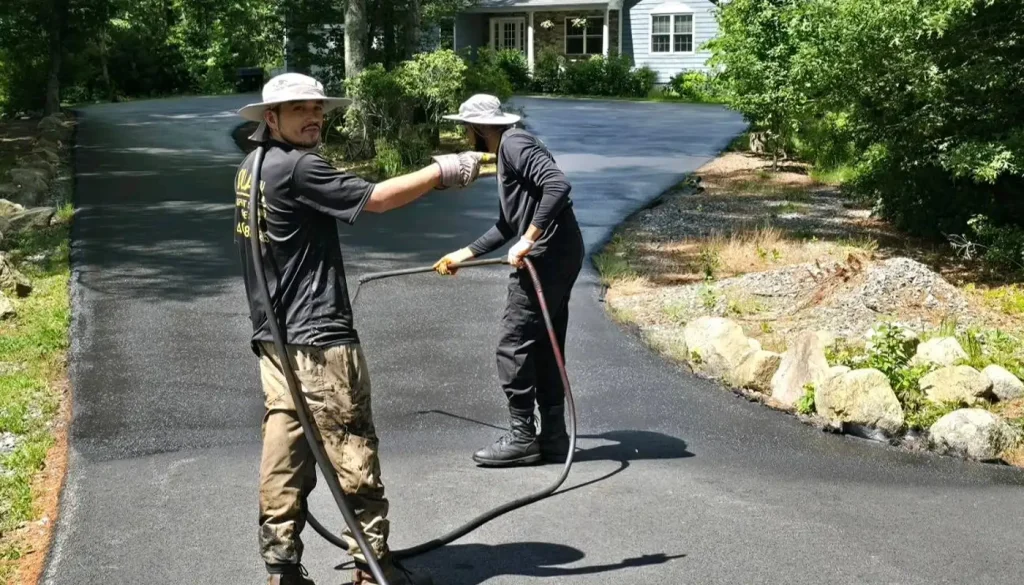
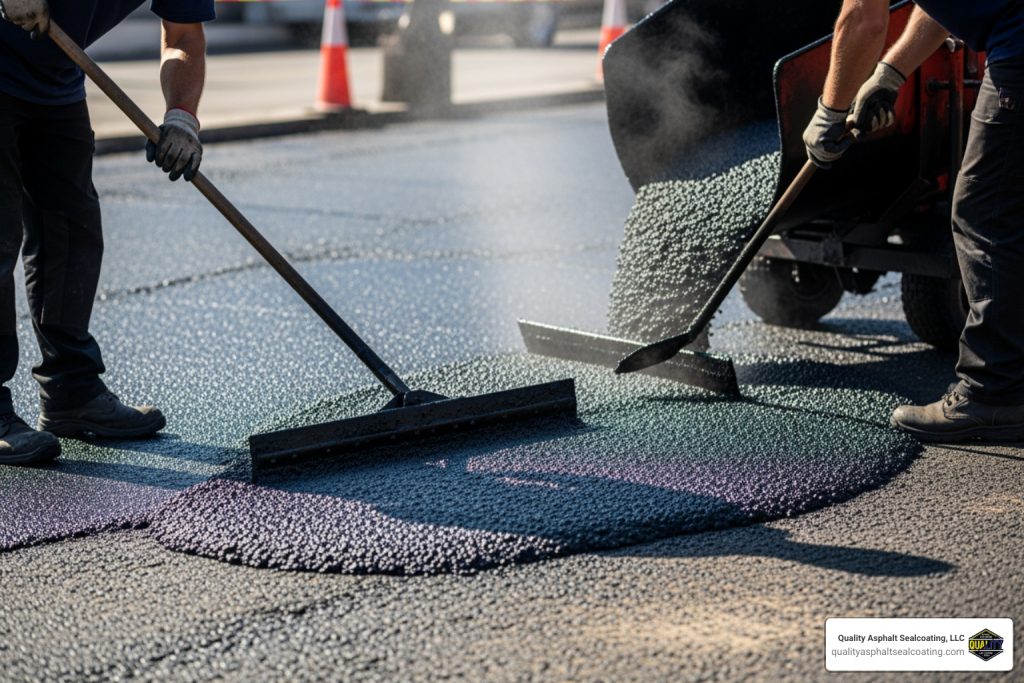
As a homeowner, you know the harsh New England weather can be tough on your property, and your driveway is no exception. With freezing winters, hot summers, and constant UV exposure, asphalt can quickly break down if it isn’t properly protected. You might be wondering, “Does my driveway need sealcoating?” If you have to ask, the answer is probably yes! Sealcoating is the best way to shield your asphalt from the elements and extend its lifespan. In this post, we’ll go over the top seven signs that it’s time to call in the pros for Driveway Sealcoating.
1. Fading from Black to Gray
When your driveway was first installed, it likely had a rich, deep black color. Over time, exposure to the sun’s UV rays causes the asphalt to oxidize, fading it to a dull gray. This isn’t just a cosmetic issue; it means the protective oils in the asphalt are drying out, making the surface brittle. A fresh sealcoat will restore that beautiful dark finish and lock in the essential oils, keeping your driveway flexible and strong. If your driveway looks more gray than black, it’s a clear sign you need to schedule a sealcoating service.
2. Small Surface Cracks
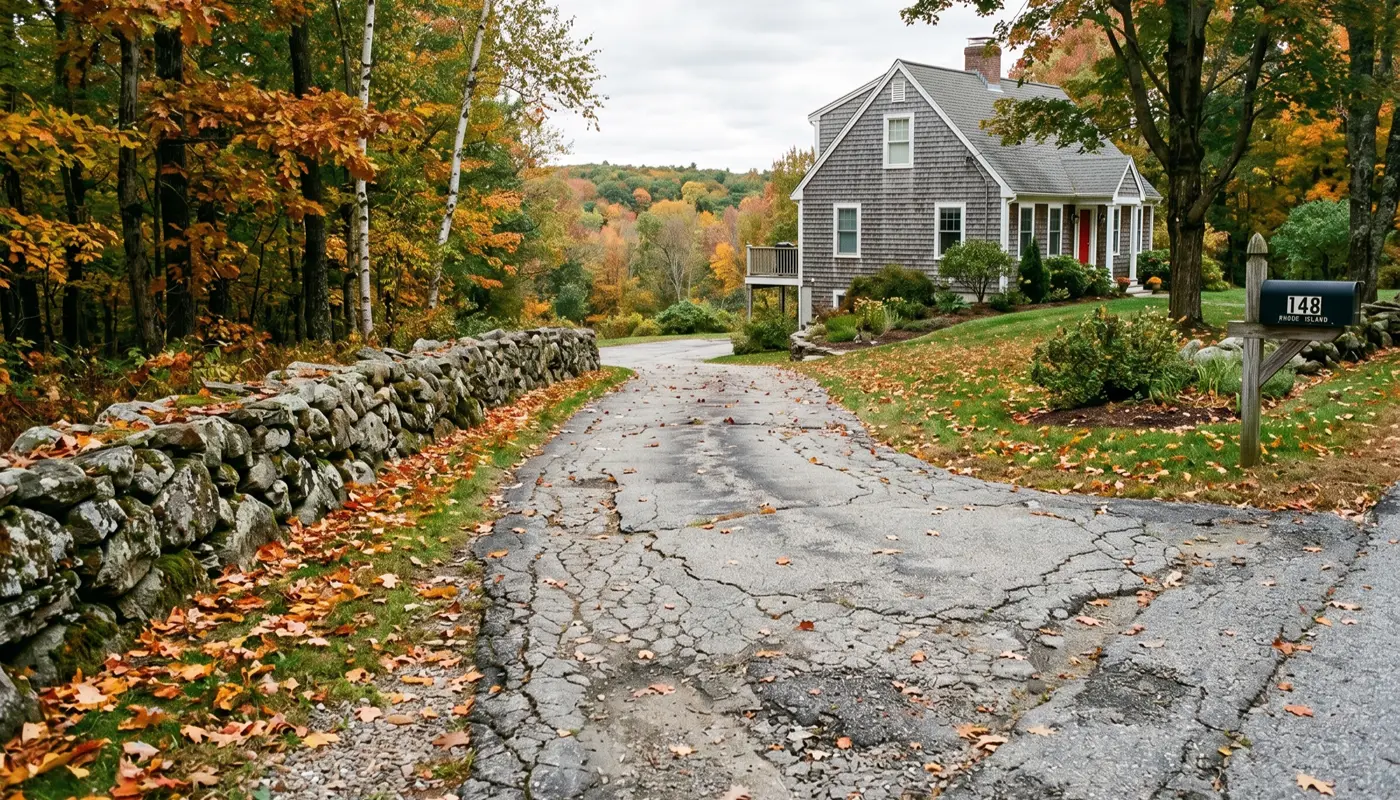
Have you noticed tiny cracks starting to form on your driveway’s surface? These are early warning signs that the asphalt is drying out and losing its flexibility. If left untreated, water will seep into these small cracks. During Rhode Island’s freezing winters, that water turns to ice, expanding and forcing the cracks wider.
- Prevents water damage: Sealcoating fills in minor surface cracks.
- Stops freeze-thaw damage: Keeps water out before winter hits.
- Saves money: Fixing small cracks now prevents expensive repairs later.
3. Rough or Uneven Texture
A healthy driveway should have a relatively smooth surface. Over time, as the protective binder wears away, the small rocks and aggregate within the asphalt become exposed. This leaves your driveway feeling rough and looking worn down. You might even notice small loose stones gathering at the edges. Driveway Sealcoating provides a smooth, even layer that protects those exposed rocks and makes the surface easier to clean.
4. Water Pools or Soaks In
One of the main jobs of a sealcoat is to act like a raincoat for your driveway, causing water to bead up and roll off. If you notice water soaking directly into the asphalt after a rainstorm, your protective barrier is gone. You might also see water pooling in slight depressions instead of draining properly. When water penetrates the asphalt, it damages the foundation underneath, leading to structural failure. A fresh sealcoat will restore that waterproof barrier and keep moisture out.
5. Stains from Oil and Chemicals
Your driveway is constantly exposed to vehicle fluids like motor oil, gas, and antifreeze. These chemicals can actually dissolve the binder in your asphalt, causing it to soften and break apart. If you see dark, stubborn stains on your driveway, the damage has already begun. Sealcoating acts as a protective shield, making it much harder for these harsh chemicals to penetrate the surface. It’s a simple step that provides major protection against common automotive spills.
6. Potholes are Forming
If you are seeing potholes, your driveway is officially past the early warning stage. Potholes form when water has already penetrated the surface, weakened the base layer, and traffic has broken the asphalt apart. This requires professional asphalt repair, including hot-mix patching, to fix the structural damage. Once the potholes are properly repaired, a fresh sealcoat is necessary to protect the entire driveway and prevent new holes from forming.
- Indicates structural damage: Potholes mean the base layer is compromised.
- Requires professional repair: Potholes need to be patched before sealcoating.
- Sealcoating prevents future holes: Protects the repaired surface from water.
7. It’s Been More Than 3 Years
Even if your driveway looks okay, time is a major factor. For most properties in Rhode Island, we recommend professional sealcoating every 2 to 3 years. The heavy road salt and extreme temperature changes we experience break down the sealcoat faster than in milder climates. If you can’t remember the last time your driveway was sealed, or if you know it’s been over three years, you are overdue for a protective coating.
Conclusion
Don’t wait until small cracks turn into massive, costly potholes. Recognizing these seven signs early on can save you thousands of dollars in full replacement costs. Protecting your investment is simple when you stay ahead of the weather. If you are noticing faded colors, rough textures, or small cracks, it is time to take action. Contact Quality Asphalt Sealcoating today for a free estimate, and let our family-owned business protect your driveway for years to come!