Showing Mastic Asphalt: Your Go-To for Pavement Health
Are you a property owner dealing with cracked pavements, stubborn potholes, or worrying about water damage to your surfaces? You’re not alone. Many face these challenges, seeking durable and cost-effective fixes. Today, we’re diving deep into mastic asphalt, a highly effective material designed to tackle these very issues.
What is Mastic Asphalt?
- Definition: Mastic asphalt is a dense, voidless construction material. It’s a mixture of hard-grade asphalt binder, fine mineral material (like sand and filler), and sometimes aggregates and polymers.
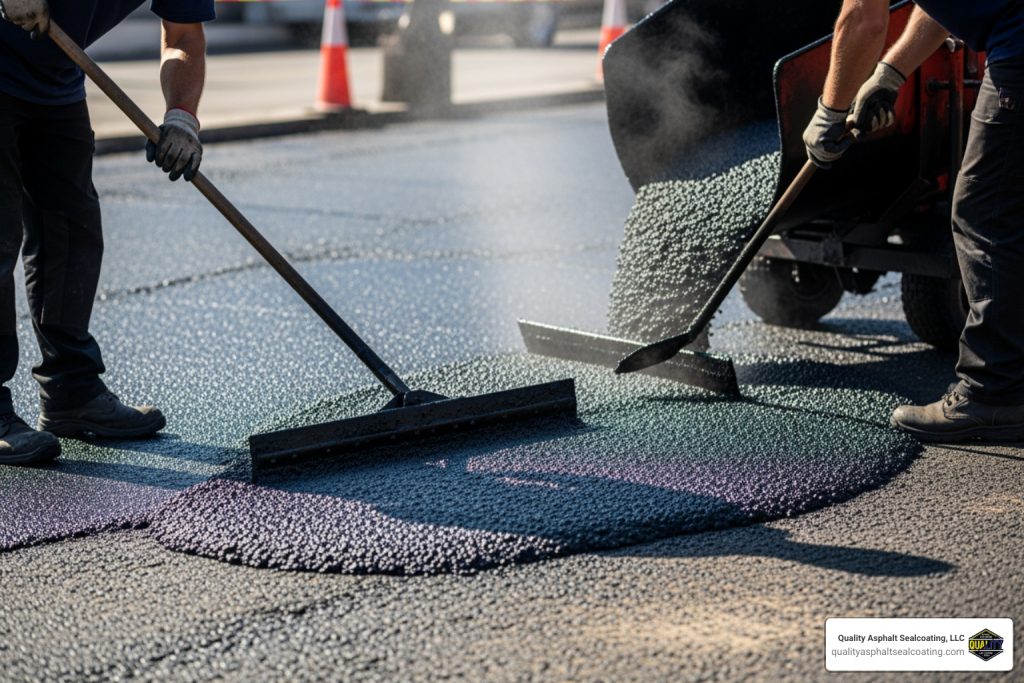
- Application: It’s typically heated to a high temperature (180–250°C) and poured hot into place. It’s then compacted by hand troweling to create a smooth, seamless surface.
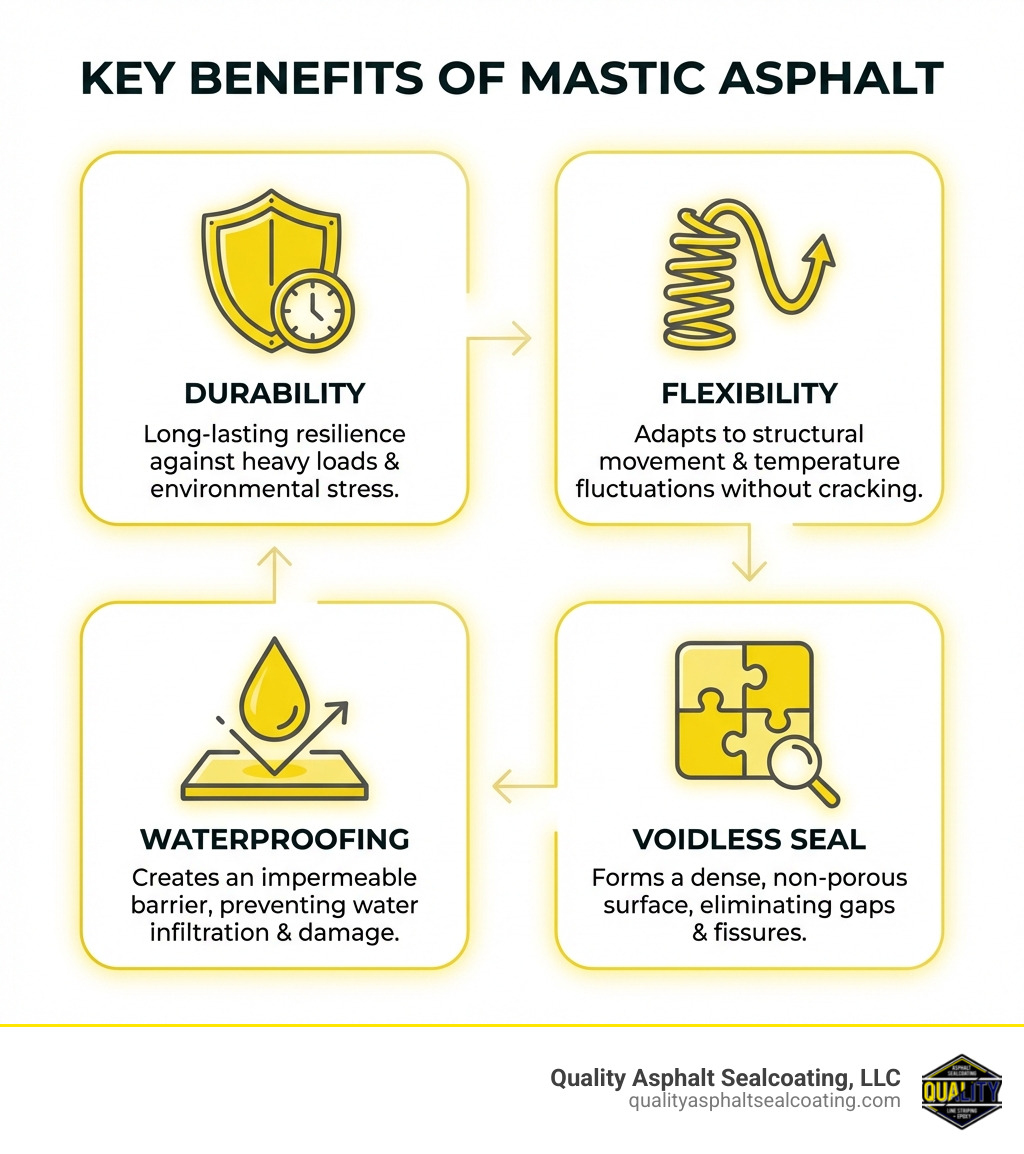
- Key Properties: This unique composition gives it exceptional durability, flexibility, and waterproofing capabilities.
- Main Use: It forms a crucial seal, protecting surfaces where standard asphalt or concrete repairs might leave porous gaps.
This extensive guide will cover everything you need to know about mastic asphalt. You’ll learn its history, properties, and why it’s a superior choice for many repair and construction tasks. We’ll also explore its diverse applications and how it compares to other materials. Get ready to understand how this versatile solution can extend the life and integrity of your asphalt surfaces.
Unpacking Mastic Asphalt: Composition and History
When we talk about mastic asphalt, we’re discussing a material with a rich history and a precise composition that sets it apart. It’s not just another form of asphalt; it’s a specially engineered mixture designed for specific performance characteristics, especially its ability to seal and protect.
What are the primary components?
At its core, mastic asphalt is a durable surface material made primarily of mineral filler and asphalt binder. But let’s break that down a bit further. The “vehicle,” or binder component, typically consists of about 55% ±10% by weight of asphalt and 45% ±10% by weight of petroleum solvents. This gives it the characteristic pourable consistency when hot.
The solid components, or “fillers,” are crucial for its strength and voidless nature. These inorganic fillers should make up a maximum of 40% by weight of the overall mastic asphalt. For optimal performance, these fillers (excluding any asbestos, which is no longer used) must be fine enough to pass through a 0.043-mm sieve opening. We also ensure that no more than 15% by weight of the total mastic asphalt is retained on that same sieve. This meticulous grading creates a dense, impermeable material.
In addition to these core components, modern mastic asphalt often includes graded aggregates, and sometimes fibers (like cellulose) or polymer-modified binders. These additions improve its properties, such as flexibility and resistance to deformation. The result is a thick, viscous mixture that, once heated, can be spread easily and evenly, forming a strong bond with the underlying material as it cools.
A Brief History of Mastic Asphalt
The story of mastic asphalt isn’t a new one; it’s a centuries-old material with a fascinating evolution. Its origins trace back to ancient times, but its formal development began in the 19th century. It was first patented in 1837, marking a significant step in its journey from a traditional material to an engineered solution.
Throughout history, mastic asphalt has proven its remarkable longevity and waterproofing capabilities. Iconic structures stand as testaments to its durability. For instance, mastic asphalt laid at London’s St Paul’s Cathedral in 1906 provided well over 100 years of effective waterproofing! Similarly, Buckingham Palace boasts a rooftop of mastic asphalt that has kept the building dry for well over 80 years. These examples highlight its enduring performance in demanding applications.
While its early uses were often in roofing and flooring, mastic asphalt has continuously evolved. Today, it’s a staple in road repair and construction, offering solutions for everything from wide cracks to bridge decks. Its versatility and proven track record make it a material we trust. For more detailed insights into its modern applications and why it’s often the preferred choice, you can explore resources like Why Specify Mastic Asphalt?.
Key Properties: Why Mastic Asphalt is a Superior Choice
When considering materials for pavement repair and maintenance, the properties of mastic asphalt truly make it stand out. It’s engineered to offer a combination of characteristics that are hard to beat, making it a superior choice for many of the challenges we face in Rhode Island’s climate.

Best Durability and Longevity
One of the most compelling reasons we champion mastic asphalt is its unbeatable durability. When properly applied, mastic asphalt repairs can last longer than five years, often outperforming the surrounding pavement. This longevity is crucial for our clients in Rhode Island, where extreme weather conditions can take a toll on surfaces.
This exceptional durability stems from its unique composition. In specialized forms like Stone Mastic Asphalt (SMA), a high coarse aggregate content interlocks to form a “stone skeleton,” providing superior stone-on-stone contact that resists permanent deformation. This structural integrity translates to a tough, wear-resistant surface that can handle heavy traffic without succumbing to rutting or cracking. This means less frequent repairs and significant long-term savings, as mastic asphalt has been shown to offer a more cost-effective solution over a 60-year lifecycle compared to alternatives.
Superior Flexibility and Adhesion
Rhode Island weather throws everything at our pavements – from freezing winters to hot, humid summers. This constant thermal cycling causes materials to expand and contract. Regular asphalt and concrete can crack under this stress, but mastic asphalt excels here. It’s inherently softer and more pliable than traditional asphalt, allowing it to expand and contract easily. Unlike concrete, it resists cracking in freezing temperatures and holds up well against salt and snow plows.
This flexibility is a game-changer, especially in preventing reflection cracking, where cracks in the underlying pavement propagate through the new surface. Mastic asphalt forms a strong bond with the existing material, providing superior adhesion that helps it move with the pavement rather than against it. When we use rubberized mastic asphalt compounds, this flexibility is further improved, making it ideal for repairing cracks, joints, and areas where concrete has shifted, ensuring a lasting seal.
The Ultimate Waterproofing Seal
Perhaps the most critical property of mastic asphalt for protecting your investment is its unparalleled waterproofing capability. Its voidless composition means it’s inherently impermeable, creating a seamless, waterproof seal that effectively prevents moisture penetration. This is vital because water infiltration is the primary culprit behind pavement deterioration, leading to sub-grade erosion, potholes, and freeze-thaw damage.
By creating a continuous, impervious barrier, mastic asphalt safeguards the underlying layers of your pavement from water damage. This protection extends the life of your surfaces significantly, making it an ideal choice for areas where water management is critical. Whether it’s for large cracks or patching, the ultimate goal is to keep water out, and mastic asphalt delivers on that promise. For more information on how we use this property to protect your pavement, check out our Crack Filling & Mastics Services.
Mastic Asphalt vs. Conventional Pavement Repairs
When it comes to fixing our roads and parking lots, we have several options, but not all are created equal. Understanding how mastic asphalt differs from regular asphalt or concrete in repair applications is key to choosing the right solution for your property.
| Feature | Mastic Asphalt | Regular Hot-Mix Asphalt | Concrete |
|---|---|---|---|
| Durability | Very high; deformation-resistant, long lifespan | Moderate to high; depends on mix design and traffic | High compressive strength, but brittle |
| Flexibility | High; expands and contracts with temperature | Moderate; can crack with extreme temperature shifts | Low; prone to cracking in freeze-thaw cycles |
| Waterproofing | Excellent; voidless and seamless seal | Moderate; can be porous, requires sealing | Moderate; joints require sealing, can be porous |
| Application | Poured hot, hand-troweled, no compaction | Laid hot, rolled and compacted with heavy machinery | Poured wet, requires curing, joint work |
| Repair Use | Wide cracks, potholes, sealing patches, binding | General paving, larger area repairs | Structural bases, large area paving, long cure time |
| Adhesion | Superior; forms strong bond to existing pavement | Good, but can show seams and differential movement | Moderate to poor with asphalt; requires bond breakers |
| Porous Nature | Non-porous, creates a seal | Porous, allows water penetration if not sealed | Can be porous, especially if not sealed or cracked |
How is it different from regular asphalt?
The primary distinction between mastic asphalt and regular hot-mix asphalt lies in their composition, application, and a critical property: porosity. Traditional asphalt, while durable, is inherently porous. This means it can leave tiny gaps, allowing water to seep into the sub-base, leading to erosion and damage—a common issue we see in Rhode Island.
Mastic asphalt, on the other hand, is designed to be virtually voidless. It has a higher binder content and a thicker bitumen film compared to conventional dense graded asphalt (DGA). This composition makes it softer and more pliable when heated. While regular asphalt is laid hot and then compacted with heavy rolling equipment, mastic asphalt is poured hot (typically between 180–250°C) and then hand-troweled to a smooth, seamless finish. It doesn’t require mechanical compaction, which simplifies application in many repair scenarios. This pourable nature allows it to fill irregular shapes and bind more effectively, providing a much-needed seal that regular asphalt repairs might miss.
Advantages Over Concrete Repairs
When comparing mastic asphalt to concrete for repair applications, especially on asphalt surfaces, several advantages become clear. Concrete is rigid and strong in compression, but it lacks flexibility. In regions like Rhode Island, where we experience significant temperature fluctuations and freeze-thaw cycles, concrete is prone to cracking. We’ve seen countless instances where concrete repairs on asphalt surfaces fail prematurely due to this lack of flexibility.
Mastic asphalt handles these extreme temperature changes much better, expanding and contracting easily without cracking. It also offers superior adhesion to existing asphalt, creating a seamless integration that prevents water from getting underneath. Concrete repairs often require specific joint sealing and can create differential movement, which leads to new cracks forming at the interface. With mastic asphalt, we achieve a monolithic repair that binds effectively, eliminating these vulnerabilities and providing a longer-lasting, more resilient solution.
A Guide to Mastic Asphalt Applications and Installation
The versatility of mastic asphalt is truly impressive, making it a go-to material for a wide range of applications, especially in the demanding conditions we face in Rhode Island. Its unique properties allow us to address various pavement issues with confidence.

Common Uses for Mastic Asphalt
We find mastic asphalt indispensable for many critical tasks. It’s an ideal solution for:
- Wide Crack and Joint Repair: It effectively seals significant cracks and joints, preventing water infiltration that can lead to sub-base erosion and further damage.
- Pothole Filling: For potholes that are too large for simple cold patch but don’t warrant full asphalt replacement, mastic asphalt provides a durable, seamless fill.
- Alligator Cracking: It can be used to treat areas of severe alligator cracking, binding the fragmented asphalt together and sealing the surface.
- Parking Lot Maintenance: From repairing individual damaged sections to sealing entire areas, mastic asphalt extends the life of commercial parking lots, ensuring a smooth and safe surface. You can learn more about our comprehensive approach to parking lot care on our Commercial Parking Lot Sealcoating page.
- Bridge Decks: Its waterproofing and flexible properties make it suitable for protecting bridge decks from the elements and traffic wear.
- Airport Runways: The demanding environment of airport runways benefits from mastic asphalt‘s durability and resistance to deformation.
- New Pavement Applications: While primarily known for repairs, it can also be spread and compacted to form strong, durable surfaces in new construction where specific performance is required.
Its ability to fill larger spaces than traditional crack sealing and repair areas where concrete has shifted makes it incredibly useful for both heavily trafficked roads and smaller, localized repairs. For a deeper dive into its diverse uses, the TECHNICAL GUIDES provide extensive information.
Understanding the Different Types of Mastic Asphalt
While the term “mastic asphalt” refers to a general category, there are several distinctions worth noting, each custom for specific applications:
- Hot-Applied Mastic: This is the most common type we use for repairs. It’s heated to high temperatures (180–250°C) until it becomes a pourable liquid. This allows for excellent penetration and bonding with existing pavement, creating a seamless, durable repair.
- Cold-Applied Mastic: Less common for large-scale repairs, cold-applied options are typically used for smaller patches or in situations where heating equipment isn’t feasible. They often contain solvents that evaporate, allowing the material to harden.
- Polymer-Modified Mastic: This type incorporates polymers into the asphalt binder, enhancing its flexibility, adhesion, and resistance to fatigue cracking. This is particularly beneficial in areas with significant movement or extreme temperature swings, like those we experience in Rhode Island.
- Rubberized Mastic: Similar to polymer-modified, rubberized mastic asphalt compounds are specifically formulated for superior elasticity and adhesion, making them excellent for crack sealing and joint repairs where flexibility is paramount. Our “Pure Asphalt Mastic” is an example of a high-performance, rubberized asphalt compound designed for durable and long-lasting crack sealing.
- Stone Mastic Asphalt (SMA): While technically a type of asphalt concrete, SMA is often mentioned alongside mastic asphalt due to its high binder content and unique performance. SMA is a special type of asphalt for wearing courses, consisting of a mineral mix with a higher asphalt and stone content, designed for rut resistance in heavily trafficked areas. It forms a stone skeleton for structural strength, whereas standard mastic asphalt is voidless and primarily used for sealing and filling.
The Application Process, Safety, and Quality
Applying mastic asphalt is a specialized process that requires the right equipment, trained professionals, and strict adherence to safety and quality standards. Here’s how we approach it:
- Surface Preparation: First, the area to be repaired must be thoroughly cleaned of debris, loose material, and moisture. Proper preparation ensures optimal adhesion.
- Heating and Mixing: The mastic asphalt is heated in specialized melters or kettles, often 55-gallon units designed to maintain the material at its optimal application temperature (between 180–250°C or 356-482°F). This ensures it achieves the necessary pourable consistency.
- Application: Once heated, the mastic asphalt is poured directly into the prepared area. Our skilled technicians then use hand trowels to spread and smooth the material, ensuring a seamless, voidless finish. This method allows for precise application, even in intricate areas.
- Temperature Control: For the best results, the surface temperature should be at least 3°C above the dew point, and the air temperature should be over 4°C (about 40°F). These conditions are crucial for proper bonding and curing, and we carefully monitor them for all our projects in Rhode Island.
Safety Precautions: We prioritize safety during application. While mastic asphalt is applied in molten form, it does not require a naked flame at the point of installation, which significantly reduces fire risk compared to some other methods. However, handling hot materials always demands proper protective gear and trained personnel to prevent burns and ensure a safe working environment.
Quality Control Measures: To ensure the highest quality, mastic asphalt undergoes rigorous testing. For instance, it should have a penetration of not more than 1.0 mm at 25°C and show no thickening, curdling, gelling, or hard caking after 24 months of storage. These specifications guarantee the material’s consistency and long-term performance. Our commitment to these standards is evident in every project we undertake. Take a look at some of our successful applications on our Recent Work page.
Frequently Asked Questions about Mastic Asphalt
We often get questions about mastic asphalt, and we’re happy to share our expertise. Here are some of the most common inquiries we receive:
How long does a mastic asphalt repair last?
A properly applied mastic asphalt repair can last for more than five years, often outliving the surrounding pavement due to its superior durability and flexibility. We’ve seen repairs hold up for many years, even decades, thanks to the material’s inherent resistance to wear, weather, and traffic. Its ability to expand and contract with temperature changes, crucial in Rhode Island’s climate, significantly contributes to its longevity, reducing the need for frequent re-repairs.
Is mastic asphalt the same as Stone Mastic Asphalt (SMA)?
No, while related, they are different. Mastic asphalt is a dense, voidless, pourable material primarily used for repairs, waterproofing, and flooring. It’s designed to fill gaps and create an impermeable seal. Stone Mastic Asphalt (SMA), on the other hand, is a specific type of gap-graded paving mix used as a durable wearing course for heavily trafficked roads. SMA has a high coarse aggregate content (typically 70-80%) that interlocks to form a stone skeleton, providing exceptional rut resistance. While both use asphalt binder, their compositions, intended applications, and structural properties are distinct.
Can mastic asphalt be used on residential driveways?
Yes, absolutely! Mastic asphalt is an excellent solution for repairing large cracks, potholes, or deteriorated areas on residential driveways. Its durable, waterproof seal prevents further damage and extends the life of your driveway. For homeowners in Rhode Island, where driveways are exposed to harsh winters and hot summers, mastic asphalt offers a resilient repair that withstands environmental stresses better than many traditional patching materials. It’s a smart investment to maintain your property’s value and curb appeal. To understand how such repairs fit into overall driveway maintenance, explore our Driveway Sealcoating Services.
Conclusion
We’ve explored the sticky truth about mastic asphalt, and what we’ve found is a material that offers immense value for pavement maintenance and repair. Its unique composition, historical pedigree, and superior properties—especially its durability, flexibility, and waterproofing capabilities—make it a standout choice.
For property owners in Rhode Island, understanding the advantages of mastic asphalt means recognizing a solution that goes beyond temporary fixes. It’s about investing in long-term value, superior performance, and ultimately, a more cost-effective approach to maintaining your asphalt surfaces. Whether facing stubborn cracks, persistent potholes, or the need for a robust, impermeable seal, mastic asphalt provides a reliable answer.
At Quality Asphalt Sealcoating, LLC, we pride ourselves on our expertise and commitment to using top-quality materials for lasting results. For professional assessment and application of mastic asphalt solutions in Rhode Island, our experienced team ensures your property receives the best care. Contact us today for expert Crack Filling & Mastics Services and let us help you protect your investment.