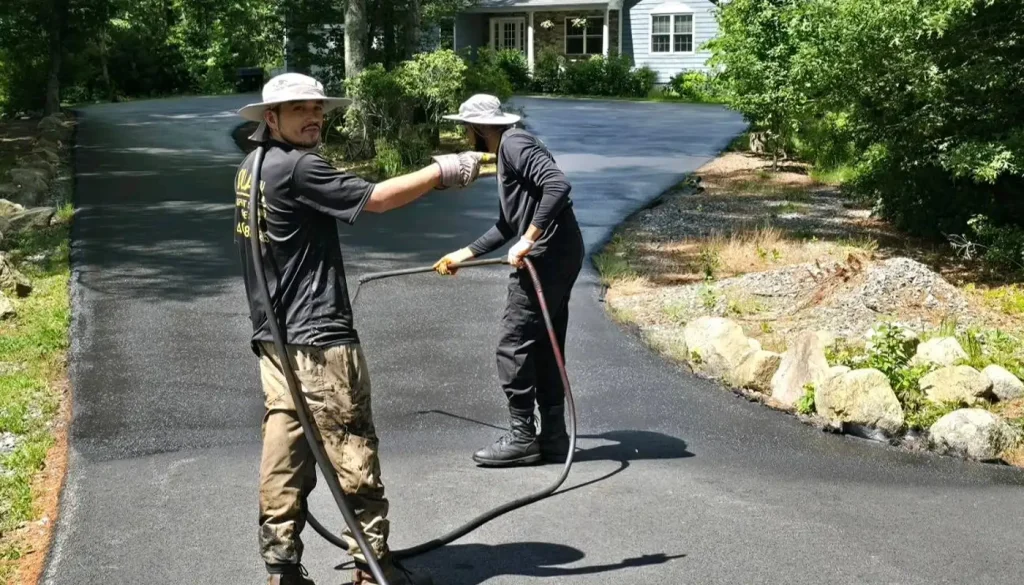
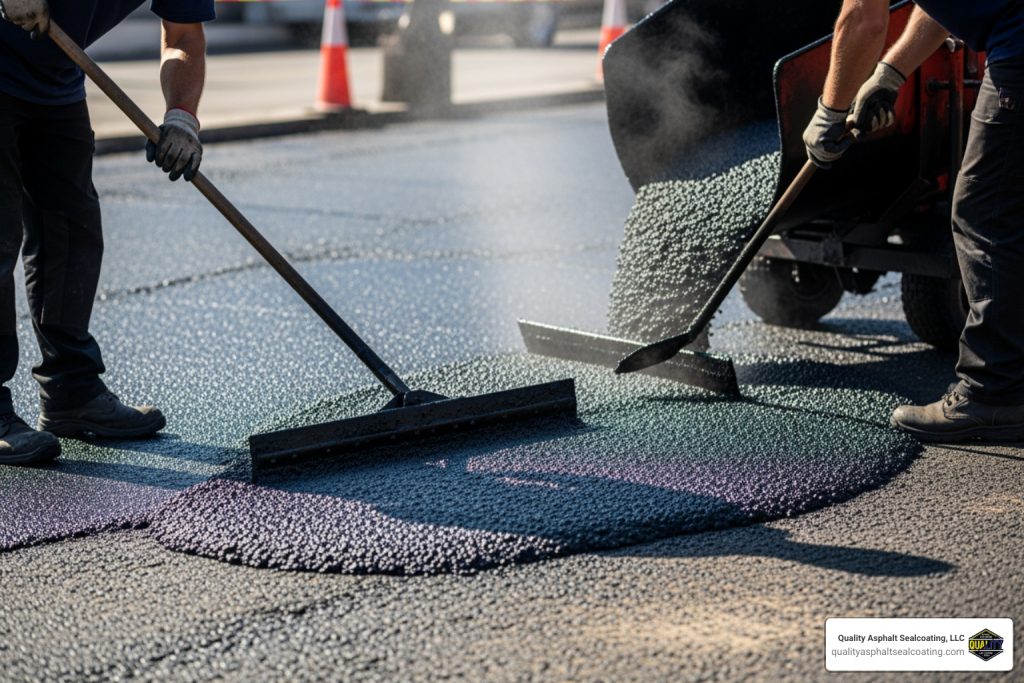
The Essential Role of Pavement Marking Services
Pavement marking services involve painting lines, arrows, and symbols on asphalt and concrete surfaces. This helps organize spaces, guide traffic, and ensure safety.
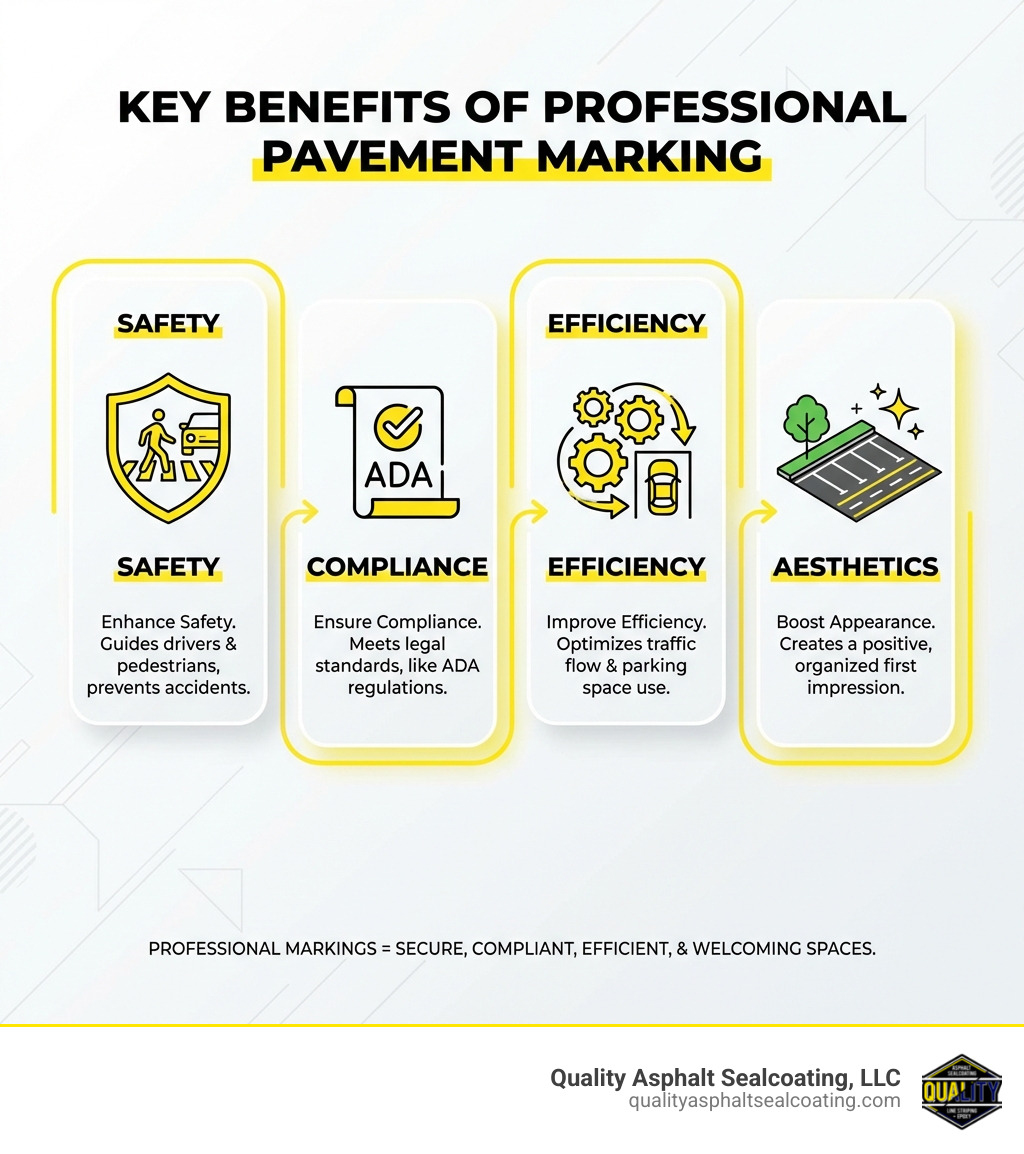
Here’s why these services are so important for your property:
- Improve Safety: Clear markings guide drivers and pedestrians, preventing accidents.
- Ensure Compliance: They help meet legal standards like the Americans with Disabilities Act (ADA).
- Improve Efficiency: Well-marked areas optimize traffic flow and parking space use.
- Boost Appearance: A neat, organized look creates a positive first impression.
Now more than ever, clear pavement marking is vitally important for any property owner. From guiding vehicles in a busy parking lot to ensuring accessible pathways, these markings are a key part of your property’s safety and functionality.
Understanding Pavement Marking Materials and Types
When it comes to pavement marking services, one size doesn’t fit all. The right material choice is crucial for durability, visibility, and overall performance. We consider several factors when recommending the best solution for your project, including the type and condition of your pavement, the volume of traffic it experiences, your desired longevity for the markings, and, of course, your budget.
For instance, a busy commercial parking lot in Providence, RI, will require a more robust and long-lasting material than a low-traffic private road. We always aim to provide solutions that offer excellent value and reduce the frequency of re-striping, saving you time and money in the long run.
Common Pavement Marking Materials
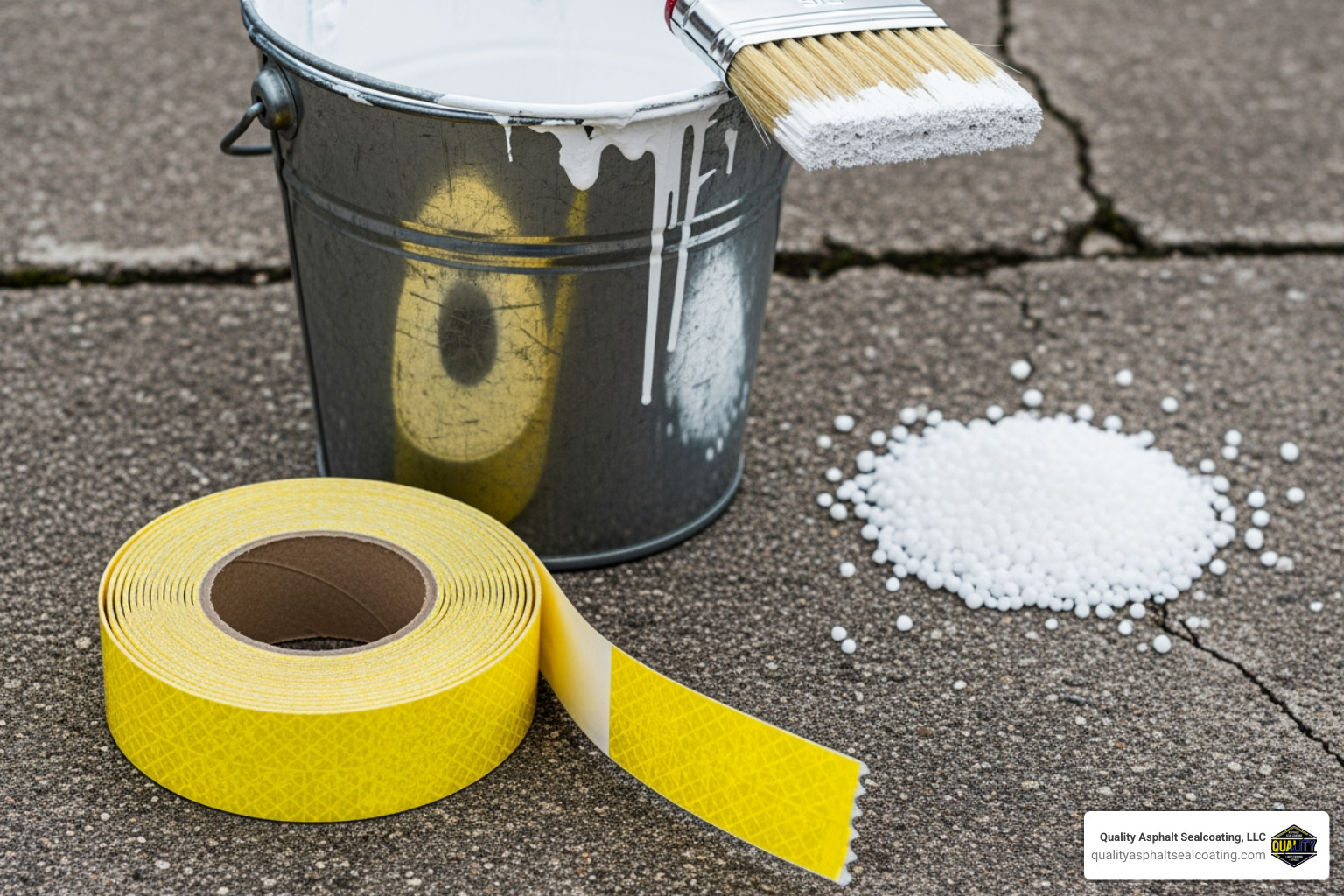
The industry offers a variety of materials, each with unique characteristics. Here’s a closer look at what we typically work with:
- Water-based Paint: This is a common and cost-effective option, particularly for parking lots and less trafficked areas. It’s generally quick-drying and can be combined with glass beads for added reflectivity, especially important for nighttime visibility. While it offers good initial brightness, its durability is often less than other materials, typically requiring reapplication more frequently.
- Epoxy: Known for its exceptional durability and strong adhesion, epoxy markings are a premium choice for high-traffic areas. They offer superior color retention and reflectivity, making them ideal for roadways and busy commercial properties. Epoxy typically requires a longer curing time compared to paint, but its longevity makes it a worthwhile investment. It can also be applied in a wider temperature range than some other materials.
- Thermoplastic: This material is applied hot, melting onto the pavement surface to create a strong chemical bond. Thermoplastic markings are highly durable and reflective, perfect for busy streets and highways where long-lasting performance is critical. They cool and dry relatively quickly, allowing traffic to resume sooner. We often use this for major thoroughfares or areas needing maximum wear resistance.
- Preformed Tape: These are pre-cut markings, often made of durable plastic or retroreflective sheeting, that are adhered directly to the pavement. They are excellent for specific symbols, legends, or for areas requiring precise, high-performance markings. Some tapes are designed for temporary use, while others offer long-term durability, especially when applied into grooves in the pavement to minimize plow damage.
- Reflective Media (Glass Beads): Almost all pavement marking services incorporate reflective media, primarily glass beads, to improve nighttime visibility. These tiny beads are either premixed into the marking material or dropped onto the wet surface during application, embedding themselves to reflect vehicle headlights. The type and application rate of glass beads significantly impact the retroreflectivity and safety of the markings.
For an overview of how road markings are standardized across the United States, see the Road surface marking article on Wikipedia. For detailed information on how these materials are applied and how they can benefit your property, explore our Pavement Marking Services & Parking Lot Striping page.
Here’s a quick comparison of these common materials:
| Material | Durability | Cost | Drying Time | Best Use |
|---|---|---|---|---|
| Paint | Low to Medium | Low | Fast | Parking lots, low-traffic areas |
| Thermoplastic | High | Medium | Fast | High-traffic roadways, crosswalks, symbols |
| Epoxy | Very High | High | Moderate | Highways, airports, industrial settings |
| Preformed Tape | Medium to High | Medium to High | Immediate | Crosswalks, legends, temporary markings |
Temporary vs. Permanent Markings
Understanding the distinction between temporary and permanent markings is key to planning any project.
- Temporary Markings: As the name suggests, these are designed for short-term use. They are often employed in construction zones, during special events, or for traffic diversions. While they need to be visible and effective, their primary purpose is to last for a limited period. Materials like removable tape or water-based paints (without extensive bead application) are common for temporary markings. Their longevity is typically less than one year.
- Permanent Markings: These are intended for long-term guidance and control. They use durable materials like thermoplastic, epoxy, or highly durable paints designed to withstand significant wear and tear from traffic and environmental exposure. The goal is to maximize their lifespan, which can range from three years or more, depending on the material, traffic volume, and climate. We strive to provide durable solutions that offer lasting clarity and safety for your property in Rhode Island.
The Critical Role of Pavement Markings: Benefits and Applications
Pavement marking services are more than just lines on the ground; they are a silent language guiding movement, enhancing safety, and optimizing space. From busy commercial hubs to quiet residential streets in Rhode Island, these markings play a pivotal role.
Clear markings lead to:
- Improved Safety: This is perhaps the most significant benefit. Well-defined lanes, stop lines, and crosswalks reduce confusion, prevent accidents, and create a safer environment for drivers, pedestrians, and cyclists alike. Reflective materials further boost visibility during low-light conditions, a crucial aspect for safety.
- Improved Traffic Flow: Logical layouts and directional arrows ensure vehicles move smoothly and efficiently, minimizing congestion and frustration. This is especially vital in commercial parking lots where efficient movement directly impacts customer experience.
- Maximizing Space: Expertly designed parking stall layouts can maximize the number of vehicles a lot can accommodate, making the most of your property’s footprint. We understand that every square foot counts for businesses in places like Providence or Warwick.
- Professional Appearance: Crisp, vibrant markings convey a sense of professionalism and care for your property. It’s often the first impression visitors get, contributing to your business’s overall image.
- Liability Reduction: By clearly delineating safe zones and traffic patterns, property owners can significantly reduce their liability risks associated with accidents on their premises. Compliance with safety standards is not just good practice, it’s essential.
Applications for Businesses and Municipalities
The versatility of pavement marking services means they are essential across a wide array of environments:
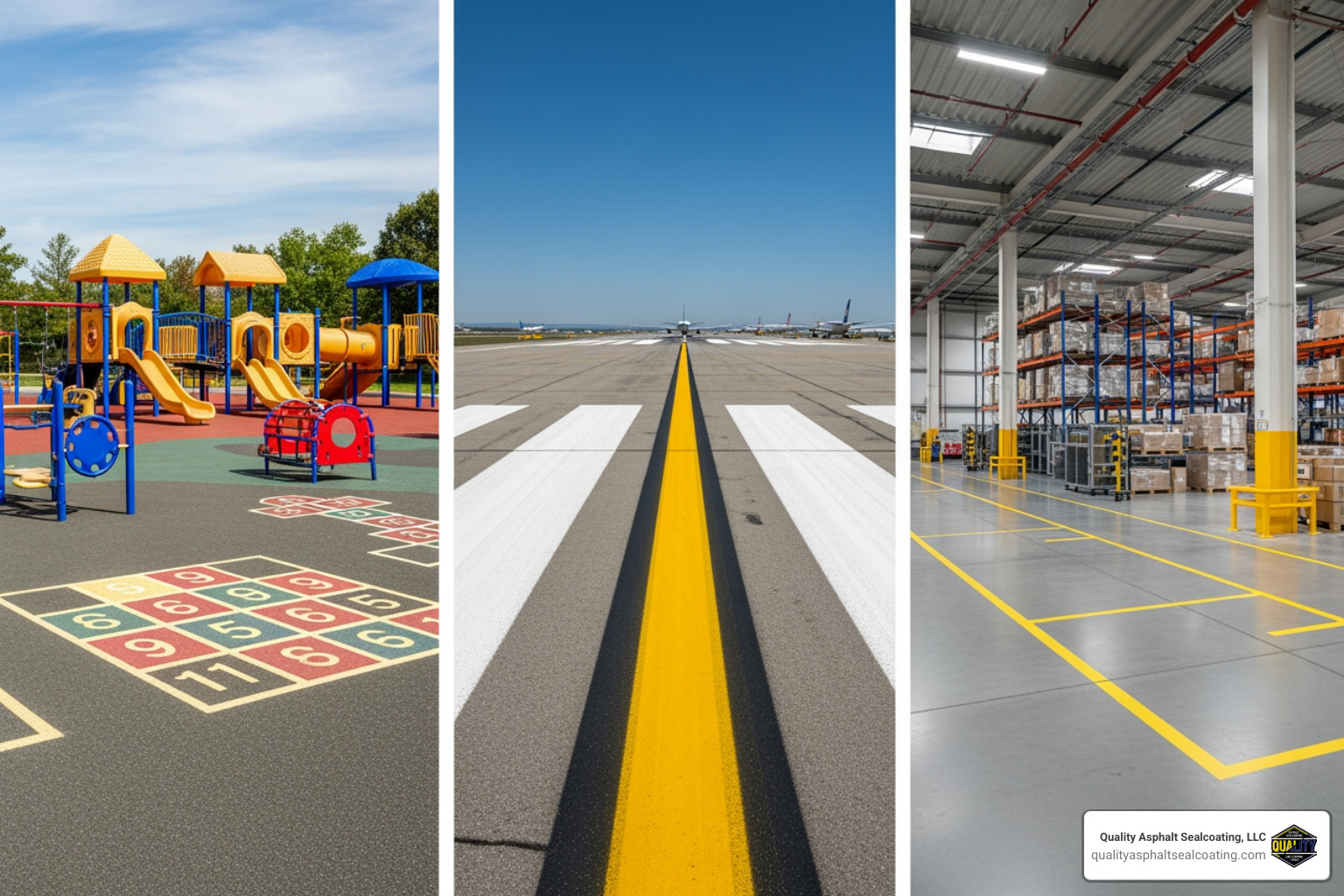
- Parking Lots: From small business lots to large retail centers, clear parking stalls, directional arrows, handicap spaces, and loading zones are fundamental for organization and safety.
- Roadways: Lane lines, center lines, yield lines, stop lines, and crosswalks are critical for guiding traffic on public and private roads throughout Rhode Island.
- Airports: While we focus on ground-level applications, the highly technical and precise markings required for airport runways and taxiways underscore the importance of specialized marking. Even smaller private airfields in our service area benefit from clear ground markings.
- Playgrounds: Fun and vibrant markings like hopscotch, four-square, and sports court lines transform asphalt into engaging play areas for children, promoting active play while defining boundaries.
- Warehouses/Industrial Facilities: Safety lines, pedestrian walkways, forklift lanes, and designated storage areas are crucial for operational efficiency and worker safety in industrial settings.
- Sports Courts: Basketball, tennis, pickleball, and other court markings provide clear boundaries for recreational and competitive play.
To learn more about how we can improve your commercial property, including how we protect and maintain your asphalt, visit our More info about commercial sealcoating page.
The Benefits of Professional Pavement Marking Services
While it might seem like a simple task, professional pavement marking services offer benefits that DIY approaches simply can’t match:
- Expertise: With over 23 years of experience in asphalt maintenance in Rhode Island, we understand the nuances of different pavement types, traffic patterns, and local regulations. Our team is trained and certified, ensuring manufacturer standards and government agency requirements are met.
- Specialized Equipment: We use advanced line striping equipment, such as Line Lazer machines, to ensure sharp, thick, and durable lines. This technology allows for precision and efficiency that hand-painting simply cannot achieve.
- Efficiency: Our specialized tools and experienced crew ensure projects are completed quickly and effectively, minimizing disruption to your business or property. We can even schedule work during off-hours to avoid inconvenience.
- Guaranteed Compliance: Staying up-to-date with ADA standards, MUTCD guidelines, and local regulations is complex. We ensure all your markings are fully compliant, protecting you from potential fines and legal issues.
- High-Quality Materials: We use top-quality, durable marking materials chosen for their longevity and visibility, ensuring your investment lasts.
- Long-Lasting Results: Our commitment to quality materials and precise application techniques means your markings will remain vibrant and effective for years to come.
For a comprehensive look at all the ways we can serve your asphalt and concrete needs, please visit our Services page.
The Pavement Marking Process: From Installation to Compliance
A successful pavement marking services project involves careful planning, precise execution, and adherence to regulations. It’s a lifecycle that extends from initial surface preparation to the final cure, all while ensuring compliance.
Our process is designed to be thorough and efficient, utilizing the right technology and equipment for superior results. We believe in getting it right the first time, ensuring your markings are not only aesthetically pleasing but also functional and long-lasting.
The Typical Installation and Removal Process
Whether it’s a fresh application or a complete overhaul, our process follows a structured approach:
- Surface Cleaning: The first step is always to ensure the pavement surface is immaculately clean. This means removing all dust, dirt, debris, oil, grease, and any other contaminants that could interfere with the marking material’s adhesion. We use methods like sweeping, blowing, or even power washing to get the surface pristine.
- Old Marking Removal (if applicable): If we’re working on a re-striping project, old, faded, or incorrect markings need to be removed. Methods for removal include:
- Grinding/Scarification: This involves mechanically abrading the surface to remove the old paint. It’s effective but can leave a slight texture.
- Water Blasting: Using high-pressure water, this method effectively removes markings without damaging the pavement surface, often leaving a cleaner finish.
- Black-out Tape/Paint: For temporary solutions or minor adjustments, black-out paint or tape can be used to cover existing lines.
We carefully select the removal method that is most appropriate for your pavement type and the desired outcome, ensuring the surface is ready for new markings.
- Layout and Design: This is where precision comes in. We carefully measure and mark out the entire layout, including parking stalls, directional arrows, symbols, and ADA-compliant spaces, using chalk lines or temporary markers. This ensures optimal space utilization and accurate placement.
- Application: Using our specialized equipment, such as advanced line stripers, we apply the chosen marking material (paint, thermoplastic, epoxy, etc.) according to the precise layout. We ensure consistent application rates, proper thickness, and the correct embedding of glass beads for reflectivity.
- Curing: After application, the markings need time to dry and cure. This period is crucial for the material to fully bond with the pavement and achieve its maximum durability. We’ll advise you on the necessary drying times and when traffic can safely resume.
For more insights into how a well-executed re-striping project can revitalize your property, read our article: Re-striping Your Parking Lot: More Than Just Paint.
Ensuring Regulatory and ADA Compliance
Compliance is non-negotiable when it comes to pavement marking services. Failing to meet standards can lead to costly fines and accessibility issues. We are meticulous in ensuring all our projects adhere to the latest regulations, particularly those concerning accessibility.
- ADA Standards: The Americans with Disabilities Act (ADA) sets specific requirements for accessible parking. This includes:
- Handicap Spaces: Correctly sized and positioned spaces, often 96 inches wide, with an adjacent access aisle.
- Access Aisles: These striped areas, typically 60 inches wide (or 96 inches for van-accessible spaces), are crucial for wheelchair users to load and unload safely. They must be clearly marked and kept free of obstructions.
- Van-Accessible Markings: Specific signage and larger access aisles are required for van-accessible spaces.
- Signage: Proper handicap signage must be installed at each accessible space.
- MUTCD Guidelines: The Manual on Uniform Traffic Control Devices (MUTCD) provides national standards for all traffic control devices, including pavement markings. While a federal standard, its principles are widely adopted and inform local regulations, ensuring uniformity and safety on roadways and in parking areas.
- Local Regulations: Beyond federal guidelines, municipalities in Rhode Island may have specific local codes or requirements for pavement markings. We stay informed about these local nuances to ensure your project is fully compliant.
- VOC Limits: Environmental regulations also play a role, particularly concerning Volatile Organic Compound (VOC) content in pavement marking materials. We use products that meet or exceed these standards, such as traffic marking coatings with a maximum of 150 grams per liter (g/l) of VOCs, ensuring our work is environmentally responsible.
Our expertise means you can rest assured that your pavement markings are not only functional and appealing but also fully compliant with all necessary regulations.
Key Factors for a Successful Pavement Marking Project
Starting on a pavement marking services project requires more than just knowing how to paint a straight line. It demands careful planning, an understanding of environmental impacts, and selecting the right partner. At Quality Asphalt Sealcoating, LLC, we guide you through every step, ensuring a successful outcome for your property in Rhode Island.
Effective project planning involves scheduling, budgeting, and, critically, choosing a service provider who understands the unique challenges and requirements of your specific location.
How Weather and Surface Conditions Impact Your Project
Weather is a major player in the success and longevity of pavement markings. We carefully monitor conditions to ensure optimal application:
- Temperature Requirements: For most marking materials, application temperatures typically require surface and air temperatures above 50 degrees Fahrenheit (10 degrees Celsius) for optimal drying and curing. Applying markings in colder temperatures can compromise adhesion and durability. However, some materials like epoxy can be applied in a wider temperature range.
- Humidity: High humidity can extend drying times for water-based paints, increasing the risk of smudging or track marks.
- Rain Delays: Rain is the enemy of fresh pavement markings. We avoid applying markings during or immediately after rainfall to prevent wash-off and ensure proper adhesion. Unexpected showers can lead to project delays, but they are essential to maintaining quality.
- Surface Moisture: The pavement surface must be completely dry before application. Moisture can prevent the marking material from bonding correctly, leading to premature failure. We conduct moisture tests to ensure the surface is ready.
- Drying Time vs. Curing Time: It’s important to distinguish between drying (when the marking is dry to the touch) and curing (when the material has fully hardened and achieved its maximum strength). Both are affected by weather.
- Sealcoating Interaction: If your asphalt has recently been sealcoated, we often recommend waiting at least 60-90 days for the sealcoat to fully cure before applying new markings. Applying paint too soon after sealcoating can affect drying time and may require multiple layers of paint, as the new surface can be more absorbent.
Our experience in Rhode Island’s climate means we know how to steer these challenges, planning projects for the best possible conditions, typically in spring, summer, or fall.
Choosing the Right Pavement Marking Service Provider
Selecting the right company for your pavement marking services is paramount. Here’s what to look for:
- Experience: Look for a company with a proven track record. We have over 23 years of experience in asphalt maintenance, including line striping, serving businesses and municipalities throughout Rhode Island.
- Insurance: Ensure the provider is fully insured to protect both parties in case of unforeseen incidents.
- Certifications: Professional certifications indicate that a company adheres to industry standards and best practices. Our personnel are trained and certified in pavement marking installation.
- Equipment Quality: High-quality, specialized equipment is essential for precise, durable, and efficient work. We invest in advanced tools to deliver superior results.
- Portfolio: Review their past projects. A strong portfolio, like our Recent Work page, demonstrates their capabilities and quality of work.
- Customer Reviews: What do other clients say? Positive testimonials are a good indicator of reliability and customer satisfaction.
- Local Expertise: A company familiar with Rhode Island’s specific climate, local regulations, and common pavement types will be better equipped to handle your project effectively. We are a family-owned Rhode Island business and understand the local landscape.
Choosing a professional like Quality Asphalt Sealcoating, LLC means partnering with a team dedicated to delivering clear, compliant, and long-lasting pavement markings that improve your property’s safety and appearance.
Frequently Asked Questions about Pavement Marking Services
We often get asked common questions about pavement marking services, and we’re happy to shed some light on them.
How long do pavement markings last?
The longevity of pavement markings can vary significantly, typically ranging from less than 1 year for non-durable options to 3 years or more for durable materials. For many common applications, you can expect markings to remain fresh and visible for 2-5 years. Several factors influence this lifespan:
- Material Type: As we discussed, epoxy and thermoplastic offer much greater durability than standard water-based paints.
- Traffic Volume: High-traffic areas experience more wear and tear, naturally shortening the lifespan of markings. A busy commercial parking lot will see faster degradation than a private road.
- Weather Exposure: Rhode Island’s weather, with its freeze-thaw cycles, snow plowing, and UV exposure from the sun, can all impact durability. Reflective materials can be sheared off by snow removal equipment, for example.
- Maintenance: Regular cleaning and proper asphalt maintenance, like sealcoating and crack filling, can help extend the life of your markings by preserving the surface they’re applied to.
We help you choose the best material for your specific needs to maximize durability and reflectivity, ensuring your investment lasts.
How soon can you drive on new pavement markings?
This is a critical question for minimizing disruption! The answer depends heavily on the material used and the prevailing weather conditions.
- Drying vs. Curing: It’s important to differentiate between when markings are “dry to the touch” and when they are “fully cured” and have reached their maximum hardness and adhesion.
- Material Dependent:
- Paint: Many water-based paints can be dry to the touch in as little as 2-4 hours, especially on warm, dry days. Some can even dry almost immediately.
- Thermoplastic: Because it’s applied hot and cools quickly, thermoplastic can often be driven on relatively fast once it has solidified.
- Epoxy: This material generally requires more time, often 15 minutes or more, before traffic can return, as it needs to cure properly.
- Recommended Wait Time: To ensure proper adhesion and prevent tracking or smudging, we generally recommend leaving newly painted areas undisturbed for at least 12 hours. This allows for adequate drying and curing, leading to cleaner lines and a longer-lasting finish.
We will always provide specific guidance on traffic re-entry for your particular project, ensuring the best results.
Can you apply markings in the winter?
Applying pavement marking services in winter in Rhode Island can be challenging, but it is sometimes possible under optimal conditions.
- Optimal Conditions Needed: The primary requirement is a dry pavement surface and air and surface temperatures above a certain threshold, typically 40-50 degrees Fahrenheit (4-10 degrees Celsius) and rising. Many materials simply won’t adhere or cure properly in colder temperatures.
- Dry Surfaces: Snow, ice, or even dampness from melting frost will prevent proper adhesion. The pavement must be completely dry.
- Professional Assessment Required: While spring, fall, and summer are ideal for pavement marking applications, we understand that sometimes projects can’t wait. We can assess your specific situation and recommend if a winter application is feasible with specialized materials or techniques, ensuring quality is not compromised. Our team is skilled at determining the best approach for every season.
Conclusion
As we’ve explored, pavement marking services are an indispensable aspect of property management for businesses and municipalities across Rhode Island. They are far more than just aesthetic touches; they are fundamental to safety, compliance, and operational efficiency.
From guiding traffic seamlessly and maximizing parking capacity to ensuring ADA accessibility and creating a professional first impression, the benefits of clear, well-maintained markings are undeniable. The right materials, applied with precision and expertise, translate into durable, reflective lines that stand the test of time and weather.
At Quality Asphalt Sealcoating, LLC, we pride ourselves on being your trusted, family-owned Rhode Island partner with over 23 years of experience. We bring our expertise, specialized equipment, and commitment to quality to every project, ensuring your pavement markings meet the highest standards. Don’t underestimate the power of a well-marked property – it’s an investment in safety, efficiency, and your reputation.
For expert Line Striping & Pothole Repair Services, contact us today. Let us help you make your property safer, more organized, and more appealing.