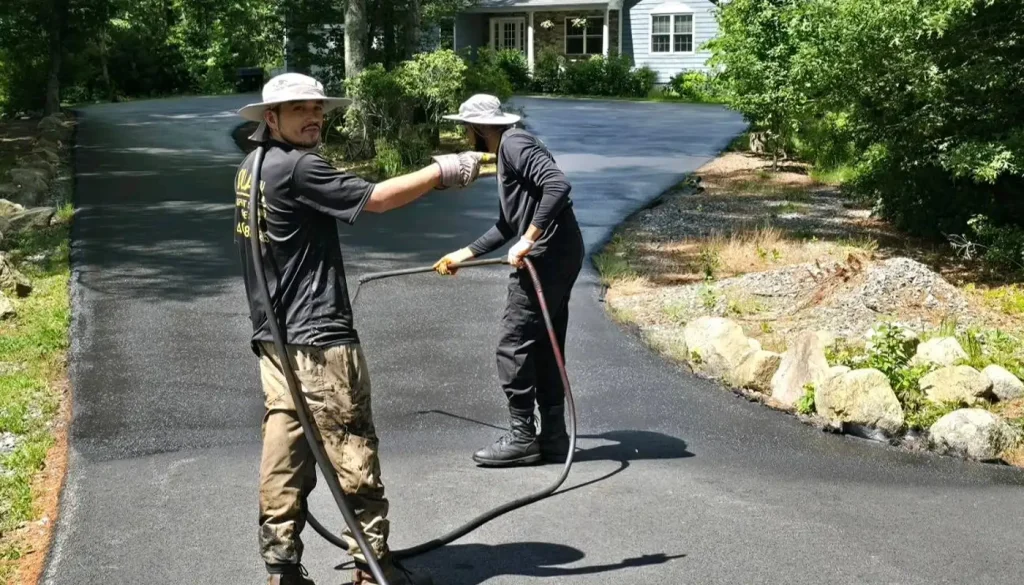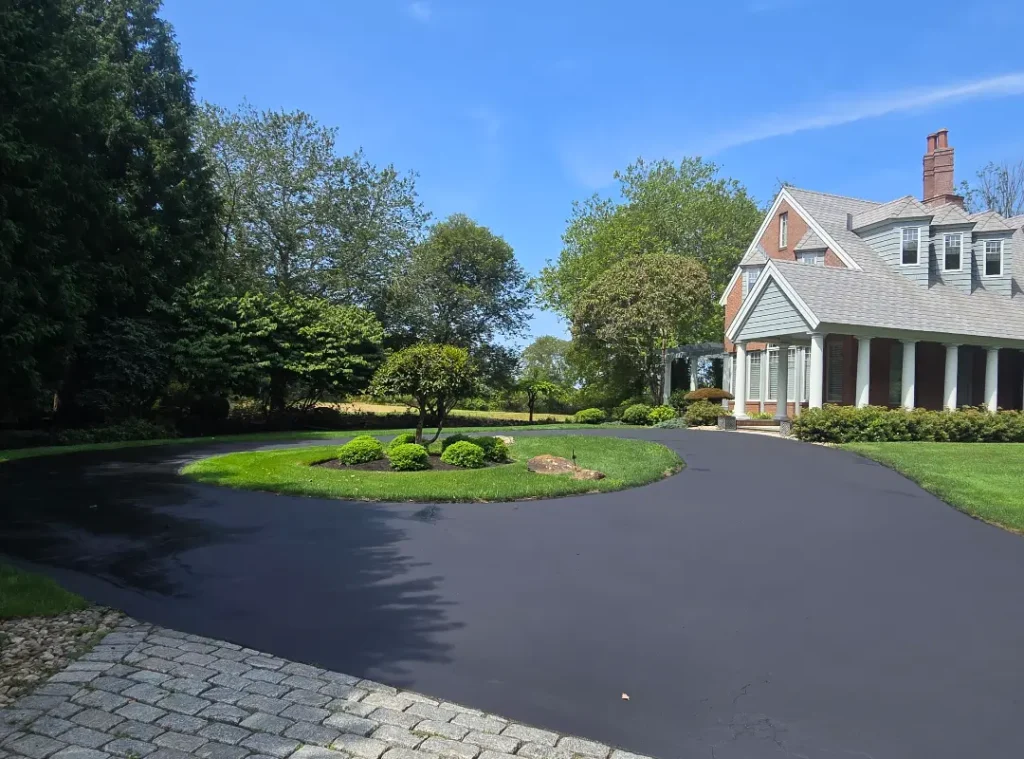
Yes — driveway sealcoating is absolutely worth the cost. For most Rhode Island homeowners, a professional sealcoat is one of the smartest and most affordable ways to protect your biggest investment. A new asphalt driveway can cost thousands of dollars to replace, but a routine sealcoat costs a fraction of that price. At Quality Asphalt Sealcoating, we’ve seen firsthand for over 23 years how a simple sealcoat can add years — even decades — to the life of a driveway.
What Is Asphalt Sealcoating and How Does It Work?
Asphalt sealcoating is a liquid coating that gets applied over the top of your driveway. Think of it like sunscreen for your pavement — it creates a protective layer between your asphalt and everything that tries to break it down. Once it dries, it acts as a tough, flexible barrier against rain, UV rays, motor oil, and road chemicals.
When asphalt is new, it looks rich and dark. But over time, the sun dries it out, water sneaks into small cracks, and the surface starts to turn gray and brittle. Sealcoating slows all of that down by sealing the surface and restoring that deep, dark finish. It fills in tiny surface pores before they become big, expensive problems.
At Quality Asphalt Sealcoating, we use premium asphalt emulsion sealants that are low-VOC and designed to hold up in New England’s tough climate. Our process includes a thorough surface cleaning, hot-applied rubberized crack filling, careful edging along lawns and walkways, and a professional sealcoat application that bonds tightly to your pavement.
The Real Cost of NOT Sealcoating Your Driveway
Skipping sealcoating might feel like saving money — but it almost always costs more in the long run. When asphalt isn’t protected, small cracks turn into big ones. Water gets in, freezes during a Rhode Island winter, and pushes the cracks wider. What started as a simple fix becomes a major repair job.
Here’s what happens when a driveway is left unprotected over time:
- Surface erosion — The top layer breaks down, turning gravelly and rough.
- Deep cracking — Small hairline cracks widen into alligator cracking that weakens the whole surface.
- Potholes — Once water gets under the asphalt and freezes, potholes can form fast.
- Fading and oxidation — UV rays dry out the binders in asphalt, making it gray and brittle.
- Full replacement costs — A neglected driveway may need to be torn out and replaced entirely, which can run several thousand dollars.
Regular asphalt sealcoating breaks this cycle. It stops minor damage from becoming major damage — and that’s where the real savings come from.
Why Rhode Island Weather Makes Sealcoating Even More Important
Rhode Island is tough on driveways. We get hot, humid summers that bake the asphalt, and then cold, icy winters that freeze and crack it. That constant back-and-forth between heat and cold is called freeze-thaw cycling, and it’s one of the biggest reasons driveways fail here faster than in warmer states.
Our Providence winters regularly dip below freezing, and when water gets trapped in even the smallest crack, it expands as it freezes. That expansion pushes the crack wider every single time it happens. By spring, what was a hairline crack can be a pothole. Driveway sealcoating RI homeowners rely on each year is specifically designed to close off those entry points before the cold weather hits.
Salt and sand from road treatment also do a number on unprotected asphalt. The chemicals in road salt are corrosive — they eat into the surface and weaken the binders that hold asphalt together. A good sealcoat acts as a sacrificial barrier, taking that abuse so your pavement doesn’t have to.
What Does the Professional Sealcoating Process Look Like?
A lot of homeowners have seen cheap, rushed sealcoat jobs — and unfortunately, those results never last. A professional job is a completely different experience. At Quality Asphalt Sealcoating, every project follows our proven five-step process to make sure the sealcoat bonds properly and lasts for years.
- Inspection — We look at the full condition of your driveway and identify cracks, damaged areas, and oil spots that need special treatment.
- Surface preparation — We use mechanical blowers, stiff brooms, and wire brushes to fully clean the surface. Any oil spots get treated with a primer so the sealcoat adheres properly.
- Crack treatment — We use industrial-grade, hot-applied rubberized crack filler heated to nearly 400°F. This isn’t the cold-pour product you find at a hardware store. Our hot-tar bonds directly to the asphalt sidewalls and creates a flexible, watertight seal that survives New England winters — not just weeks, but years.
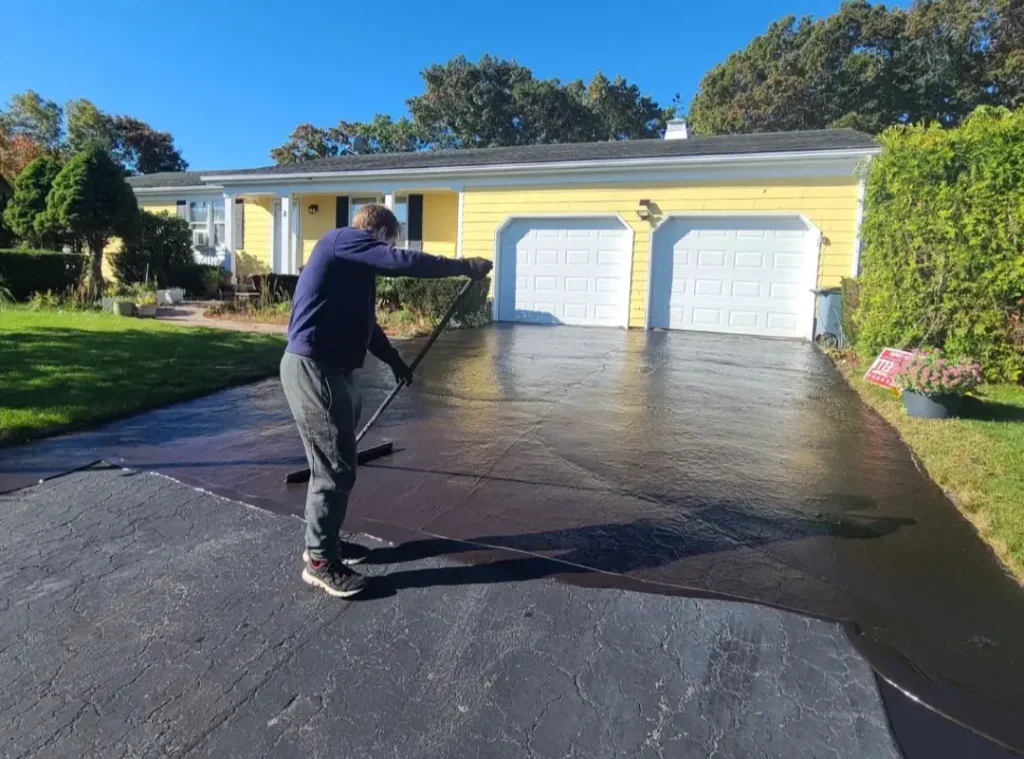
- Sealcoat application — We apply a premium asphalt emulsion coating using professional equipment for an even, consistent finish. Commercial jobs get a two-coat system for maximum protection.
- Cure time — We advise keeping foot traffic off for 4–8 hours and vehicles off for 24–48 hours to let the sealcoat cure properly.
The best time to sealcoat is during late spring through early autumn when temps are above 50°F, and no rain is in the forecast. That’s our peak season, and it books up fast across towns like Warwick, Cranston, Johnston, Providence, Smithfield, and beyond.
How Often Should You Sealcoat Your Driveway in Rhode Island?
For most Rhode Island driveways, sealcoating every two to three years is the right schedule. If your driveway gets heavy use, sits under lots of direct sunlight, or took a beating from a rough winter, you may want to sealcoat closer to every two years. A fresh driveway should wait at least 90 days before its first sealcoat to let the asphalt fully cure.
The good news is that when you stay on a regular schedule, each job is quicker and more affordable than the last — because there’s less damage to address. Think of it like regular oil changes for your car. The cost is small. The protection is big. Skipping it is what leads to the expensive repairs.
If you’re not sure where your driveway stands, the team at Quality Asphalt Sealcoating offers free, no-obligation estimates. We’ll take a look, give you an honest assessment, and let you know exactly what your driveway needs — no pressure, no upsells.
Sealcoating vs. Full Driveway Replacement: The Numbers Make Sense
The cost difference between routine sealcoating and full driveway replacement is dramatic. A full asphalt driveway tear-out and repave can run several thousand dollars depending on the size and condition of the surface. A professional sealcoat is a fraction of that price — and done on a regular schedule, it can push back that replacement date by many years.
Crack filling pairs perfectly with sealcoating for even more protection. Our hot-applied rubberized crack filler handles cracks up to about one inch wide, while our polymer-modified mastic material takes care of larger gaps, alligator cracking, and surface depressions that standard fillers can’t fix. Pairing crack filling with a sealcoat at the same visit is one of the most cost-effective things you can do for your driveway.
When you’re searching for sealcoating near me in Rhode Island, look for a contractor who uses hot-applied crack filler — not the soft cold-pour stuff that cracks right back open after one freeze. That’s the difference between a repair that lasts a season and one that lasts for years.
Why Choose Quality Asphalt Sealcoating for Your Driveway?
We’ve been protecting Rhode Island driveways and commercial parking lots for over 23 years. We’re a family-owned business based right here in Warwick, and we serve communities across the state — from Providence and North Providence to Johnston, Cranston, Coventry, Smithfield, North Kingstown, Cumberland, and many more. When you hire us, you’re not calling a big out-of-state company. You’re working with a neighbor who knows these roads and these winters.
We’re fully registered and insured, and every job comes with our commitment to honest, transparent pricing — no hidden fees, no surprises. Our free estimates let you know exactly what you’re getting before any work begins. Whether it’s a residential driveway, a commercial parking lot, or a sports court resurfacing, we bring the same level of care and quality to every project.
We also offer line striping for parking lots, ADA-compliant markings, pothole repair, and asphalt repair services — so if your pavement needs more than just a sealcoat, we can handle everything in one visit. For the 2026 season, we’re offering competitive pricing and booking up fast, so it’s a great time to reach out.
Conclusion: Sealcoating Is One of the Smartest Investments You Can Make
So, is driveway sealcoating in Rhode Island worth the cost? Without a doubt — yes. For a small investment made every couple of years, you get a driveway that looks great, holds up to harsh New England weather, and lasts years longer than one that goes unprotected. The alternative is spending dramatically more on pothole repairs, crack patching, or a full replacement down the road.
At Quality Asphalt Sealcoating, we’ve helped Rhode Island homeowners and business owners protect their pavement for more than 23 years. We use the best materials, follow a careful process on every job, and we treat your property like it’s our own. Whether you’re in Providence, Warwick, Johnston, Smithfield, or anywhere else across our Rhode Island service area, we’re ready to help.
Give us a call at 401-283-9815 or reach out online for your free, no-obligation estimate today. Don’t wait until the damage is done — the best time to protect your driveway is right now.
Frequently Asked Questions
How long does driveway sealcoating last in Rhode Island?
A professionally applied sealcoat typically lasts two to three years in Rhode Island, depending on the amount of traffic, sun exposure, and how hard the winter was. Driveways that get heavy use or a lot of direct sunlight may need attention closer to every two years. Staying on a regular schedule is the key — it keeps small issues from becoming big repairs and makes each future job faster and more affordable.
Can I sealcoat my driveway myself instead of hiring a pro?
DIY sealcoat kits are available at hardware stores, but they use cold-pour materials that don’t bond as well and often crack, peel, or wash out within a season. Professional contractors use hot-applied rubberized crack fillers and premium asphalt emulsion sealants — materials that genuinely stick to the pavement and flex with temperature changes. A proper surface cleaning and prep also makes a huge difference in how long the sealcoat lasts. For a job that actually protects your driveway and looks great, hiring an experienced local contractor is absolutely worth it.