Most outdoor pickleball courts need resurfacing every four to eight years. In Rhode Island, harsh winters and constant freeze-thaw cycles can push that number toward the shorter end of the range. The right timeline for your court depends on how often it gets used, how well the asphalt was built, and how well small repairs get handled along the way. At Quality Asphalt Sealcoating, we have spent over 23 years caring for asphalt surfaces across Rhode Island, including sports courts. Here is what to look for, and how to make your court last as long as possible.
How Often Should You Resurface a Pickleball Court?
The four to eight year range is a general guideline, not a fixed deadline. Whether your court belongs to a town park, an HOA, or a private club, some courts need attention sooner and some can wait longer, depending on a few key factors:
- How often the court gets used, since daily club play wears faster than casual games
- The quality of the original asphalt base and how well it drains water
- Local weather, since freeze-thaw cycles are hard on Rhode Island pavement
- How consistently cracks and small repairs get handled between projects
A court with a solid base and steady upkeep can often stretch toward the longer end of that window.
Signs Your Pickleball Court Needs Resurfacing
Watching for early warning signs helps you catch problems before they get worse. A few signs mean it is time to call for a resurfacing estimate:
- Cracks that keep spreading, especially ones shaped like a spiderweb
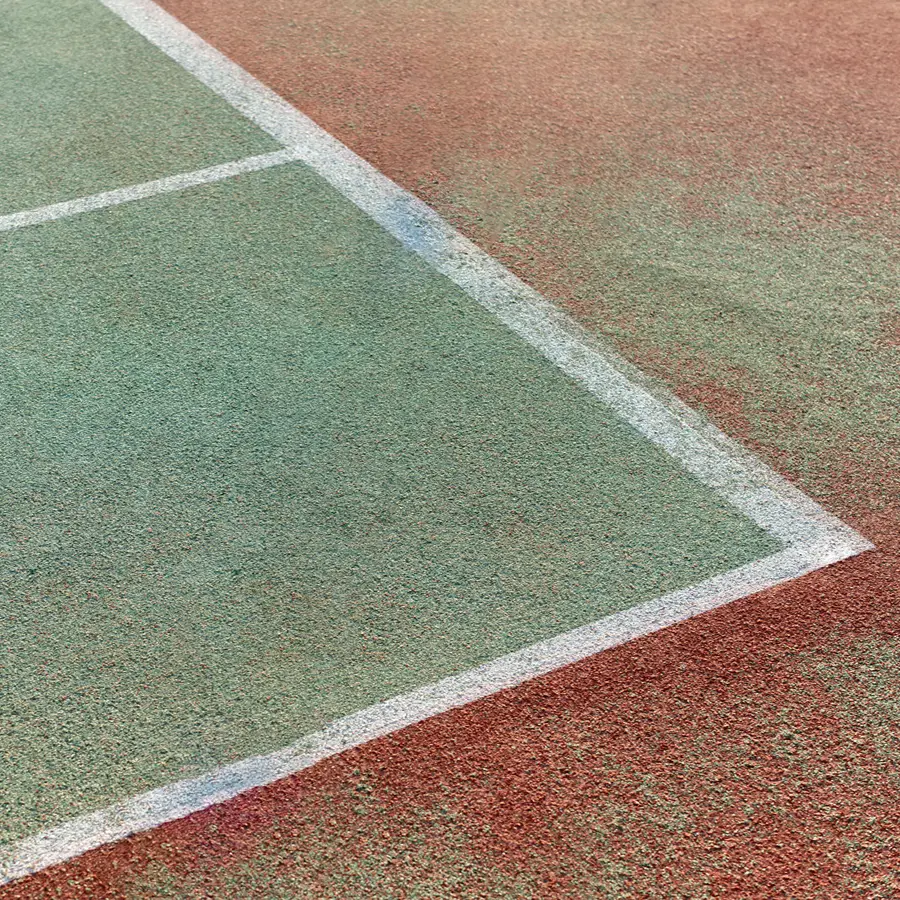
- Lines that are faded, chipped, or hard to see clearly
- Puddles or low spots that do not drain after it rains
- A rough or bumpy surface that changes how the ball bounces
Catching these signs early can save you from a bigger, more expensive repair down the road.
Why Rhode Island Weather Speeds Up Wear
Rhode Island’s cold winters are tough on any asphalt surface, and pickleball courts are no exception. Water seeps into tiny cracks, then freezes and expands, making those cracks bigger with every freeze-thaw cycle. Salt, sand, and plow damage near the edges of a court add to the wear over time. After more than 23 years working on driveways, parking lots, and sports courts across the state, we have seen firsthand how quickly small cracks turn into big problems when they get ignored. That experience helps us recommend the right fix instead of a bigger repair than you actually need.
How to Stretch the Time Between Resurfacing Jobs
Sealcoating and crack filling between resurfacing jobs go a long way toward protecting your investment. Sealcoating adds a protective layer that blocks water and sun damage, while regular crack filling stops small cracks from turning into big ones. Fresh line striping also keeps games fair and the court looking sharp, even when a full resurfacing job is not needed yet. At Quality Asphalt Sealcoating, we offer crack filling, sealcoating, and line striping throughout Rhode Island to help your court last as long as possible between major projects. Staying ahead of small repairs is almost always more affordable than waiting for a full resurfacing job.

Keep Your Court Playing Great
Knowing how often to resurface a pickleball court helps you plan ahead before small problems turn into safety hazards. Most Rhode Island courts need attention every four to eight years, but regular sealcoating, crack filling, and line striping can stretch that timeline and keep players safe in between. Our team has spent over 23 years caring for asphalt across Rhode Island, and we would be glad to take a look at your court. Contact Quality Asphalt Sealcoating today for a free estimate and honest advice about what your court actually needs.
Frequently Asked Questions
Do you resurface pickleball courts, or just driveways and parking lots?
We handle sports court resurfacing along with driveways and parking lots throughout Rhode Island. If your court just needs some upkeep instead of a full resurfacing job, we can also take care of crack filling, sealcoating, and line striping.
How much does it cost to resurface a pickleball court in Rhode Island?
Cost depends on the court’s size, its current condition, and how much repair work is needed before resurfacing. The best way to get an accurate number is a free, no obligation estimate from our team.