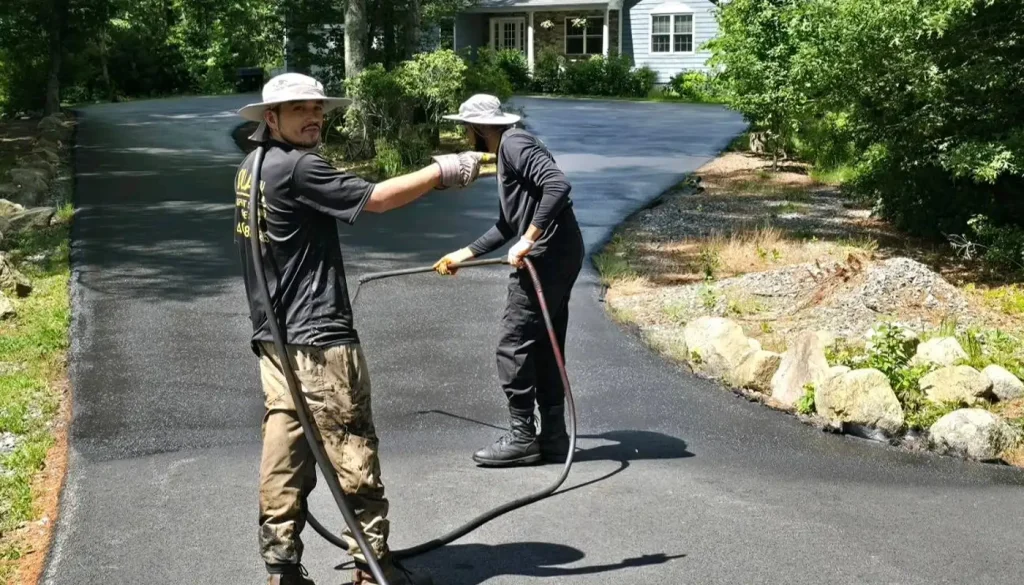
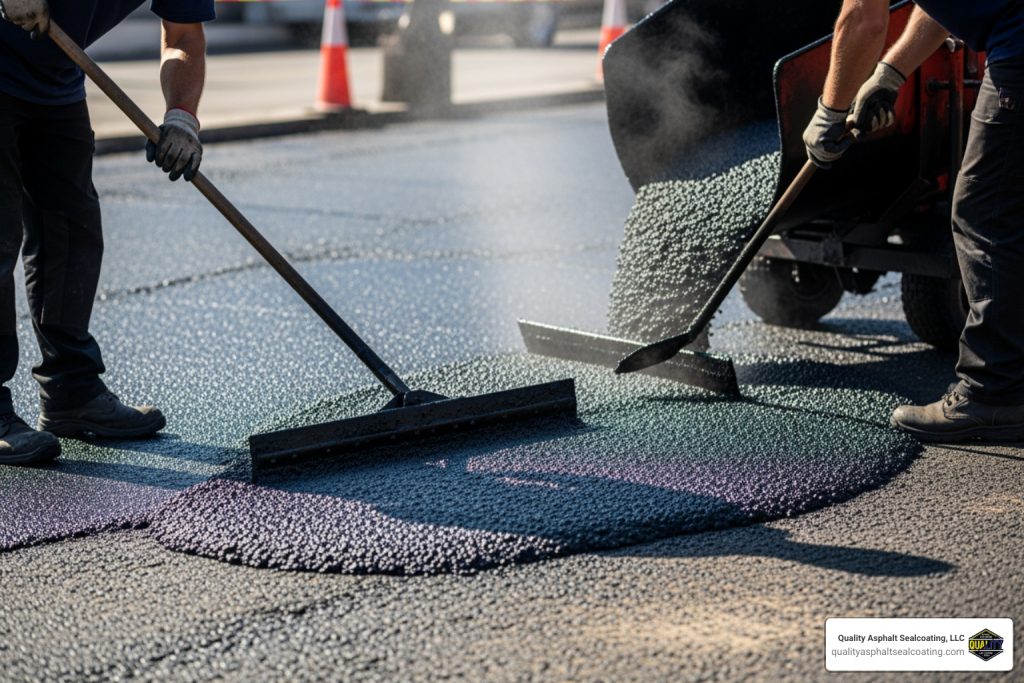
The Essential Role of Parking Lot Maintenance
When people visit your business or property, your parking lot is often the first thing they see. This is why consistent parking lot maintenance is so important. It’s about much more than just looking good.
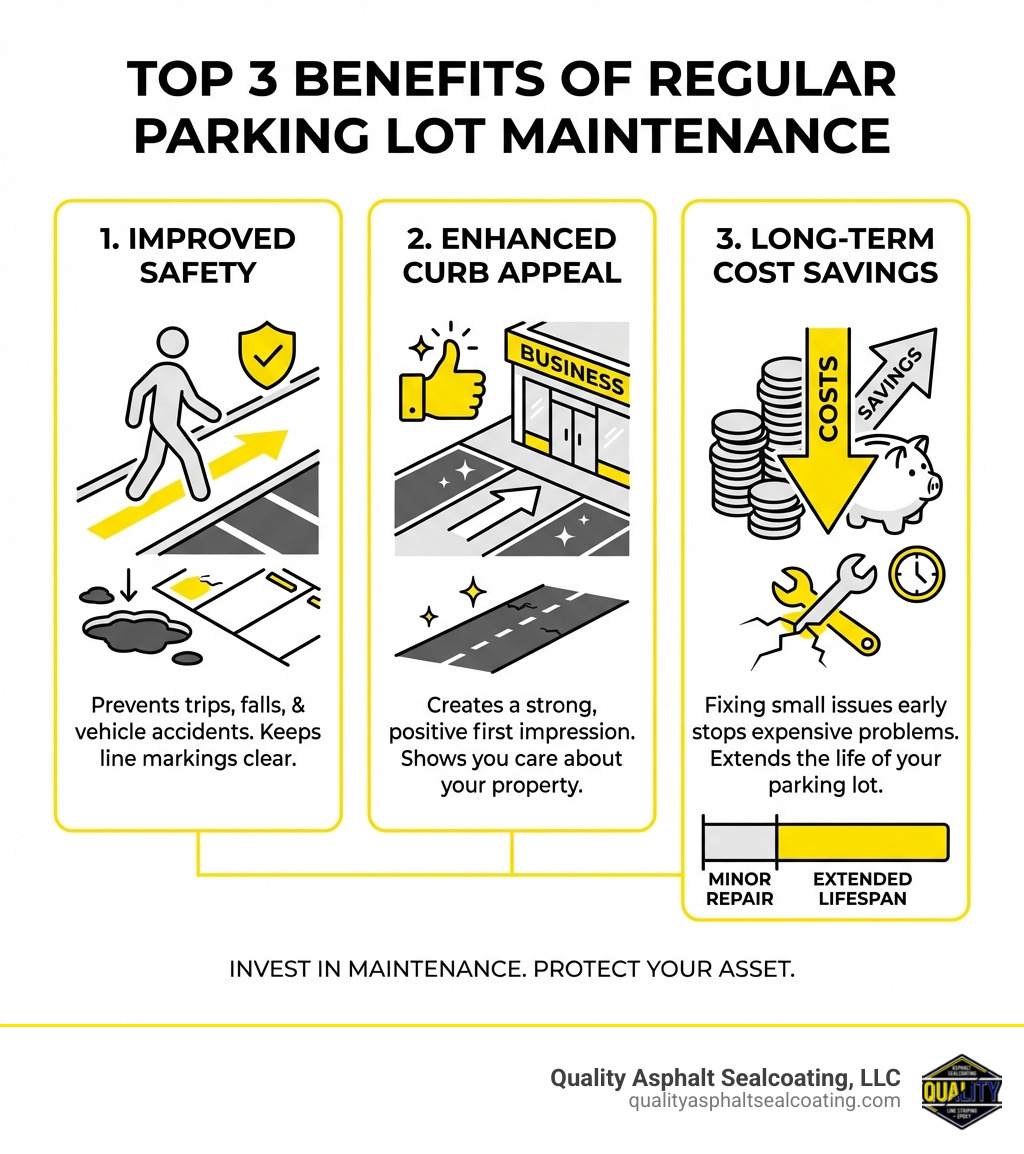
Here are the top benefits of taking care of your parking lot:
- Improved Safety: Regular maintenance fixes problems like cracks and potholes. It also keeps line markings clear. This helps prevent trips, falls, and vehicle accidents.
- Improved Curb Appeal: A clean and well-maintained parking lot creates a strong, positive first impression. It shows you care about your property and your visitors.
- Long-Term Cost Savings: Fixing small issues early stops them from becoming big, expensive problems. This extends the life of your parking lot and saves you money over time.
A well-kept parking area makes a strong statement. It tells visitors your business is professional and cares about their experience.
Most parking lots in the U.S. are made of asphalt—about 90% of all parking lots. While asphalt is tough, it still faces wear and tear from weather and traffic. Proper care extends its life and protects your investment.
The High Cost of Neglect vs. The Value of Upkeep
It’s tempting to put off parking lot maintenance, especially when budgets are tight. But as a family-owned Rhode Island business with over 23 years of experience, we’ve seen how neglecting your parking lot can quickly turn into a costly headache. It’s truly a case where an ounce of prevention is worth a pound of cure—or in this case, thousands of dollars in repairs!
A well-maintained parking lot offers several crucial benefits:
- Safety and Liability Reduction: Cracks, potholes, and faded line striping aren’t just eyesores; they’re potential hazards. They can cause trips and falls for pedestrians or damage vehicles, leading to costly liability claims. By addressing these issues promptly, we help you create a safer environment and minimize your risk. Optimal maintenance leads to fewer liabilities.
- Protecting Property Value: Your parking lot is a significant asset. Its condition directly impacts your property’s overall value and curb appeal. A pristine parking lot signals professionalism and attention to detail, enhancing your business image.
- Extending Pavement Life: Asphalt parking lots are designed to last between 20 and 40 years. However, a well-designed preventative parking lot maintenance program can extend your lot’s life well beyond its initial life expectancy—potentially up to 30 years or more with proper care. This means you get more out of your investment before a full replacement is needed.
Consider the financial implications: preventive maintenance, like sealcoating and crack filling, is significantly more affordable than major repairs. For example, resealing an 81,000 square foot parking lot costs about $0.19 per square foot, totaling around $15,000. This relatively small investment delays the need for much more expensive work.
What happens if you skip that resealing? Over the harsh Rhode Island winter, snow removal can scrape off the existing sealing. If the pavement isn’t resealed, it will crack faster than usual, eventually requiring resurfacing. Resurfacing that same 81,000 square foot lot, with a two-inch overlay, could cost about $1.60 per square foot, or nearly $130,000. That’s a huge difference!
By performing preventive maintenance, you’re not just maintaining; you’re investing in the longevity and cost-effectiveness of your property. It’s more affordable to maintain a lot than to replace it early. We’re here to help you protect your investment. More info about our services.
Common Parking Lot Problems and Professional Solutions
Asphalt is incredibly durable, but it’s not invincible. Its primary enemy? Water. Especially here in Rhode Island, the constant cycle of freezing and thawing is particularly destructive. Water seeps into tiny cracks, freezes, expands, and then thaws, leaving behind larger cracks and eventually potholes. This process can weaken the underlying sub-base, which is the foundation of your pavement, leading to serious structural issues.

How to Inspect Your Lot and Identify Damage
Regular inspections are the foundation of effective parking lot maintenance. Think of it as a health check-up for your asphalt. We recommend looking for these common issues:
- Alligator Cracking: This pattern of interconnected cracks resembles alligator skin and indicates significant damage to the asphalt’s surface and potentially the sub-base. It’s often a sign that water has penetrated and weakened the pavement.
- Potholes: These infamous craters form when water penetrates cracks, freezes, expands, and then dislodges pieces of asphalt. They pose a significant safety hazard and can cause vehicle damage.
- Raveling: This occurs when the aggregate (small stones) in the asphalt begins to loosen and separate from the binder, giving the surface a rough, grainy appearance. It’s a sign of wear and tear and can lead to further deterioration.
- Pooling Water: After a rain shower, observe if water collects in certain areas. Pooling water indicates poor drainage and can accelerate pavement damage.
- Faded Line Striping: Faint or invisible lines create confusion for drivers and pedestrians, leading to disorganization and potential accidents.
- Oil and Chemical Stains: These aren’t just unsightly; oil and fuel can chemically degrade asphalt, softening it and accelerating its deterioration.
Spotting these small issues early, perhaps during a routine walk-through, can prevent them from turning into bigger, more costly problems. For a comprehensive guide, you can refer to a Parking Lot Maintenance Checklist.
Addressing Cracks, Potholes, and Other Parking Lot Maintenance Issues
Once you’ve identified issues, it’s time for action. Our professional solutions target these problems directly:
- Crack Sealing and Crack Filling: This is arguably the most important maintenance precaution you can take. Cracks are future potholes, plain and simple. When water enters unsealed cracks, it works its way into the sub-base. In Rhode Island, that water then freezes and expands, causing more damage. Our process involves cleaning the cracks thoroughly to remove dirt and debris, then filling them with a high-quality asphalt crack filler. This seals out water, preserves the pavement, and can even act as expansion joints during temperature fluctuations. Properly filled cracks help prolong the life of your asphalt and are much more cost-effective than waiting for a full replacement. More info about our Crack Filling & Mastics Services.
- Asphalt Patching for Potholes: For potholes and significantly deep, sunken spots, we provide hot asphalt patching. This involves cleaning out loose debris and water, filling the area with suitable asphalt patching material (often hot-mix asphalt), and then compacting it firmly. The goal is to restore the integrity of your pavement, preventing further damage and costly repairs. We ensure the patched area is flush and level with the surrounding pavement for a smooth, safe surface.
- The Importance of Proper Drainage: Even the best asphalt won’t last if water isn’t managed properly. Pooling water is a menace, seeping into the pavement, damaging the surface, and speeding up the development of cracks and potholes. It can even lead to structural hazards. We implement solutions like grading and catch basin installation to direct water away from your pavement. Proper slope grading ensures water runs off efficiently, preventing blockages and sewer backups. These drainage solutions are crucial for the longevity and safety of your parking lot.
Issues like faded line striping are also critical for safety and organization. We offer expert line striping to keep your lot clear and compliant. More info about our Line Striping & Pothole Repair Services.
The Paving and Repaving Process Explained
Sometimes, your parking lot moves beyond routine repairs and needs a fresh start. This is typically when 25% to 35% or more of the total surface area has sustained damage, or if the sub-base is compromised. While a substantial financial investment, a professional repaving can give your property decades of renewed service.
The process for a new commercial parking lot or a complete repaving involves several meticulous steps:
- Site Assessment and Preparation: This initial stage involves a thorough evaluation of the existing lot and its sub-base. For a repaving, it includes the removal of old, damaged asphalt and other unusable material like concrete or organic matter. Excavation may go down up to a foot if we’re dealing with soft ground or stumps.
- Milling and Excavation (for Repaving): If the damage is extensive, we often mill (grind off) the top layers of asphalt or completely excavate the old pavement down to the sub-base. This allows us to address any underlying issues that caused the initial deterioration. Paving over existing asphalt is generally not a good idea if there are significant sub-base concerns, as cracks and sunken areas tend to reflect upward into the new layer.
- Installation of Base Gravel and Grading: An asphalt structure is only as good as what’s underneath it! This step involves installing and compacting a sturdy gravel underlayment, typically 4 to 6 inches of recycled asphalt product (R.A.P.), depending on conditions. Crucially, we carefully grade the surface to ensure proper pitch and water drainage. This foundational work prevents future pooling and structural issues.
- Applying a Binder and a Top Wear Coat: Once the base is solid, we apply hot mix asphalt in two lifts, or layers. The first is the “binder course,” which uses larger stone for greater strength and stability. The second is the “top coat,” a finer stone mix that provides a smooth, clean finished look and acts as the wear surface.
- Compaction and Finishing: Each layer of asphalt is thoroughly compacted using vibratory drum rollers and plate compactors. Without proper compaction, the asphalt won’t hold together and endure the seasons. We also hand-tamp the edges to a 45-degree angle for strength, and sawcut joints where the asphalt abuts other surfaces to ensure a flush, seamless transition.
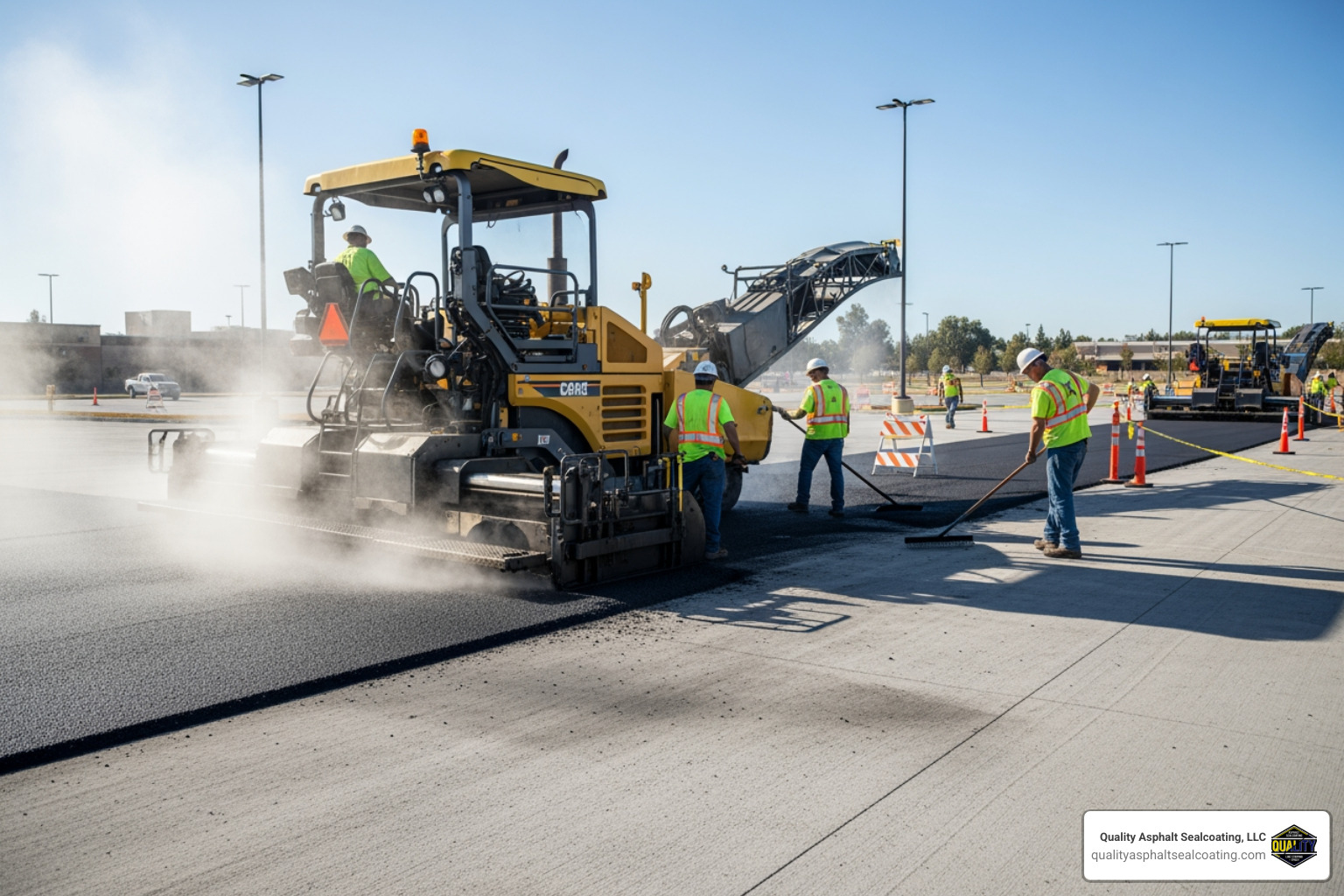
A newly paved commercial parking lot, especially here in New England, should last approximately 30 years with regular sealcoating. Every step of this process, done to industry standard practice, is critical for the durability and life expectancy of the pavement. We pride ourselves on the quality of our work, ensuring your investment stands the test of time. View our Recent Work.
Your Essential Parking Lot Maintenance Plan
Effective parking lot maintenance isn’t about waiting for problems to appear; it’s about being proactive. A proactive approach means identifying potential issues before they become major headaches, saving you money and extending the life of your asphalt. Creating a long-term strategy, rather than reacting to emergencies, is key to preserving your property’s value and safety.
While some basic tasks can be handled by general maintenance technicians, comprehensive parking lot maintenance often requires the specialized skills and equipment of professionals. Our experienced team at Quality Asphalt Sealcoating has the expertise to assess your lot, recommend the right solutions, and execute them with precision and quality. This ensures that your maintenance program is not just effective but also cost-efficient in the long run. More info about our Commercial Parking Lot Sealcoating.
A Recommended Timeline for Key Parking Lot Maintenance Tasks
To keep your parking lot in optimal condition, we recommend a consistent schedule for these key tasks:
- Sweeping (Monthly or Bi-Monthly): Regular sweeping removes dirt, gravel, leaves, and other debris that can accumulate. This not only keeps your lot looking clean and professional but also prevents debris from clogging drains and causing water damage. Sweeping should be done monthly or every other month, depending on traffic and debris accumulation.
- Crack Filling (Annually): We recommend professional crack filling at least once a year. This crucial step prevents water penetration, which is the leading cause of potholes and pavement failure, especially with Rhode Island’s freeze-thaw cycles. Filling cracks promptly extends the life of your asphalt significantly.
- Sealcoating (Every 2-3 Years): Sealcoating applies a protective layer that shields your asphalt from UV rays, water, and chemicals like oil and gas. For best results, we recommend sealcoating your parking lot at least every three years, or every two years for lots with heavy wear and tear. If your lot is new, the first sealcoating should ideally occur within three to six months of initial installation. A professional application can last anywhere from 2-5 years before needing re-application.
- Line Striping (Every 1-2 Years): Parking lot lines fade over time due to traffic and weather. Clear and visible line striping is essential for guiding motorists, maximizing parking spaces, and ensuring safety. We recommend repainting your parking lot lines every 1-2 years or whenever they start to fade. This also ensures compliance with ADA codes for accessible parking. More info about Re-Striping Your Parking Lot.
Adapting Your Strategy for Seasonal Weather
Rhode Island weather brings unique challenges to parking lot maintenance. Adapting your strategy seasonally is vital for year-round protection:
- Spring: Damage Assessment and Repair: After the harsh winter, spring is the perfect time for a thorough inspection. Look for new cracks, potholes, and areas of winter damage caused by the freeze-thaw cycle, de-icing salts, and snowplows. We address these promptly with crack filling and pothole repair. It’s also a great time for a deep clean and to assess your drainage systems.
- Summer: Sealcoating and Striping: Warmer, drier weather makes summer (or late spring/early fall) ideal for major projects like sealcoating and line striping. Sealers and paints require specific temperature ranges to cure properly. We typically schedule sealcoating between April and November, ensuring temperatures are consistently between 40-95 degrees Fahrenheit for optimal application and curing.
- Fall: Debris Removal and Drain Clearing: As leaves fall, regular sweeping becomes even more important. Decaying leaves can chemically damage asphalt surfaces if left to accumulate. This is also the time to ensure all catch basins and drainage systems are clear of debris, preparing them to handle winter’s rain and melting snow. Planning for winter maintenance, such as snow removal contracts, should also be done in the fall.
- Winter: Snow Removal and De-icing Strategies: Winter in Rhode Island puts parking surfaces to the test. Our winter strategy focuses on safety and minimizing pavement damage. We recommend using liquid anti-icing agents before snow storms to prevent snow and ice from bonding to the pavement, which can be more effective and use less material than de-icing after the fact. Prompt snow removal is critical to prevent compaction and ice buildup. When de-icing, it’s important to minimize salt usage, as salt is only effective above 15 degrees Fahrenheit and can pollute waterways. We advise using alternative de-icers for colder temperatures and always plowing before applying de-icers to reduce material usage.
For a more detailed seasonal breakdown, check out this Parking Lot Maintenance Checklist by Season.
Frequently Asked Questions about Parking Lot Care
We get a lot of great questions from property owners and managers about how to best care for their asphalt. Here are some of the most common ones:
How long does a newly sealed parking lot need to cure?
Patience is a virtue, especially after sealcoating! While the surface may appear dry quickly, the sealer needs time to fully harden and bond. We recommend waiting a full 24-48 hours before allowing vehicle traffic back onto your newly sealed asphalt. This allows the product to set properly and prevents tire marks or scuffing. For the sealer to achieve its maximum durability and full cure, it generally takes about 2-3 weeks. Factors like humidity, sun exposure, wind speed, and ambient temperature all play a role in how quickly the sealer cures. We carefully consider these conditions when scheduling your project here in Rhode Island to ensure the best possible results.
What is the difference between sealcoating and an asphalt overlay?
This is a common point of confusion, but they serve very different purposes:
- Sealcoating: Think of sealcoating as a protective “sunscreen” and “raincoat” for your asphalt. It’s a thin, liquid layer applied to the surface to guard against damaging UV rays, water penetration, and chemical spills (like oil and gas). It refreshs the asphalt’s appearance, restoring its rich black color, and extends its lifespan by preventing oxidation and surface deterioration. It’s a preventive maintenance measure for healthy pavement.
- Asphalt Overlay (Resurfacing): An overlay, also known as resurfacing, is a more significant repair. It involves applying a new layer—typically 1.5 to 2 inches thick—of hot-mix asphalt over the existing pavement. This is done when the underlying structure is still sound, but the surface has extensive cracking, raveling, or other damage that sealcoating can’t fix. It essentially gives your parking lot a fresh, new driving surface without a complete reconstruction.
While sealcoating protects the surface, an overlay addresses more significant structural or surface integrity issues.
Why is professional line striping so important?
Professional line striping is far more than just painting lines; it’s critical for the safety, efficiency, and aesthetics of your parking lot. Here’s why:
- Safety: Clear, bright lines guide drivers and pedestrians, preventing accidents, especially in busy lots. They delineate parking spaces, directional arrows, fire lanes, and crosswalks, reducing confusion and improving traffic flow. Faded lines can lead to chaos and increase the risk of collisions.
- Maximizing Space and Efficiency: Well-planned and precisely executed striping ensures that you’re making the most of your available parking area. It optimizes the number of parking spots and helps traffic move smoothly in and out of the lot.
- ADA Compliance: Professional line striping ensures your parking lot complies with the Americans with Disabilities Act (ADA) regulations. This includes properly marking accessible parking spaces, access aisles, and van-accessible areas, which is a legal requirement and crucial for inclusivity.
- Professional Appearance: Crisp, vibrant lines improve your property’s curb appeal, reinforcing a positive first impression for your customers and visitors.
We use high-quality, durable, and reflective paints, combined with precise layouts, to achieve optimal results that last.
Protect Your Investment with Professional Maintenance
Your parking lot is a valuable asset and often the first impression your business makes. Investing in regular, professional parking lot maintenance is the smartest decision you can make for its longevity, safety, and aesthetic appeal. By addressing issues proactively—from crack filling and sealcoating to line striping and proper drainage—you not only improve safety and improve curb appeal but also achieve significant long-term cost savings, avoiding much more expensive repairs or premature replacement.
A proactive maintenance plan is truly the best defense against costly repairs and unexpected headaches. For property owners in Rhode Island seeking expert care, the experienced team at Quality Asphalt Sealcoating, LLC is here to help. With over 23 years of experience, we are a family-owned business specializing in residential and commercial sealcoating, crack filling, pothole repair, and line striping, using top-quality materials for lasting results. Let us help you protect your investment and keep your parking lot in top shape. Learn more about our professional asphalt maintenance services.