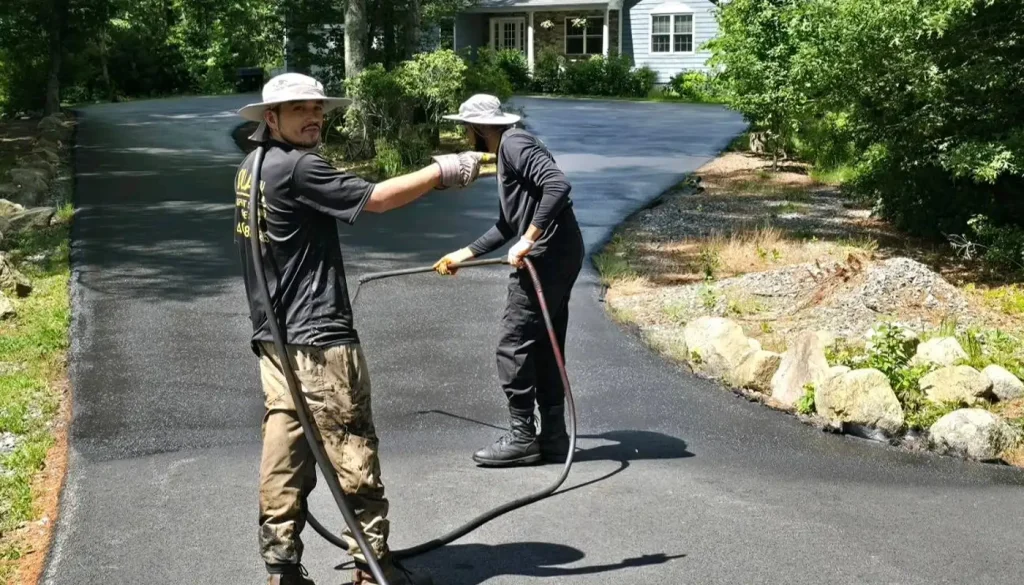
Why Your Asphalt Deserves Better Than a Quick Fix
Sealcoating near me is one of the most searched terms by property owners looking to protect their asphalt investment—and for good reason. Whether you’re staring at a faded driveway or managing a cracked parking lot, finding the right professional can mean the difference between years of protection and wasted money.
Quick Answer: What to Look for in a Local Sealcoating Pro
- Experience: Look for companies with 15+ years in business (many top-rated pros have 20-30 years)
- Credentials: Verify BBB accreditation and A+ ratings, plus proper licensing and insurance
- Process: Ensure they clean, fill cracks, and apply by hand (not just spray)
- Materials: Ask about coal tar emulsion or asphalt-based sealers that meet industry standards
- Guarantee: Reputable contractors offer 1-3 year warranties on their work
- Pricing: Expect $339+ for residential driveways; beware of quotes that seem too good to be true
Your asphalt surfaces face a daily beating from UV rays, water, oil spills, and temperature swings. Without protection, that $4,000-$15,000 driveway or parking lot will crack, fade, and crumble—forcing you into expensive repairs or full replacement. Sealcoating acts as a shield, extending your pavement’s life by years while keeping it looking sharp.
But here’s the catch: not all sealcoating pros deliver the same results. Some rush the prep work. Others use watered-down materials. A few skip crucial steps like crack filling entirely. The research shows that homeowners who choose carefully—asking the right questions and checking credentials—end up with driveways that look “like glass” and last for years. Those who don’t? They’re back searching for help within months.
This guide will walk you through exactly what professional sealcoating involves, how to spot a quality contractor in your area, and what questions to ask before signing anything. Whether you’re protecting a residential driveway or maintaining a commercial lot, you’ll know how to pick a pro who’ll do it right the first time.
Understanding Sealcoating: The What, Why, and When
This section covers the fundamentals of asphalt sealcoating, explaining its purpose, benefits, and the key indicators that your pavement is ready for this essential maintenance. As a family-owned Rhode Island business with over 23 years of experience, we at Quality Asphalt Sealcoating, LLC have seen the transformative power of a well-applied sealcoat.
What is Sealcoating and Why is it Essential?
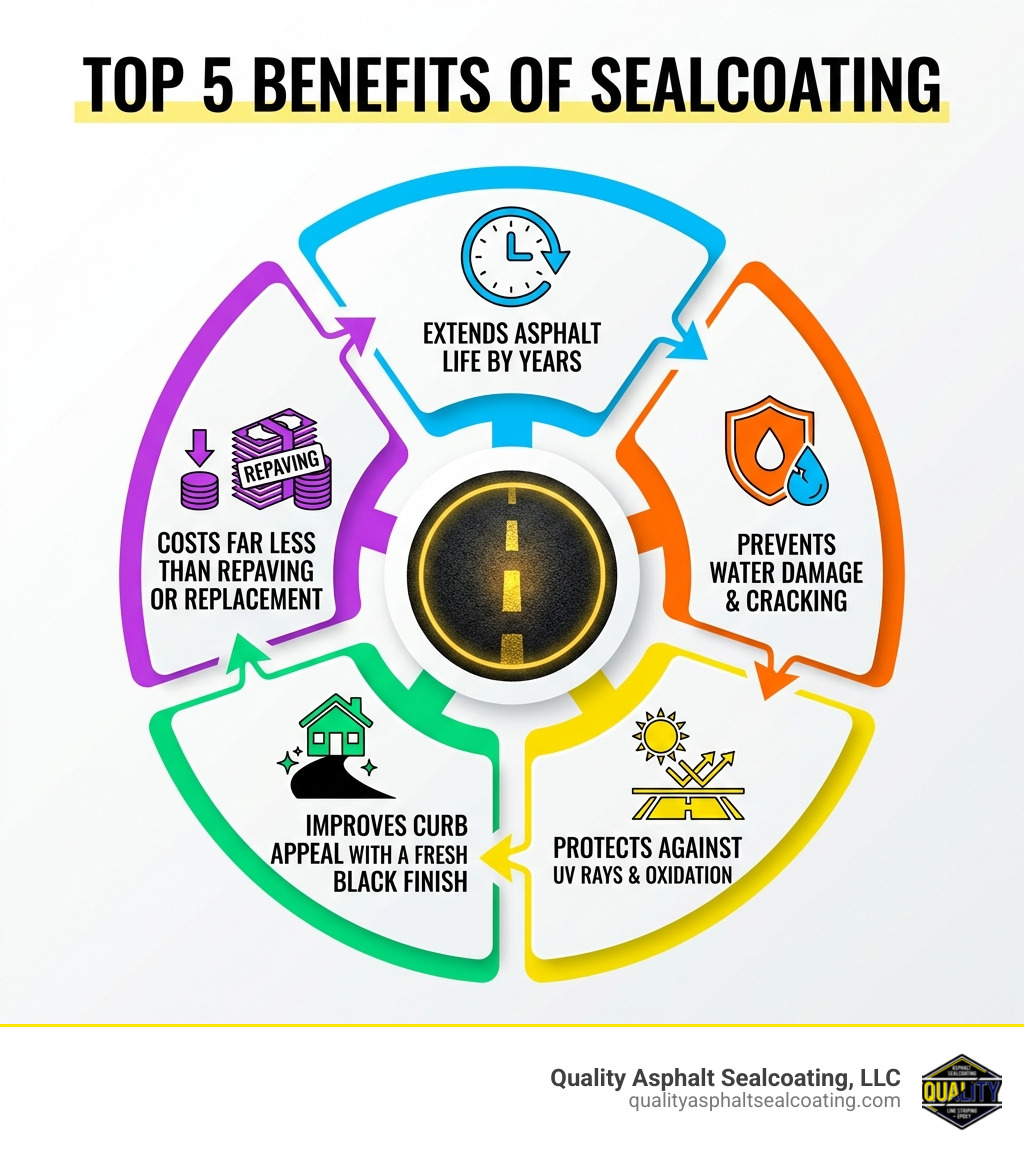
At its core, sealcoating is the application of a protective liquid layer over your asphalt surface—think of it as sunscreen and a raincoat combined. This specialized coating acts as a barrier, shielding your asphalt from deterioration. In Rhode Island, our asphalt endures harsh weather, from summer sun to freezing winters. Without protection, your asphalt is vulnerable to:
- Oxidation: The sun’s UV rays turn the surface gray and brittle. Sealcoating blocks these harmful rays.
- Water Damage: Water seeps into pores, freezes, and expands, creating cracks and potholes. Sealcoating waterproofs the surface.
- Chemical Spills: Oil and gasoline can dissolve asphalt. A sealcoat provides a resistant layer against these common spills.
- Wear and Tear: Daily traffic grinds down the surface. Sealcoating adds a layer of durability.
Beyond protection, sealcoating dramatically improves curb appeal with a rich, black finish, increasing property value. It’s a remarkably cost-effective maintenance solution compared to expensive repairs or a full asphalt replacement.
Key Signs Your Asphalt Needs Sealcoating
How do you know if your asphalt is crying out for a fresh coat? Catching these signs early can save you significant repair costs.
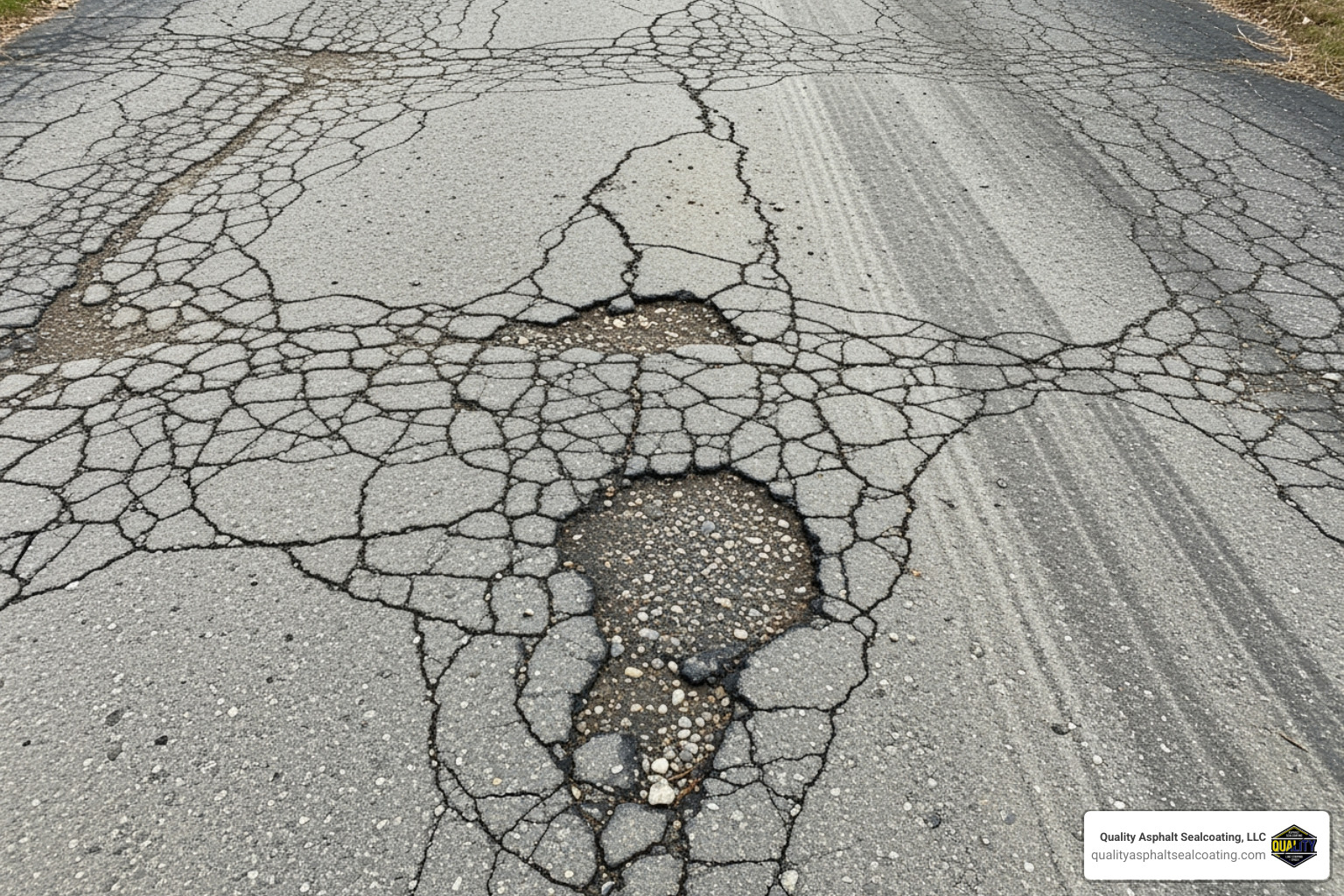
Here are the key indicators we look for:
- Faded Gray Color: If your once-black asphalt is now a dull gray, it’s a clear sign of oxidation. The binder is drying out, making the surface brittle.
- Small Cracks (Alligatoring): These interconnected cracks signal surface fatigue from water and stress. They must be properly filled before sealcoating to prevent them from worsening.
- Surface Raveling: If you see loose stones on the surface, the aggregate is separating from the binder due to severe oxidation and wear.
- Stains from Chemicals: Persistent oil or gas spots not only look bad but also soften the asphalt. Sealcoating can cover these after proper treatment and prevent future stains.
- Potholes Forming: Small depressions or crumbling edges are red flags indicating water penetration. These areas must be patched before sealcoating.
If you’re noticing any of these signs on your Rhode Island property, it’s likely time to consider professional sealcoating. Don’t wait until these issues become major headaches!
How Often Should You Sealcoat and What’s the Lifespan?
This is one of the most common questions we get. Generally, we recommend sealcoating every one to three years. A professionally applied sealcoat typically lasts 2-3 years, but this isn’t a hard rule. The ideal frequency depends on:
- Traffic Volume: A residential driveway will hold its sealcoat longer than a busy commercial parking lot.
- Weather Conditions: Rhode Island’s freeze-thaw cycles, rain, and snow put more stress on asphalt, potentially shortening the sealcoat’s lifespan.
- Sun Exposure: Surfaces in constant, direct sunlight will oxidize faster.
- Initial Asphalt Condition: The quality of the initial installation and the amount of prep work needed significantly impact durability.
- Quality of Materials and Application: Using top-quality materials and applying them correctly ensures maximum longevity for your sealcoat.
We assess each property individually to recommend the optimal sealcoating schedule, ensuring your investment is protected.
The Professional Sealcoating Process from Start to Finish
A professional sealcoating job involves more than just applying sealer. Learn the critical steps contractors take to ensure a durable, long-lasting finish for your driveway or parking lot. At Quality Asphalt Sealcoating, LLC, we pride ourselves on our meticulous process, honed over 23 years, to deliver superior results for our Rhode Island customers.
Step 1: Surface Preparation is Key
Imagine painting a dirty, peeling wall – the new paint wouldn’t stick. The same principle applies to sealcoating, which is why surface preparation is the most important stage for adhesion and durability.

Our comprehensive preparation process includes:
- Thorough Cleaning: We use power washing, sweeping, and wire brushes to remove all dirt, debris, and grime to ensure maximum sealer adhesion.
- Crack Filling: Unfilled cracks let water in, causing major damage. We use hot rubberized crack filler to seal these vulnerable points, preventing the freeze-thaw cycle from creating potholes.
- Pothole Repair: Any existing potholes must be properly patched before sealcoating to restore a stable, smooth surface.
- Oil Spot Treatment: We treat oil and gas stains with specialized primers to ensure the sealer bonds effectively and prevents peeling.
Meticulous preparation ensures the sealcoat bonds perfectly. If a contractor skimps on prep, the job will fail prematurely. For more detailed information on proper surface preparation, you can Learn about surface preparation from PWNA.
Step 2: Application and Ideal Conditions
Once the surface is clean, dry, and repaired, we apply the sealcoat. The method and weather conditions are crucial for a successful finish.
Application Methods:
- Brush/Squeegee Application: This is our preferred method for most residential and detailed commercial work. Applying by hand ensures a neat, uniform coat with precise edges and no overspray.
- Spray Application: This method is efficient for large, open commercial lots but requires a skilled operator to ensure even coverage.
Ideal Weather Conditions:
Timing is everything. We always aim for:
- Temperature: 50°F and rising for proper curing.
- No Rain Forecast: At least 24-48 hours of dry weather is needed after application. Rain can wash away uncured sealer.
- Low Humidity & Dry Surface: High humidity slows drying, and the asphalt itself must be completely dry for proper adhesion.
By adhering to these strict conditions, we ensure the sealcoat cures correctly, providing maximum protection.
Step 3: Drying, Curing, and Returning to Use
You’ve done the hard part – now comes the waiting game. Rushing this stage can undo all the good work.
- Drying Time for Foot Traffic: You can typically walk on a freshly sealcoated surface within 24 hours. We often use caution tape to protect the area.
- Curing Time for Vehicles: This is the most crucial period. We recommend waiting a full 48 to 72 hours before driving or parking on the asphalt. Driving on it too soon can cause tire marks and scuffs.
- Full Cure Process: The sealcoat continues to harden over several weeks. During this time, it’s wise to avoid parking in the same spot for prolonged periods on very hot days.
We’ll always provide clear instructions on when you can safely resume use of your driveway or parking lot. Following these guidelines ensures your investment achieves maximum durability. For more tips on maintaining your asphalt, be sure to Read our blog for more tips.
Finding the Best “Sealcoating Near Me”: A Contractor Vetting Guide
Searching for “sealcoating near me” yields many results. This guide will help you ask the right questions and choose a reputable pro who will protect your investment, especially here in Rhode Island where quality matters.
Comparing Sealcoating and Other Asphalt Maintenance Options
It’s easy to get confused by the different terms used in asphalt maintenance. While sealcoating is a fantastic preventative measure, it’s important to understand how it differs from other services like crack filling and patching.
|
|
|
|
|
|---|---|---|---|---|
|
|
|
|
|
|
|
|
|
|
|
|
|
|
|
Sealcoating is a proactive maintenance service that shields your pavement from damage. Crack Filling addresses existing cracks with hot rubberized filler to stop water intrusion. Patching is a repair service that restores structural integrity by fixing potholes. A comprehensive plan often involves all three: patching, filling cracks, and then applying a sealcoat to protect the entire surface. To learn more about how we can help with your specific needs, Explore our driveway sealcoating services.
Questions to Ask a Potential “Sealcoating Near Me” Contractor
When you’re looking for professional sealcoating services in Rhode Island, asking the right questions helps separate the true professionals from the fly-by-night operators. Here’s what we recommend asking:
- How many years of experience do you have? Look for established companies with 15-20+ years of experience, like our 23 years at Quality Asphalt Sealcoating, LLC.
- Are you licensed, bonded, and insured? This is non-negotiable for your protection against accidents or incomplete work.
- What type of sealcoating materials do you use? A pro can explain their choice of high-quality, durable materials that meet industry standards.
- Can you walk me through your preparation process? They should detail their cleaning, hot-rubber crack filling, and oil spot treatment steps. Vague answers are a red flag.
- Do you offer a guarantee or warranty on your work? Reputable companies stand behind their work, often with a 1-year guarantee.
- Can you provide references or reviews? Check for positive reviews and a high BBB rating (like an A+). You can Check for BBB Accredited businesses in your area (just be sure to search for Rhode Island specifically!).
- What is your cleanup process? A professional crew leaves your property tidy, with no sealer splatters on surrounding surfaces.
- Do you give free estimates? Most reputable companies offer free, no-obligation estimates.
By asking these questions, you’ll be well-equipped to choose a qualified and trustworthy professional.
Understanding Sealcoating Costs and Why to Hire a Pro
Let’s talk numbers and the age-old question: DIY or professional? While the allure of a cheap bucket of sealer from the hardware store might be strong, professional sealcoating is a superior investment.
Cost Factors for Professional Sealcoating:
The cost of sealcoating is influenced by:
- Square Footage: Larger driveways or parking lots will cost more.
- Amount of Prep Work and Repairs: Extensive crack filling or patching will increase the overall price.
- Type of Sealer Used: Higher quality, more durable sealers might have a higher upfront cost but offer better longevity.
- Number of Coats: Two coats are standard for optimal results.
DIY Pitfalls vs. Professional Benefits:
DIY often leads to disappointment and wasted effort.
- DIY Pitfalls: Splotchy application, improper prep, inferior materials, and a short lifespan are common issues. It’s also messy and can damage surrounding areas.
- Professional Benefits: With over 23 years in the business, we bring expertise, commercial-grade equipment, and top-quality materials for a smooth, durable finish. A professional job looks better, lasts longer, often comes with a guarantee, and saves you valuable time.
Hiring a professional for your sealcoating needs is an investment in your property’s longevity and appearance. This is especially true for larger areas; to learn more about how we handle bigger projects, Learn about commercial parking lot sealcoating.
Frequently Asked Questions about Asphalt Sealcoating
Get quick answers to some of the most common questions homeowners and property managers have about the sealcoating process and materials.
What are the different types of sealcoating products?
When it comes to sealcoating, not all products are created equal. The type of sealer used can significantly impact the durability and appearance of your asphalt.
- Asphalt-Based Emulsion Sealers: These are water-based products made from petroleum asphalt. They are generally considered more environmentally friendly, provide good protection against water and oxidation, and restore the rich black color of asphalt. They are a popular choice for residential and many commercial applications.
- Coal Tar Emulsion Sealers: Historically, these have been known for exceptional durability and resistance to chemicals like oil and gasoline. They provide a very hard surface, making them a strong choice for high-traffic commercial areas. However, there are ongoing discussions about their environmental impact.
- Acrylic Sealers: Less common for general asphalt sealcoating, these are primarily used for decorative purposes or for protecting concrete. They are generally not as durable for heavy traffic as asphalt or coal tar emulsions.
Pros and Cons Summary:
- Asphalt-Based: Pros: Eco-friendlier, great color, good protection. Cons: Slightly less resistant to oil/gas than coal tar.
- Coal Tar: Pros: Superior durability and chemical resistance. Cons: Environmental/health concerns, stronger odor.
- Acrylic: Pros: Wide color range. Cons: Less durable for asphalt, more expensive.
At Quality Asphalt Sealcoating, LLC, we carefully select top-quality materials that balance performance and longevity for your Rhode Island property.
Can sealcoating fix cracks and potholes?
This is a crucial distinction, and the short answer is no, sealcoating itself cannot fix cracks or potholes. Think of sealcoating as the finishing coat of paint on a house. It’s a surface treatment designed to protect and beautify an already sound asphalt base.
- Crack Filling is a Separate Step: Before any sealcoat is applied, all existing cracks must be properly cleaned and filled with hot rubberized crack filler. This creates a waterproof seal that prevents moisture from getting into the sub-base, which is the primary cause of asphalt failure.
- Pothole Repair is a Separate Step: Potholes indicate a more severe structural failure. These areas must be cut out, the base repaired, and new asphalt patched in before sealcoating.
A professional sealcoating job always includes thorough crack filling and pothole repair as part of the preparation process. Without these essential steps, the sealcoat will fail quickly. It’s all part of a comprehensive asphalt maintenance strategy. For a deeper dive into maintaining your paved surfaces, check out The Complete Guide to Parking Lot Maintenance.
Will sealcoating make my driveway slippery?
It’s a valid concern, especially in our Rhode Island climate where wet conditions are common. Here’s what you should know:
- Initial Slickness: Immediately after application, a freshly sealcoated surface can be slick, which is why we advise against traffic for 24-72 hours.
- Sand Additives for Traction: Reputable professionals like us incorporate fine sand into the sealcoat mixture. This sand acts as an aggregate, providing a textured surface that significantly increases traction once the sealcoat has cured.
- Improved Safety Once Cured: Once fully cured, a properly sealcoated surface with sand additives is generally less slippery than unsealed, worn asphalt. The fresh, slightly textured surface provides better grip.
So, while there’s a brief period of caution required, a professional sealcoating job is designed to be safe for both pedestrians and vehicles once it has fully cured.
Conclusion: Protect Your Pavement and Boost Your Property Value
Sealcoating is a smart, cost-effective investment in your property’s longevity and curb appeal. By choosing a qualified professional, you ensure the job is done right, providing a durable, attractive finish that lasts. For homeowners in Rhode Island, Quality Asphalt Sealcoating, LLC offers over 23 years of family-owned experience and a commitment to top-quality results. Get a free estimate on our professional sealcoating services today!