That Pothole in Your Driveway Is Costing You More Than You Think
Asphalt driveway pothole filling is the process of cleaning out a damaged area in your driveway, then packing it with a repair material (like cold patch or hot mix asphalt) to restore a smooth, safe surface.
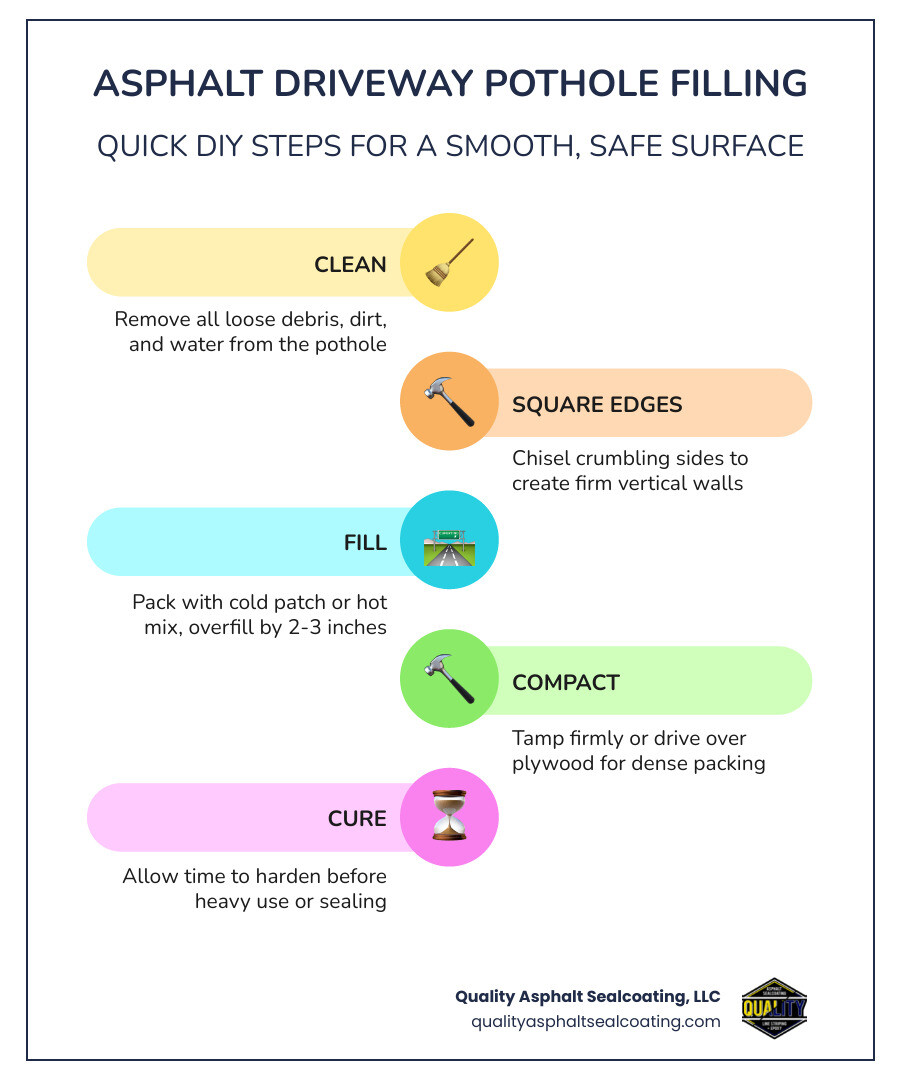
Quick answer — here’s how to fill an asphalt driveway pothole:
- Clean the hole — remove all loose debris, dirt, and water
- Square the edges — chisel out crumbling sides to create vertical walls
- Fill with cold patch or hot mix asphalt, overfilling by about 2-3 inches
- Compact firmly using a tamper, or place plywood over the patch and drive over it
- Let it cure before sealing — cold patch needs time to fully harden
That bump you feel every time you pull into your driveway? It’s not just annoying. Potholes can damage your vehicle’s tires and suspension, create tripping hazards, and — left untreated — spread into much larger, more expensive problems.
The good news: many driveway potholes are a straightforward DIY fix. With the right materials and a few basic tools, you can get a long-lasting repair done in under an hour.
This guide walks you through exactly what to buy, what to do, and when to call in a pro instead.
Why Potholes Form in Your Driveway
To stop the bump, we first have to understand why it’s there. In our 23+ years of experience serving Rhode Island, we’ve seen that potholes rarely appear overnight. They are usually the “final stage” of driveway neglect.
The Freeze-Thaw Cycle: Rhode Island’s Pavement Enemy
In the Northeast, our biggest challenge is the weather. Potholes often start as tiny, hairline cracks. When it rains or snows, water seeps into these cracks and settles into the gravel base underneath. When temperatures drop, that water freezes and expands, pushing the asphalt upward. When it thaws, a void is left behind. As cars drive over that weakened, hollow spot, the asphalt collapses. That is the birth of a pothole.
Alligator Cracking and Structural Failure
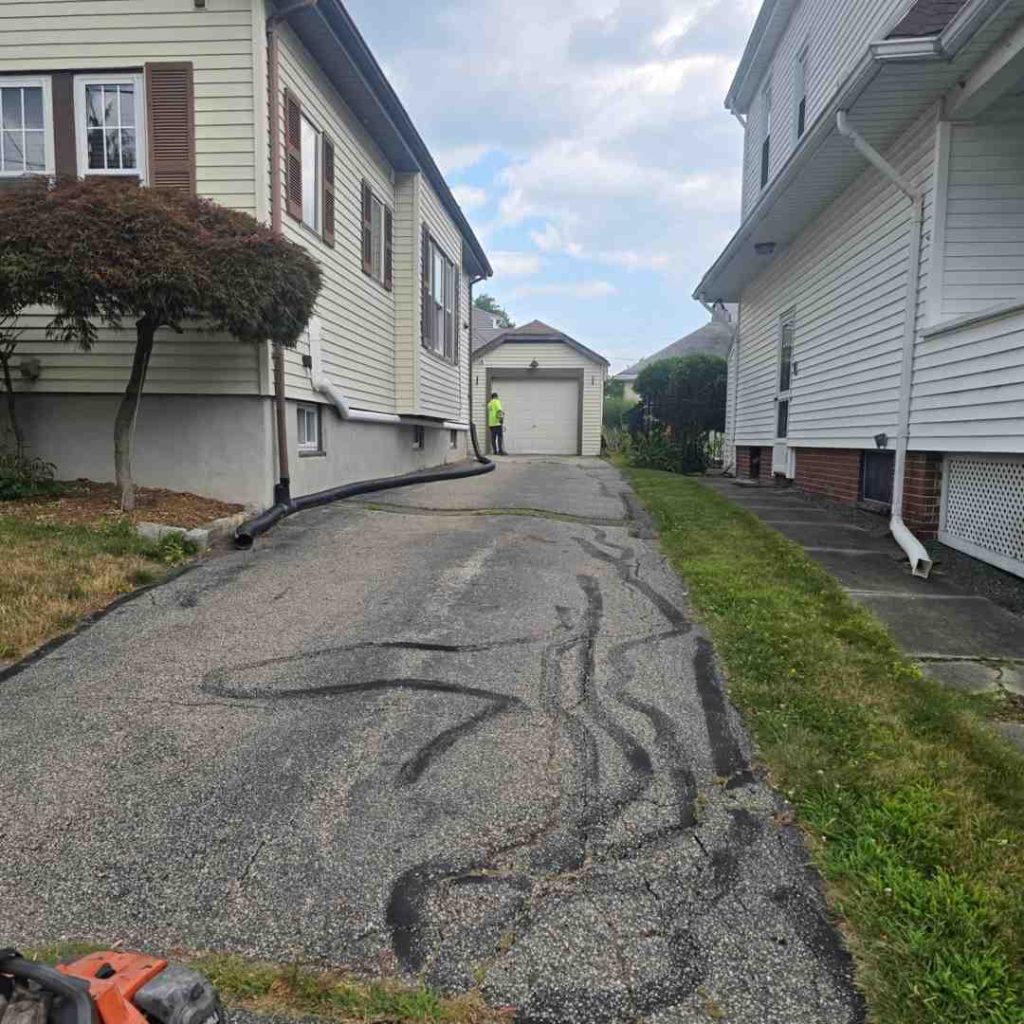
If you notice an area that looks like the scales of a reptile, you’re looking at “alligator cracking.” This is a major warning sign. It means the structural base of your driveway has softened, likely due to water infiltration. If you don’t perform asphalt driveway pothole filling or crack filling soon, those scales will pop out, leaving a deep hole.
Other Culprits: Oil, Grease, and Roots
- Chemical Degradation: Did you know that motor oil and gasoline act as solvents? They literally dissolve the bitumen (the “glue”) that holds your asphalt together.
- Vegetation: We’ve all seen it—a stubborn weed pushing through the blacktop. Roots can exert incredible pressure, cracking the surface from the bottom up.
- Heavy Traffic: While residential driveways aren’t usually handling semi-trucks, repeated heavy loads on a weakened spot will accelerate the crumbling process.

Essential Materials for Asphalt Driveway Pothole Filling
Before you head to the local home center, you need to know what you’re looking for. Not all “patch” is created equal.
Choosing Your Filler: Cold Patch vs. Hot Mix
For most DIYers, cold patch is the gold standard. It’s a pre-mixed blend of asphalt and aggregate that stays pliable in the bag but hardens once it’s compacted.
| Feature | Cold Patch (DIY Friendly) | Hot Mix (Professional Grade) |
|---|---|---|
| Ease of Use | High – Use right out of the bag | Low – Requires specialized heating |
| Longevity | Good (Permanent if applied right) | Excellent (Longest lasting) |
| Weather | Can be used in wet/cold weather | Best in hot, dry weather |
| Tools Needed | Hand tamper or shovel | Asphalt rollers and heaters |
Calculating Your Needs
A standard 50-pound bag of high-performance asphalt repair typically covers about 6 to 7 square feet at a depth of 1 inch. If you have a classic 1’x1′ pothole that is 2 inches deep, you will likely need about half a bag. It’s always better to have an extra bag on hand—you can always return it, but you can’t easily finish a job with a half-filled hole!
Your DIY Tool Kit
To do this right, you’ll need more than just the asphalt. Gather these items:
- Wire Street Broom: Essential for scrubbing out dirt and loose stones.
- Sturdy Shovel or Asphalt Lute: For placing and leveling the material.
- Hand Tamper: A heavy steel plate on a handle used to pack the patch down.
- Chisel and Hammer: To square off the edges of the hole.
- Propane Torch (Optional): Helpful for drying out a damp hole or softening the surrounding asphalt for better adhesion.
How to Fill a Pothole: A Step-by-Step Guide
Proper asphalt driveway pothole filling isn’t just about dumping a bag of rocks into a hole. If you want the repair to last through a Rhode Island winter, you need to follow a proven process. According to expert repair techniques, the secret is in the preparation.
Preparing the Area for Asphalt Driveway Pothole Filling
Most patch failures happen because the hole wasn’t prepared correctly.
- Clean it out: Use your wire street broom or a leaf blower to remove every bit of dust, loose gravel, and leaves. The patch material won’t stick to dirt.
- Square the edges: This is the pro secret. Potholes usually have “feathered” or sloped edges. Use a chisel to cut the edges so they are vertical (90 degrees). This gives the new asphalt a wall to push against, preventing it from creeping out of the hole.
- Check the depth: If the hole is deeper than 4 inches, don’t fill the whole thing with expensive patch. Fill the bottom with crushed stone or gravel and tamp it down firmly until you have about 2-3 inches of depth left for the asphalt.
- Dry the hole: While some modern cold patches (like water-activated versions) work in damp conditions, most standard patches adhere best to a dry surface. Use a torch or a hair dryer if necessary.
Applying and Compacting the Asphalt Driveway Pothole Filling
Now for the satisfying part.
- The Pour: Shovel the material into the hole.
- The Crown: Do not fill the hole flush with the driveway. You must overfill it. Aim for a “crown” that sits about 1 to 2 inches higher than the surrounding pavement.
- Compaction: This is where the magic happens. Use your hand tamper to strike the material repeatedly. You want to pack it until it is firm and level with the rest of the driveway.
- The Pro Hack: For maximum density, place a piece of scrap plywood over the patch and drive your car over it several times. The weight of the vehicle provides much better compaction than a hand tool ever could.
- Water Activation: If you are using a high-performance, water-activated product, be sure to soak the patch with a garden hose after tamping to trigger the hardening process.
Beyond the Patch: Curing and Prevention
Once the hole is filled, you aren’t quite finished. Maintenance is a marathon, not a sprint.
Curing Times
Even though you can often drive over a cold patch repair immediately (especially if you used the plywood/car method), the material is still “curing.” It takes time for the oils and solvents to evaporate and for the patch to become rock hard. In most cases, we recommend waiting at least 24 to 48 hours before parking a heavy vehicle directly on the patch for long periods.
The 70-Degree Rule
The best weather for asphalt driveway pothole filling is a clear, sunny day with temperatures around 70°F. If it’s too cold, the patch material will be stiff and hard to work with. If you must work in the winter, keep your bags of patch inside a heated garage overnight so they stay pliable.
Long-Term Protection
A patch is a localized fix, but to protect your entire investment, you need to look at the big picture.
- Sealcoating: We recommend sealcoating your driveway every 2 to 3 years. This provides a “sunscreen” for your asphalt, protecting it from UV rays and water. Note: You must wait at least 30 to 90 days for a fresh cold patch to cure before applying sealer over it, or the oils in the patch will cause the sealer to peel.
- Drainage: Ensure that water isn’t pooling on your driveway. Standing water is the #1 cause of pavement failure.
When to Call a Professional for Pothole Repair
We love a good DIY project, but sometimes a pothole is a symptom of a much larger problem. You should put down the shovel and call the professionals if:
- The hole is huge: If the damaged area is larger than 2 feet by 2 feet, a bag of cold patch likely won’t provide the structural integrity you need.
- The edges are crumbling: If the asphalt around the hole keeps breaking off as you clean it, you may have widespread base failure.
- You have a “sinkhole”: If the ground underneath the asphalt has washed away entirely, you need a professional to rebuild the sub-base.
- You want a seamless look: DIY cold patches are functional, but they often look like a “band-aid.” Professionals use infrared heaters to melt the surrounding asphalt, blending the new and old material for a seamless, permanent weld.
In Rhode Island, our harsh winters mean that small mistakes in DIY repair can lead to much bigger cracks by springtime. If you’re staring at a driveway full of “alligator scales,” it’s often more cost-effective to have a pro handle it once rather than buying 20 bags of patch every year.
Frequently Asked Questions about Pothole Filling
What is the best weather for filling potholes?
Ideally, you want a dry day with temperatures between 60°F and 80°F. This ensures the material is easy to spread and compact. However, high-quality cold patch products are designed to work in emergency situations even during wet or cold weather.
How long should I wait to drive on a new asphalt patch?
If you have compacted the patch thoroughly (especially with a vehicle tire), you can usually drive over it immediately. However, avoid turning your steering wheel while sitting on the fresh patch, as this can “scuff” or displace the stones before they have fully set.
Can I sealcoat my driveway immediately after filling a pothole?
No. This is a common mistake! Cold patch contains oils that need to “outgas.” If you seal over it too soon, the sealer won’t bond, and the patch will stay soft forever. Wait at least 30 days—and ideally 90 days—before applying a sealcoat.
Conclusion
Your driveway is one of the first things people see when they visit your home, and it’s a significant part of your property’s value. Taking the time for proper asphalt driveway pothole filling now can save you thousands of dollars in replacement costs later.
At Quality Asphalt Sealcoating, LLC, we’ve spent over two decades helping Rhode Island homeowners maintain beautiful, safe driveways. Whether you need a few tips for a DIY weekend or you want us to bring in the heavy equipment for a professional pothole repair service, we are here to help.
Don’t let that small bump turn into a major headache. Grab a bag of patch, follow these steps, and stop the bump today! For more information on how we can help protect your pavement, check out our full range of asphalt services.