Why Parking Lot Line Striping Matters for Property Owners
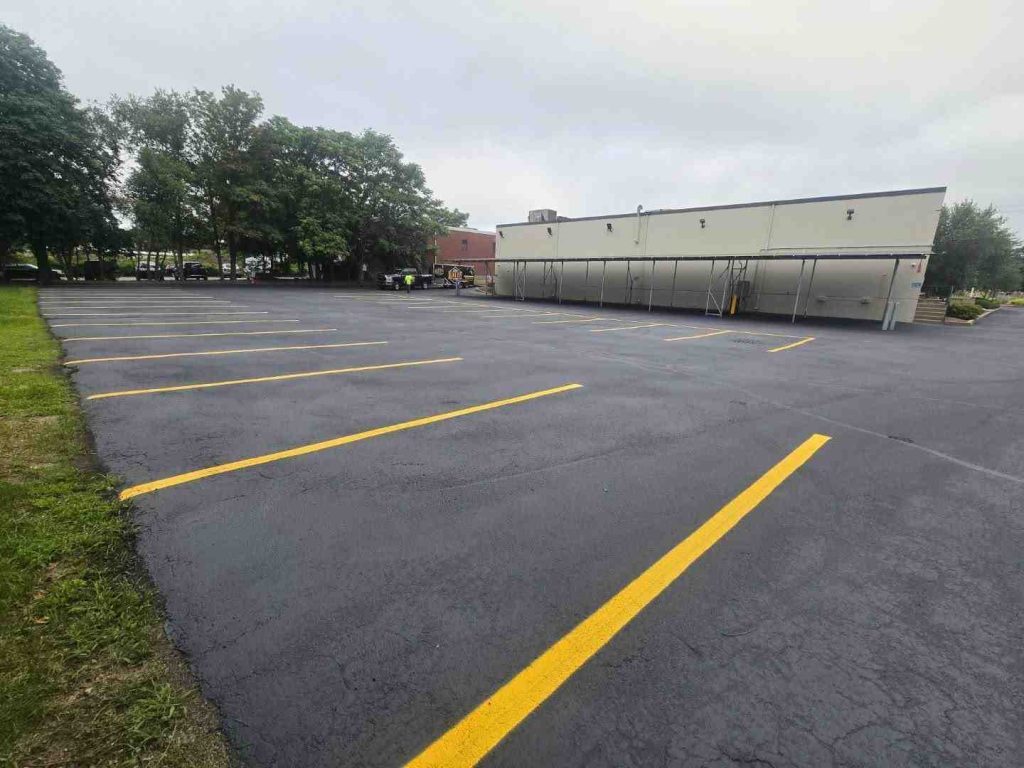
Parking lot line striping is the process of applying visible lines, symbols, and markings to asphalt or concrete surfaces to organize traffic flow, designate parking spaces, and ensure safety and compliance. Whether you own a commercial property or manage a residential parking area, clear and durable striping is essential for preventing accidents, maximizing space efficiency, and meeting legal requirements like ADA accessibility standards.
Quick Overview: What You Need to Know About Parking Lot Line Striping
- What it is: Painting lines, arrows, handicap symbols, and other markings on parking surfaces
- Why it matters: Safety, traffic organization, legal compliance, curb appeal
- When to restripe: Every 18-24 months depending on traffic volume and weather exposure
- Materials used: Water-based traffic paint, durable coatings like TBL Durables, reflective beads
- Key requirements: ADA-compliant handicap spaces, fire lanes, crosswalks, directional arrows
- Professional vs. DIY: Specialized equipment and expertise ensure precise, long-lasting results
Parking lot lines were unheard of at the turn of the 20th century when automobiles first found widespread use. Drivers were free to park just about anywhere, causing traffic jams and accidents. Today, proper line striping is where safety meets function—it guides drivers and pedestrians, prevents confusion, and protects your investment in your pavement.
For property owners facing faded lines or planning a lot redesign, understanding the striping process helps you make informed decisions about materials, compliance, and maintenance schedules. This guide walks you through every step, from surface preparation to choosing the right paint, so you can achieve professional results that last.
Basic parking lot line striping glossary:
Why Professional Parking Lot Line Striping is Essential
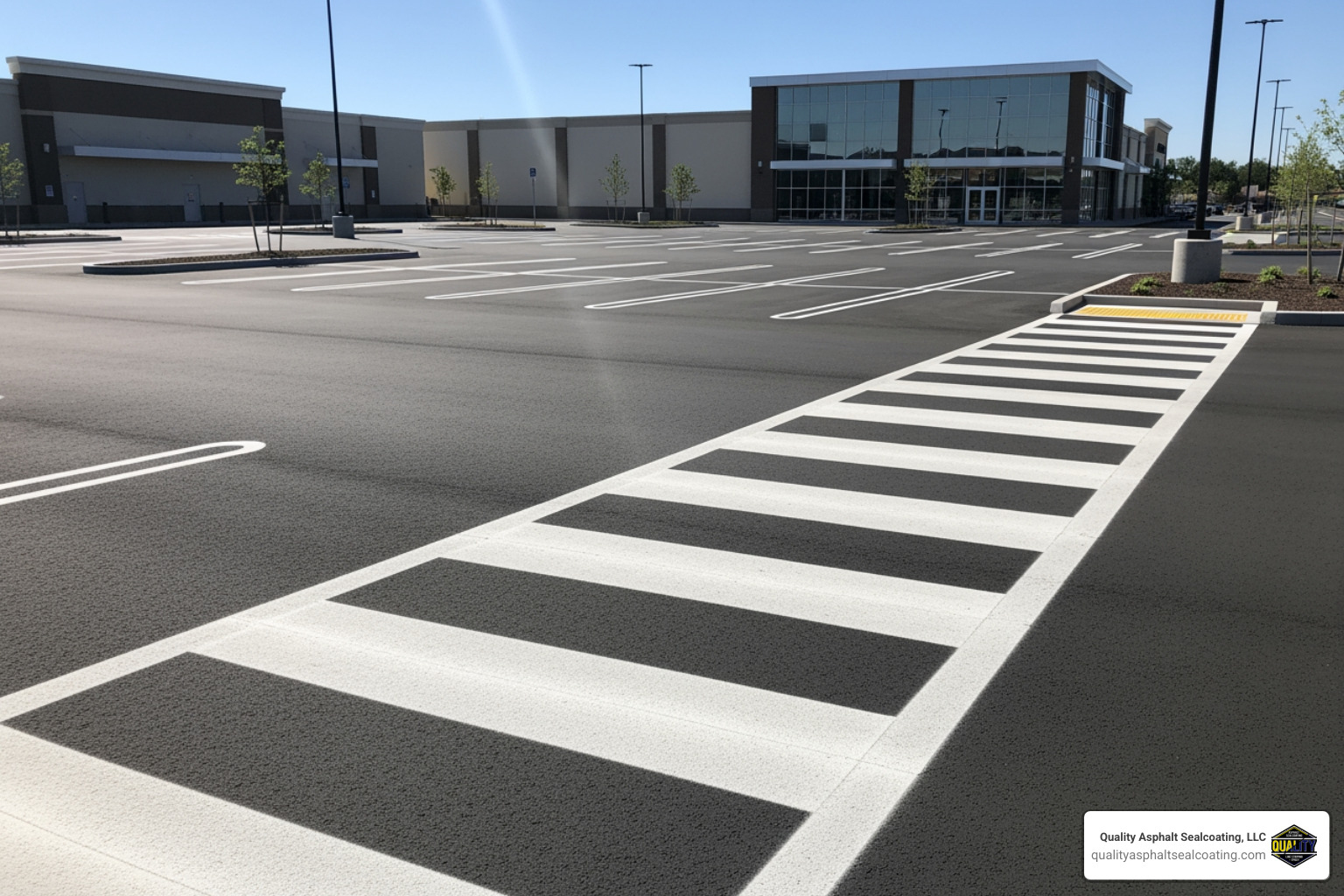
When we talk about parking lot line striping, we aren’t just talking about aesthetics—though a fresh coat of paint certainly makes a property pop. We are talking about the fundamental organization of your property. Without clear markings, a parking lot becomes a chaotic “free-for-all” that increases the risk of fender-benders and pedestrian injuries.
Properly marked pavement marking services serve several critical functions:
- Optimized Traffic Flow: Clear directional arrows and lane markings tell drivers exactly where to go, reducing congestion during peak hours.
- Accident Prevention: By clearly defining stalls and pedestrian pathways, you minimize the chance of vehicle-to-vehicle and vehicle-to-pedestrian collisions.
- Emergency Access: Fire lanes must be kept clear. Professional striping ensures these areas are marked with bright red paint and the required “FIRE LANE – NO PARKING” lettering, ensuring first responders can reach your building without delay.
- Liability Reduction: If an accident occurs in a lot where the lines are faded or non-existent, the property owner may be held liable. Maintaining Safety and Efficiency through visible markings is your first line of defense.
- First Impressions: Your parking lot is the “welcome mat” of your business. Crisp, bright lines signal to customers that you care about detail and their safety.
Preparing the Surface for a Flawless Finish
You wouldn’t paint a dirty wall in your house, and the same logic applies to asphalt. For parking lot line striping to last, the surface must be carefully prepared. If we spray paint over dirt, sand, or oil, the paint will bond to the debris rather than the pavement, leading to premature peeling and flaking.
The Preparation Checklist
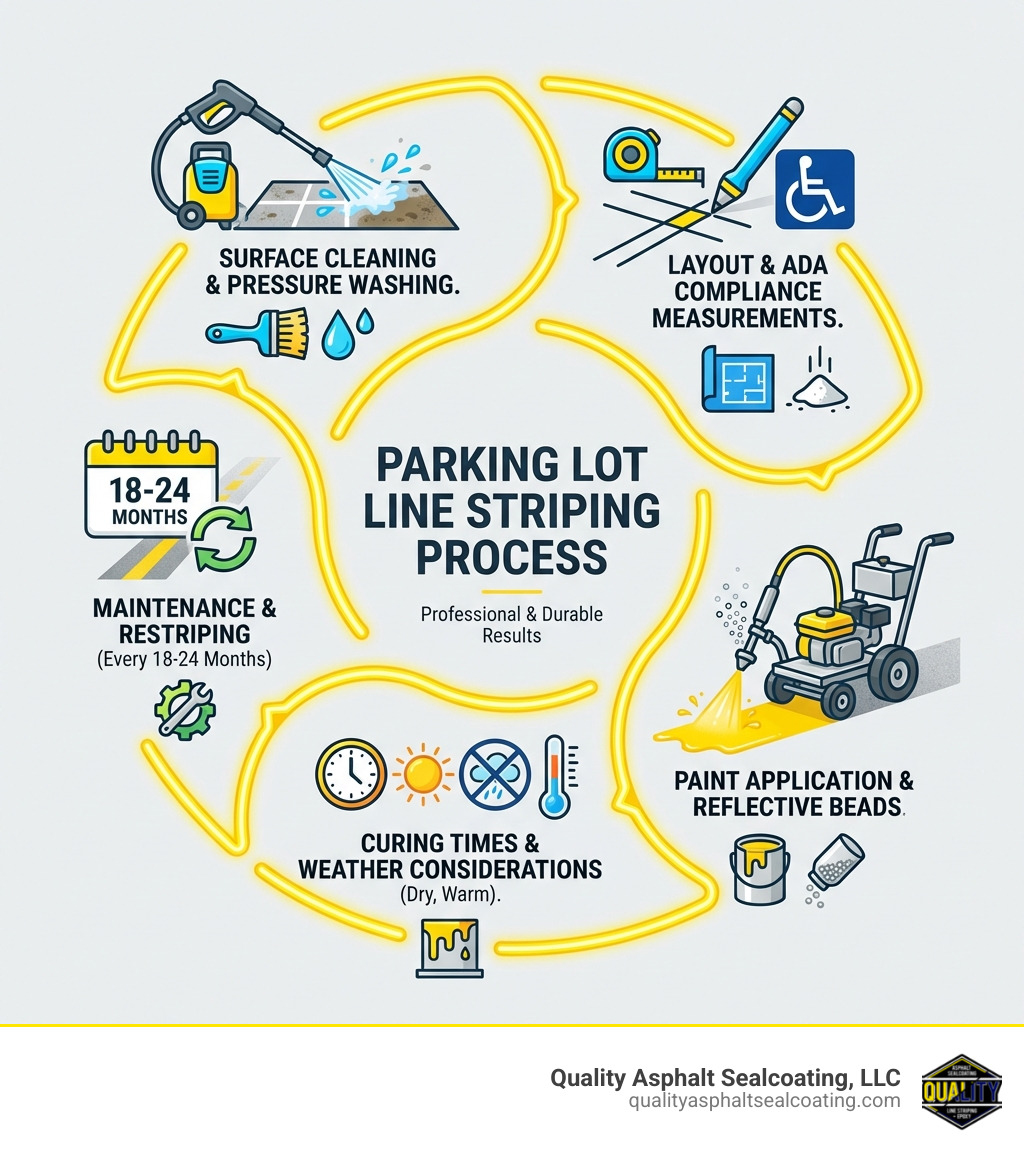
- Debris Removal: We start by using high-powered gas blowers and industrial sweepers to remove every speck of dust, rock, and leaf.
- Pressure Washing: For lots with heavy mud or caked-on grime, pressure washing is necessary. However, the surface must be allowed to dry for at least 24 hours before any paint is applied.
- Moss and Mildew Treatment: In shaded areas of Rhode Island properties, moss can take hold. This must be treated and removed, as paint will not stick to organic growth.
- Repairing the Foundation: Striping is often the final step in a larger maintenance plan. Before we stripe, we address underlying issues. This includes pothole repair services, crack filling, and sealcoating.
- Moisture and Temperature Testing: We never stripe on damp pavement. We also monitor the temperature; the pavement should be at least 45°F and rising for the paint to bond correctly.
Choosing the Right Materials and Equipment
Not all paint is created equal. Using standard house paint on a parking lot is a recipe for disaster. We use specialized traffic paints designed to withstand heavy vehicle weights and the harsh Rhode Island winters.
| Feature | Water-Based Traffic Paint | Durable Coatings (e.g., TBL Durables) |
|---|---|---|
| Drying Time | Very Fast (15-30 mins) | Moderate |
| Durability | 18-24 Months | 2-3 Times Longer |
| Eco-Friendliness | High (Low VOCs) | Moderate |
| Best For | Standard Parking Stalls | High-Traffic Entrances/Crosswalks |
Water-Based Traffic marking paint is our go-to for most commercial lots because it dries quickly, allowing the lot to be reopened to traffic within an hour. For areas that see extreme wear, we may recommend TBL Durables or solvent-based options.
To improve safety during nighttime or rainy conditions, we often incorporate reflective beads. These tiny glass spheres are dropped into the wet paint and provide retroreflectivity, making the lines glow when hit by headlights. This is a hallmark of how to stripe like a pro.
Essential Equipment for Parking Lot Line Striping
To get those laser-straight lines, we don’t use rollers and brushes for the whole lot. We use professional-grade airless sprayers like the Titan PowrLiner or Graco LineLazer series. These machines feature:
- Paint Reservoirs: Large buckets (5 to 12 gallons) that allow for continuous work without frequent refills.
- Detachable Spray Guns: Essential for using stencils to paint arrows, handicap symbols, and “NO PARKING” signs.
- Lockable Front Wheels: This ensures the machine stays on a perfectly straight path for long stalls but can be unlocked for smooth curves and circles.
Advanced Technology in Parking Lot Line Striping
The industry has come a long way from just “eyeballing it.” We now use technology to increase precision:
- Google Earth Bidding: We can use satellite imagery to get measurements accurate within inches, allowing us to provide remote quotes.
- Data Logging (J-Log): High-end machines can track exactly how much paint was used and the thickness of the application, providing proof of quality for the client.
- Laser-Guided Systems: A laser beam projects onto the pavement ahead of the machine, ensuring the operator follows the exact pre-marked layout.
Mastering the Layout: ADA Compliance and Regulations
Layout is where the “Art” meets the “Law.” In Rhode Island, every commercial parking lot must adhere to the Americans with Disabilities Act (ADA) standards. Failure to comply can lead to heavy fines and legal headaches.
ADA Standards and Accessibility
- Handicap Spaces: You must have a specific number of accessible spaces based on the total size of your lot. These are typically painted with a blue background and a white or yellow “Wheelchair” symbol.
- Van-Accessible Spaces: At least one out of every six accessible spaces must be van-accessible, featuring an 8-foot wide access aisle.
- Fire Lanes: These must be marked according to local fire marshal codes, usually involving solid red curbs or lines with white lettering.
- Directional Arrows: Strategic placement of parking lot arrows prevents “wrong-way” driving in narrow aisles.
- Stall Dimensions: While standard stalls are usually 9′ x 18′, we can adjust layouts to include “Compact” spaces to maximize your lot’s capacity.
Maximizing Longevity: Curing Times and Weather Factors
Timing is everything. Even the best paint will fail if it’s hit by a rainstorm ten minutes after application. When we perform parking lot re-striping, we keep a close eye on the forecast.
- Drying vs. Curing: Water-based paint is usually “dry to the touch” in 30 minutes at 70°F. However, it takes about 24 hours to fully “cure” and reach its maximum hardness.
- Rain Windows: We require at least a 4-hour window of dry weather after striping to ensure the paint doesn’t wash away.
- Humidity: High humidity slows down the evaporation of water in the paint, extending the time we need to keep the lot closed.
- Traffic Control: We use cones, caution tape, and sometimes flaggers to keep cars off the wet lines. Driving over wet paint not only ruins the line but leaves “ghost tracks” all over your beautiful asphalt.
When to Schedule Your Parking Lot Line Striping
Most lots should be restriped every 18 to 24 months. However, you might need it sooner if:
- High Traffic: If you manage a busy retail center, the constant friction of tires will wear paint down faster.
- Winter Damage: Snowplows are the natural enemy of parking lines. The metal blades can scrape paint right off the surface.
- Sun Oxidation: Constant UV exposure fades the bright yellows and whites to a dull grey, making them hard to see at night.
- After Sealcoating: Sealcoating covers your old lines entirely, making immediate restriping a necessity.
Cost-Effective Tips for Parking Lot Line Striping
- Menu-Style Bidding: We can provide quotes that break down costs by section, allowing you to prioritize high-traffic areas if you’re on a tight budget.
- Curb Painting: Adding bright yellow or “Safety Red” to your curbs significantly improves the look of the property for a relatively low cost.
- Proactive Maintenance: It is much cheaper to restripe every two years than to wait five years and have to pay for a completely new layout because the old lines have vanished.
Frequently Asked Questions about Striping
How long does it take for parking lot paint to dry?
Under ideal conditions (sunny, 70°F, low humidity), the paint is dry to the touch in 30 minutes and safe to drive over in about one hour. In cooler or more humid conditions, we recommend waiting at least two to four hours before reopening the lot.
Can you stripe over old lines?
Yes, this is called “restriping.” As long as the old paint is still well-bonded to the asphalt and not flaking off, we can paint directly over it. If the old paint is peeling, we may need to wire-brush or power-wash the area first to ensure the new coat sticks.
What is the difference between water-based and solvent-based paint?
Water-based paint is the industry standard for most lots; it’s eco-friendly, easy to clean up, and dries very quickly. Solvent-based (oil-based) paint is more resistant to freezing during application and can be more durable in certain high-stress industrial environments, but it has a stronger odor and longer drying times.
Conclusion
Professional parking lot line striping is an investment in your property’s safety, legal standing, and curb appeal. By choosing high-quality materials, following strict ADA guidelines, and ensuring proper surface preparation, you can create an environment that is welcoming to customers and safe for everyone.
At Quality Asphalt Sealcoating, LLC, we bring over 23 years of Rhode Island expertise to every job. As a family-owned business, we understand that your parking lot isn’t just pavement—it’s the gateway to your business. Whether you need a simple restripe or a complete lot redesign, our team uses top-tier equipment and materials to deliver results that stand the test of time and weather.
Ready to brighten up your property? Schedule your professional line striping and repair services with us today and experience the difference that professional “Art of the Stripe” can make!