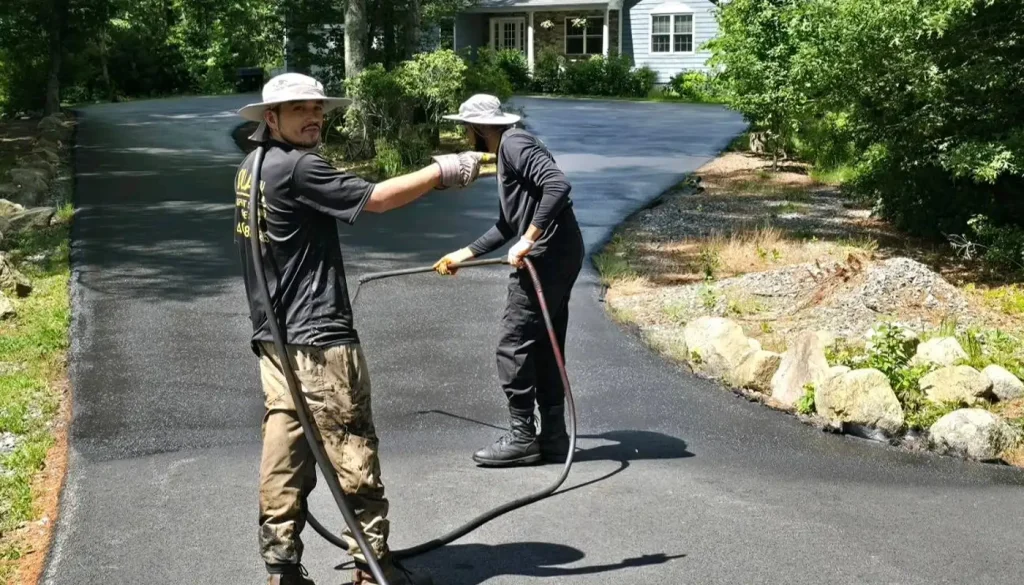
Why Parking Lot Sealcoating Is One of the Smartest Investments You Can Make
Parking lot sealcoating is the process of applying a protective liquid coating to asphalt surfaces to shield them from water, UV rays, oil spills, and daily wear — extending pavement life significantly while restoring a clean, professional appearance.
Here’s what you need to know at a glance:
- What it does: Creates a protective barrier that slows oxidation, blocks moisture, and resists chemical damage
- When you need it: When asphalt starts fading from black to gray, shows hairline cracks, or develops oil stains
- How often: Every 2-4 years for commercial parking lots, depending on traffic and weather exposure
- Key benefit: Extends pavement life 10-15 years beyond untreated surfaces — avoiding costly replacement
- Bottom line: A preventative investment that saves far more than it costs over the long run
Your parking lot is often the first thing customers or tenants notice about your property. A cracked, faded surface sends the wrong message — and left untreated, it only gets worse.
Asphalt is naturally porous. Without protection, oxygen, water, and vehicle fluids slowly break down the binder that holds it together. This process starts sooner than most people expect — sometimes within the first year after installation.
Sealcoating stops that deterioration in its tracks. Think of it like sunscreen for your pavement. It doesn’t just improve how your lot looks — it actively protects the structural integrity underneath.
The good news? Staying ahead of the damage is far simpler and more affordable than dealing with potholes, major cracking, or a full replacement down the road.
What is Sealcoating and How Does It Protect Asphalt?
To understand how parking lot sealcoating works, we first have to look at what asphalt actually is. Asphalt is a mixture of “aggregate” (stones and sand) held together by a sticky, black petroleum-based substance called asphalt binder. When a parking lot is brand new, that binder is flexible and waterproof.
However, the moment it’s laid down, the clock starts ticking. Oxygen and UV rays from the sun begin a process called oxidation. This “dries out” the binder, making it brittle. As the binder loses its grip, the stones start to pop loose, and the surface begins to crack.
In Rhode Island, we face a particularly tough enemy: freeze-thaw cycles. When water gets into those tiny cracks and freezes, it expands with incredible force, turning a small hairline fracture into a massive pothole overnight.
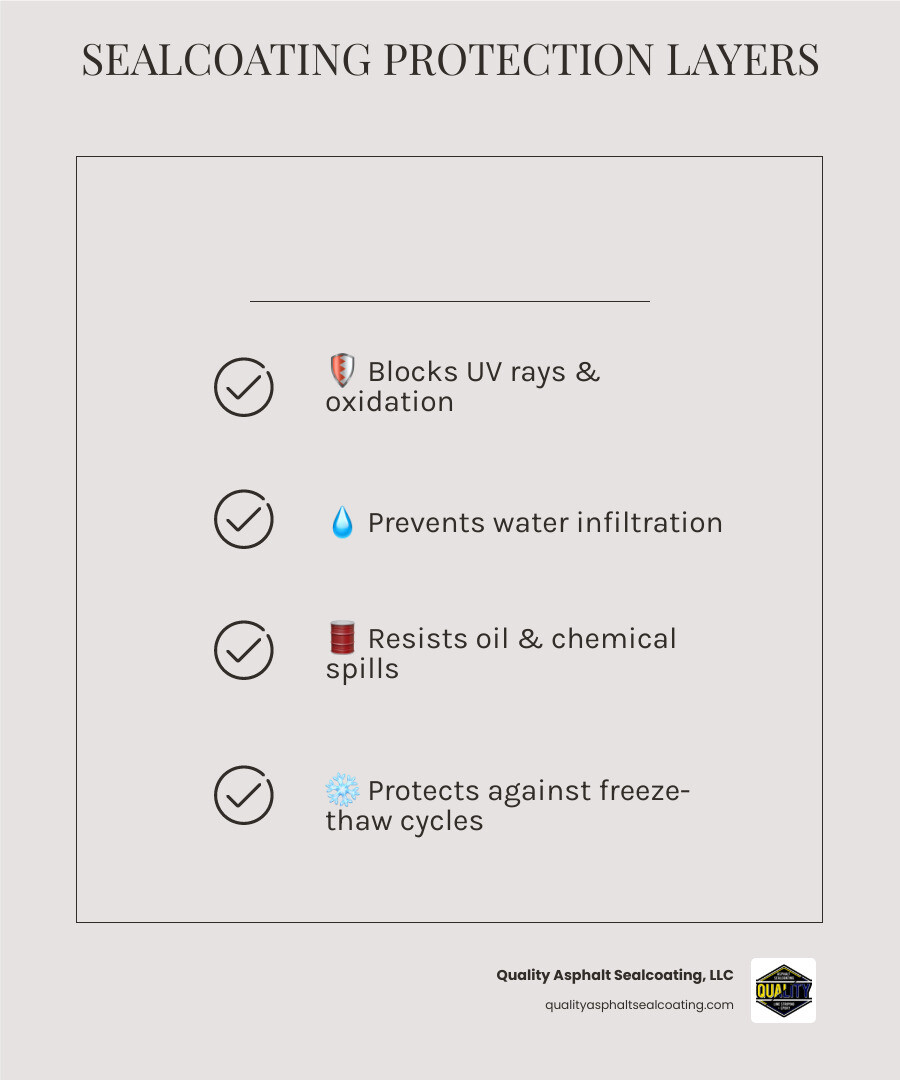
Sealcoating acts as a sacrificial barrier. It fills the surface pores and micro-cracks, creating a seamless membrane. This shield prevents water infiltration and protects the binder from UV damage. It also resists chemical spills—like gasoline and oil—which can actually dissolve the asphalt binder on contact. By keeping the “good oils” in and the “bad elements” out, you can protect your parking lot and save money simultaneously. For a deeper dive into the specifics, check out our more info about commercial sealcoats.
Types of Materials Used in Parking Lot Sealcoating
Not all sealants are created equal. Depending on the specific needs of your Rhode Island property, we choose materials that offer the best balance of durability and protection.
- Asphalt Emulsion: This is the most common choice today. It’s water-based, environmentally friendly (low VOCs), and provides excellent UV protection. It gives that rich, “jet-black” finish everyone loves.
- Coal Tar: Traditionally used for its high resistance to gasoline and oil, though it is being phased out in many areas in favor of more eco-friendly asphalt emulsions.
- Polymer-Modified Sealers: These are high-performance sealants with added polymers. Think of them as “sealer on steroids.” They dry faster, last longer, and offer superior flexibility to handle temperature swings.
- Silica Sand: We mix specialized sand into the sealer. This isn’t just for “bulk”—it provides essential skid resistance (safety first!) and helps the coating wear more evenly under heavy tire traffic.
While many of these materials apply to both commercial and residential settings, you can find more info about driveway sealcoating for smaller-scale projects.
Identifying When You Need Parking Lot Sealcoating
How do you know if your lot is crying out for help? You don’t need to be a paving expert to spot the warning signs. Keep an eye out for these visual cues:
- Fading and Graying: This is the earliest sign of oxidation. If your once-black lot now looks like a dusty chalkboard, the protective oils are evaporating.
- Hairline Cracks: Small, “spider-web” cracks indicate the asphalt is becoming brittle. If you catch these early with sealcoating, you can prevent them from becoming structural failures.
- Oil Stains: Large dark spots from leaking cars aren’t just ugly; they are eating through your pavement.
- Water Pooling: If water is sitting on the surface rather than running off, or if you see “alligator cracking” (cracks that look like reptile skin), the sub-base may already be at risk.
If you notice these signs, it’s time to look into commercial services before a simple maintenance job turns into a full repaving project.
The Professional Parking Lot Sealcoating Process
At Quality Asphalt Sealcoating, LLC, we know that a sealcoating job is only as good as the preparation that goes into it. You can’t just pour sealer over dirt and expect it to stick!

Step 1: Surface Preparation and Cleaning
We start by clearing the area of all debris. We use mechanical blowers, stiff brooms, and sometimes even wire brushes to ensure the asphalt is bone-dry and spotless. If there is dirt in the pores, the sealer won’t bond.
Step 2: Oil Spot Priming
Oil and grease spots are chemically “incompatible” with sealer. We apply a specialized oil spot primer to these areas. This acts as a bridge, allowing the sealer to stick to the contaminated asphalt without peeling.
Step 3: Crack Filling
Before the liquid sealer goes down, we address the cracks. We typically use a hot-applied rubberized crack filler. This material is heated to about 400°F, poured into the cracks, and allowed to cool, creating a flexible, watertight seal that moves with the pavement.
Step 4: The Two-Coat Application
For commercial parking lot sealcoating, we highly recommend a two-coat system.
- The First Coat: Usually applied via squeegee or spray to ensure deep penetration into the pores.
- The Second Coat: Applied after the first has dried to provide a uniform wearing surface and extra thickness for durability.
Step 5: Curing and Striping
The sealer needs time to “cure”—essentially, the water has to evaporate so the solids can harden. Once cured (usually 24–48 hours), we finish the job with fresh line striping using high-traffic acrylic paint.
Weather Conditions for Parking Lot Sealcoating
In Rhode Island, we are at the mercy of the weather. For the sealer to bond and cure correctly, we need specific conditions.
- The 50°F Rule: The pavement temperature (not just the air!) must be at least 50°F and rising. If it’s too cold, the emulsion won’t “break” properly, and the coating will fail.
- The Rain Forecast: We need a clear window. If it rains within 24 hours of application, the sealer can wash away, potentially ending up in drains or on your building’s siding.
- Humidity Factors: High humidity slows down drying time. On a muggy Rhode Island summer day, we might need to wait a bit longer before allowing cars back on the lot.
- Seasonal Timing: Our primary window is April through November. Outside of these months, the ground is generally too cold or frozen for professional results.
For more details on how we prep for these conditions, see our guide on professional preparation.
Maximizing ROI through Integrated Maintenance
Think of your parking lot as a high-value asset, much like a roof or a fleet of vehicles. Preventative maintenance is always cheaper than reactive repairs.
Industry experts like Steven Brahney, who has decades of experience in asphalt reconstruction, emphasize that routine maintenance can extend the life of a parking lot up to 30 years. Without it, you might be looking at a total replacement in just 12 to 15 years.
Integrated maintenance includes:
- Regular Inspections: Catching cracks while they are small.
- Line Striping: Keeping your lot safe and organized.
- ADA Compliance: Ensuring your handicap stalls and access aisles meet current regulations. Freshly striped lots are not just prettier; they reduce your liability.
The scope of your project will depend on the size of the lot, the number of “mobilizations” (how many times we have to move our equipment to keep your business open), and the amount of prep work required.
Frequently Asked Questions about Sealcoating
How often should a parking lot be sealcoated?
For most commercial properties in Rhode Island, we recommend a schedule of every 2 to 4 years.
However, this isn’t a “one size fits all” answer. A high-traffic retail center with thousands of cars a day will wear through sealer much faster than a quiet office park. Similarly, lots that face heavy snow plowing and salt application in the winter act like sandpaper on the coating, requiring more frequent touch-ups.
Can sealcoating fix cracks, potholes, or structural damage?
This is a common myth! Sealcoating is a protective layer, not a structural one.
- It will NOT fix potholes: Potholes require “dig-and-patch” asphalt repair.
- It will NOT level low spots: If you have a “birdbath” where water collects, sealer will just follow the contour of the dip.
- It will NOT bridge large cracks: While it fills micro-fissures, anything wider than a blade of grass needs hot-pour crack sealing before the sealcoat is applied.
Think of sealcoating like paint on a house—it protects the wood from rotting, but it won’t fix a broken beam.
Why hire a professional contractor instead of DIY?
We get it—the “buckets” at the big-box hardware store look tempting. But commercial parking lot sealcoating is a different beast entirely.
- Commercial-Grade Materials: The sealer we use isn’t available to the general public. It contains specialized additives and polymers that provide much higher durability.
- Specialized Equipment: Our spray systems and high-volume tanks allow us to apply a perfectly even coat. DIY applications often end up with “streaks” or puddles that peel quickly.
- Insurance and Liability: This is huge. Many “fly-by-night” operations carry a “Ghost Policy”—which is essentially no insurance at all. If a worker gets hurt on your property or a piece of equipment damages a customer’s car, you could be held liable. Quality Asphalt Sealcoating, LLC is fully licensed and insured, protecting you and your investment.
- Uniform Results: We have the experience to handle the “tricky” parts, like hand-brushing edges near sidewalks and ensuring the mix of sand and sealer is exactly right for the best traction. Check out our tips on how to pick a pro for more advice.
Conclusion
At the end of the day, your parking lot is a reflection of your business. A well-maintained, jet-black lot with crisp white lines tells your customers that you care about the details.
Quality Asphalt Sealcoating, LLC is a family-owned Rhode Island business with over 23 years of experience. We live and work in the same communities you do, and we take pride in delivering results that last. Whether you need a small repair or a massive commercial overhaul, we have the expertise and the top-quality materials to get the job done right.
Don’t wait for the next big storm to turn those small cracks into expensive potholes. Schedule your commercial parking lot sealcoating today and let us help you “seal the deal” on a beautiful, long-lasting property.