
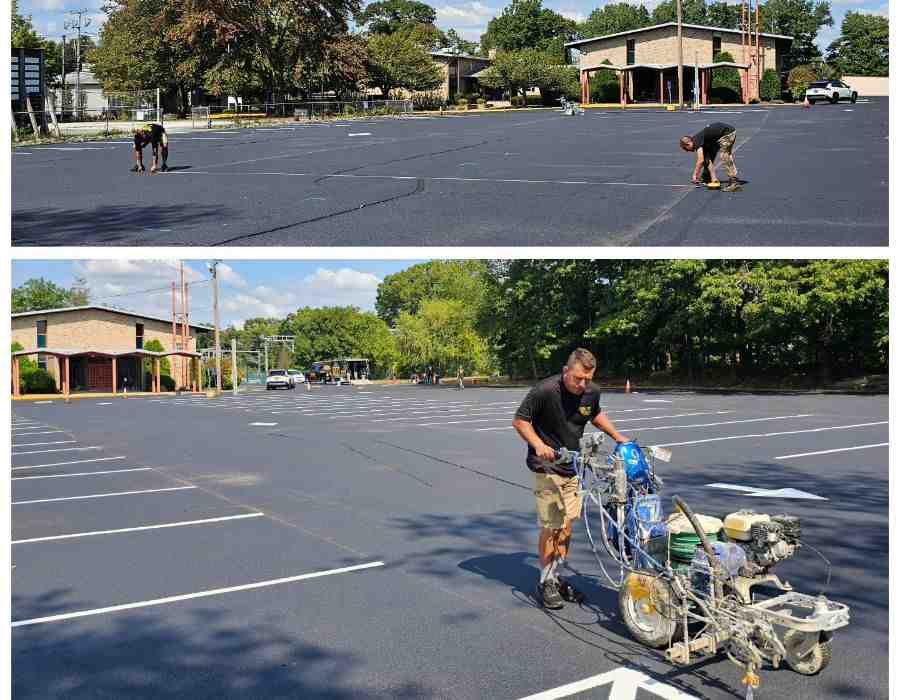
What Drives Parking Lot Striping Price? A Quick Overview
Parking lot striping price varies based on several key factors — but here’s a fast summary to help you plan:
| Factor | What to Know |
|---|---|
| Lot size | More spaces = more linear feet = higher total |
| New vs. restripe | New layouts cost 50%–70% more than restriping |
| Marking type | Standard lines, handicap symbols, arrows, and fire lanes all vary |
| Paint type | Water-based, oil-based, and thermoplastic differ in durability |
| Mobilization fee | Most jobs include a fixed call-out charge |
| Surface condition | Damaged or dirty surfaces require prep work |
The moment a customer pulls into your parking lot, they’re already forming an impression of your business. Faded lines, missing arrows, and worn handicap symbols don’t just look bad — they create safety risks, reduce efficiency, and can put you out of compliance with ADA and fire code regulations.
Whether you manage a small retail strip or a large commercial property, keeping your parking lot markings fresh and visible is one of the most practical investments you can make in your pavement.
But before you call a contractor, it helps to understand what goes into a striping quote — because the range can be surprisingly wide. Lot size, layout complexity, paint type, and the condition of your existing surface all play a role.
This guide breaks it all down so you can plan your project with confidence.
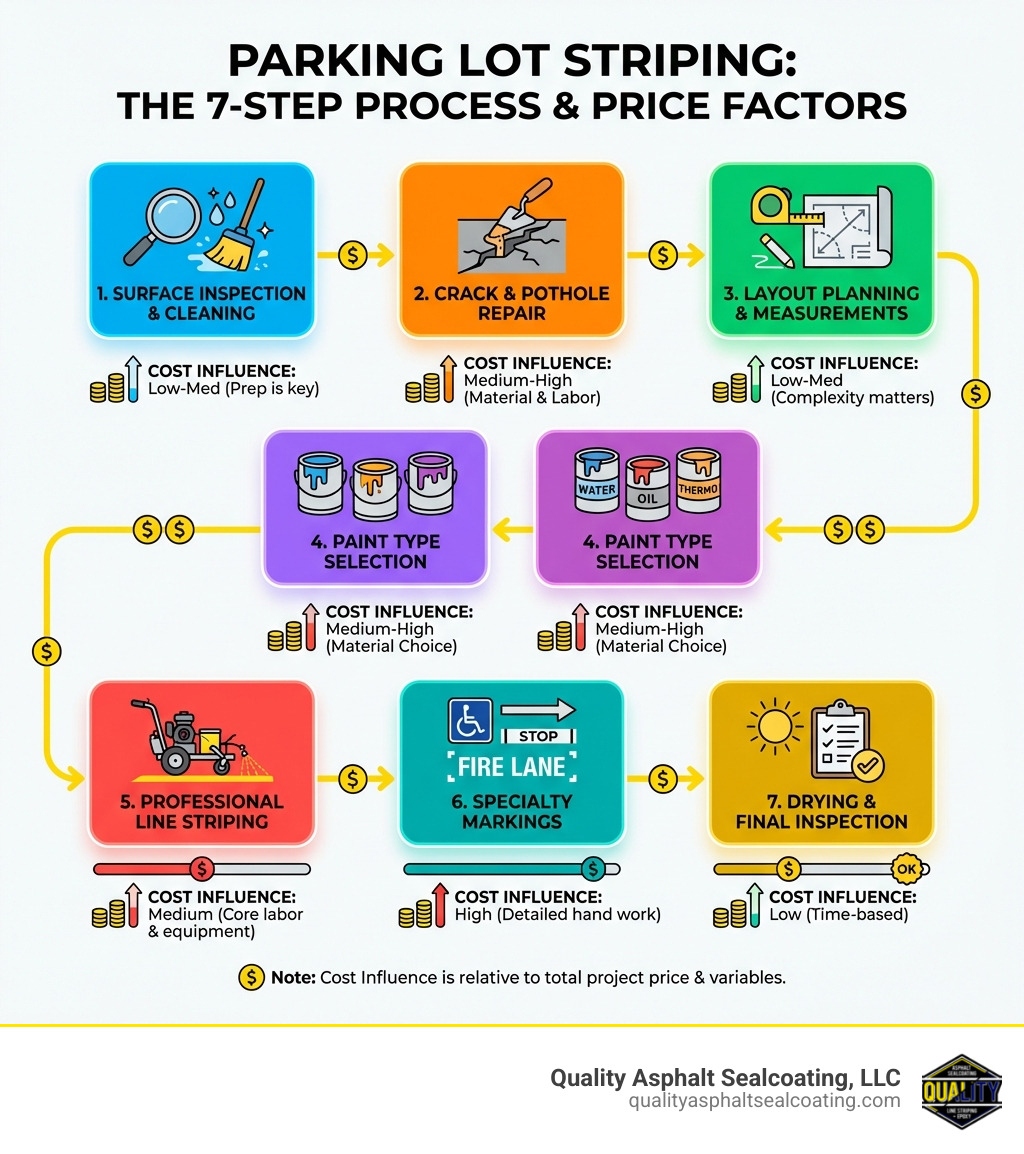
Key Factors Influencing Your parking lot striping price
When we sit down to calculate a quote for a client here in Rhode Island, we aren’t just pulling numbers out of thin air. There is a method to the madness. Several logistical and physical variables dictate how much labor and material will be required to get the job done right.
Lot Size and Linear Footage
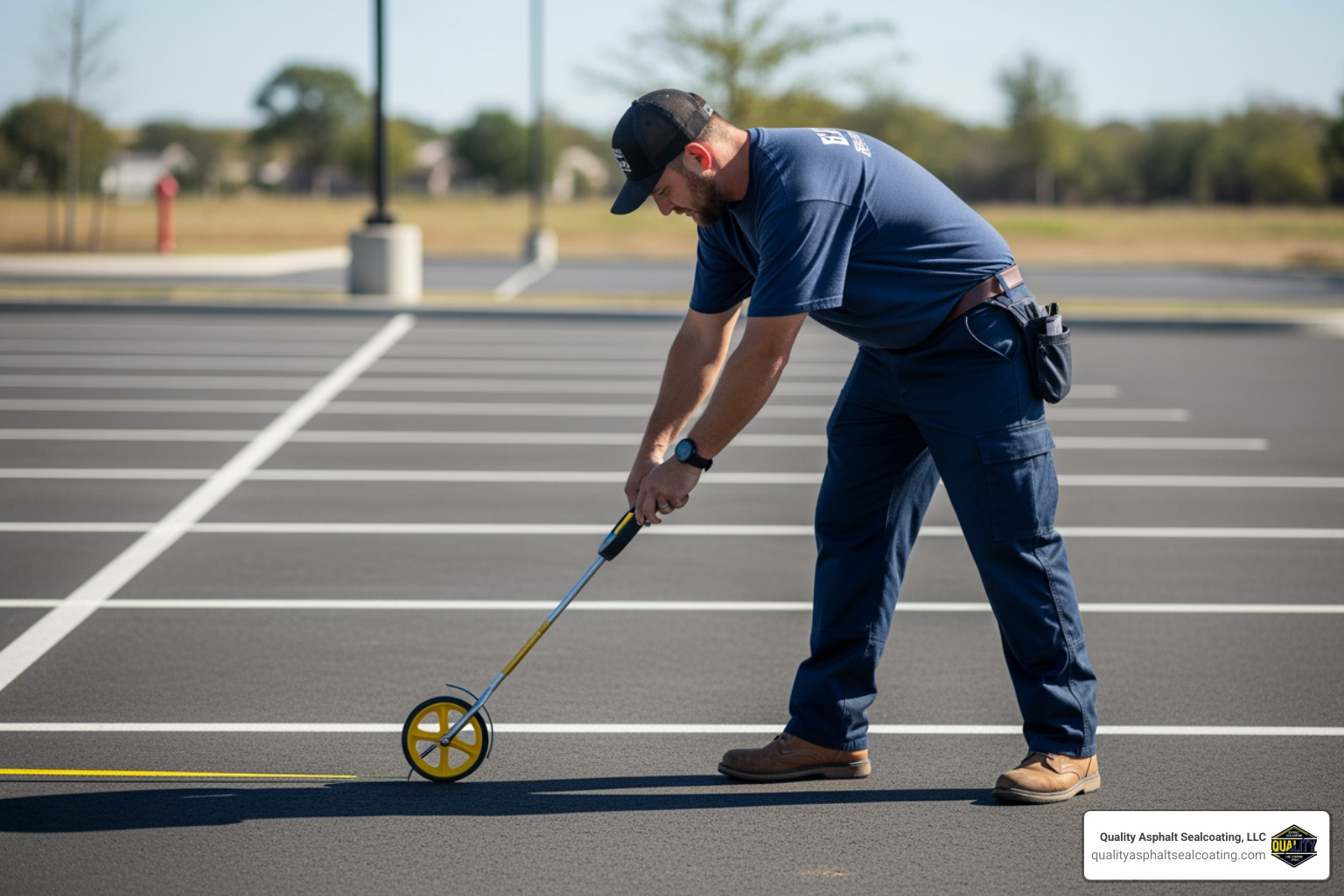
The most obvious factor is the sheer size of the pavement. Most contractors look at the total linear footage of the lines being painted. A standard parking stall line is roughly 18 feet long. If you have a lot with 50 spaces, that’s a lot of paint, but if you have 500, it’s a major operation. The “per stall” metric is a common way to simplify the estimate, but the underlying math is almost always based on how many feet of paint the machine will put down.
Stall Count and Density
A lot with many small, tightly packed spaces will require more stops, starts, and precision than a wide-open lot with fewer, larger stalls. The density of the markings directly impacts the time our crew spends on-site.
Mobilization Fees and Call-Out Charges
Every professional striping job includes what we call a mobilization fee or a call-out charge. This covers the expense of loading up the specialized striping machines, transporting the crew, and getting the equipment set up on your property. For very small lots, this fee often makes up a significant portion of the total parking lot striping price. It’s the reason why striping five spaces isn’t just one-tenth the cost of striping fifty; the overhead of getting to the site remains the same. If you are looking to compare professional rates, you can Find Local Pros to see how these fees vary in our region.
How Layout Complexity Affects Your parking lot striping price
Not all parking lots are created equal. A simple rectangular lot with straight-in 90-degree stalls is the “easy mode” of the striping world. However, many properties require more complex designs to maximize space or manage traffic flow.
- Angled Stalls: Painting lines at a 45-degree or 60-degree angle requires more precise measurements and layout time than straight lines.
- Traffic Islands and Curbs: Navigating around concrete islands or painting “no parking” zones around curbs adds labor.
- Custom Stencils: If you need “Reserved,” “Visitor,” or specific numbered stalls, each of those requires a separate stencil and extra time to align and paint.
To understand why precision matters so much in these complex layouts, check out our guide on The Art of the Line: How to Stripe Like a Pro.
Regional Variables in Your parking lot striping price
Being based in Rhode Island, we deal with specific regional factors that property owners in warmer climates might not face.
- Labor Rates: The cost of skilled labor in the Northeast is a reflection of the cost of living and the high demand for seasonal trades.
- Material Availability: We use high-quality, Department of Transportation (DOT) approved paints that can withstand our harsh winters. The availability and shipping of these specialty materials can fluctuate.
- Seasonal Demand: In Rhode Island, striping is a seasonal business. Once the snow flies and the ground freezes, striping season is over. This creates a massive rush in the spring and summer, which can affect scheduling and demand-based pricing.
- Local Regulations: Different municipalities in Rhode Island may have specific codes regarding fire lane widths or the number of required handicap spaces, all of which influence the final project scope.
New Layout vs. Restriping: Impact on Project Scope
One of the biggest forks in the road for your budget is whether we are painting over old lines or starting from scratch.
Efficiency of Restriping Existing Lines
Restriping is by far the most economical choice. If your lines are just faded but still visible, our crew can use the existing markings as a guide. This eliminates the need for extensive measuring and “chalking out” the lot.
Restriping is also faster. We can move quickly from one line to the next, which reduces labor hours. However, the surface must be clean. If the lot is covered in sand, dirt, or debris, we have to power-sweep or blow off the surface first to ensure the paint actually sticks. You can learn more about why prep is so vital in our article, Re-striping Your Parking Lot: More Than Just Paint.
For a deeper dive into how we handle these maintenance tasks, see The Ultimate Guide to Pavement Marking Services.
Challenges of Initial Layout and Design
A “new layout” occurs when you have fresh asphalt (perhaps after a pave or a heavy sealcoat) and the lines are gone. This is a much more intensive process.
- Blueprint Matching: We have to follow the original site plan to ensure the lot is legal and functional.
- Measurement Accuracy: Every single line must be measured and snapped with a chalk line before a drop of paint hits the ground. If one line is off by an inch, the whole row could end up crooked.
- Traffic Flow Optimization: New layouts give us the chance to fix old mistakes. Maybe the previous layout was cramped; a new design can improve the turning radius for cars.
- Line Sharing: Professional designers look for ways to “share” lines between stalls to reduce the total amount of paint needed, though the initial layout labor still makes this a more expensive option than a simple restripe.
Material Selection and Durability Standards
What’s in the bucket matters just as much as who’s holding the machine. The type of paint selected will directly influence your parking lot striping price and how long those lines stay bright.
Water-Based Acrylic
This is the industry standard for most commercial parking lots. It is environmentally friendly, dries quickly, and offers excellent visibility. It’s a great balance between performance and cost.
Oil-Based Paint
While becoming less common due to environmental regulations, oil-based paints are sometimes used in colder temperatures because they are less likely to freeze during application. However, they generally take longer to dry than water-based options.
Thermoplastic Markings
If you’ve ever seen the thick, slightly raised white lines on a highway, that’s thermoplastic. It’s a plastic-based material that is melted and bonded to the asphalt. It is incredibly durable and can last many times longer than standard paint. While the upfront investment is significantly higher, it is often used for high-traffic crosswalks or stop bars where standard paint would wear out in months. We follow Nationwide Standards for Professional Parking Maintenance Services to ensure these materials are applied correctly.
Longevity and Environmental Factors
In Rhode Island, our pavement goes through a lot. Between the humid summers and the salt and plows of winter, paint has a tough life.
- Traffic Volume: A coffee shop drive-thru will need restriping much sooner than the back corner of an office park.
- Drying Time: Standard acrylic paint dries to the touch in about 30 minutes, but it needs a few hours before heavy traffic should roll over it.
- Freezing Risks: We cannot stripe when the pavement temperature is too low, as the paint won’t bond properly, leading to premature peeling.
Specialty Coatings and Reflectivity
- Safety Blue: Reserved strictly for ADA-compliant handicap spaces and access aisles.
- High-Visibility Yellow: Used for fire lanes, curbs, and “no parking” zones.
- Reflective Glass Beads: For lots that see heavy night use, we can drop tiny glass beads into the wet paint. These beads reflect headlights, making the lines pop in the dark.
- Non-Slip Additives: For pedestrian crosswalks or loading zones, we can add sand or specialized grip agents to the paint to prevent slip-and-fall accidents when the pavement is wet.
Compliance, Safety, and Specialty Markings
Striping isn’t just about making the lot look pretty; it’s about following the law and keeping people safe.
Essential Safety Markings
Beyond the standard parking stalls, a functional lot requires several specialty markings:
- Stop Bars: Thick lines that tell drivers exactly where to stop at intersections.
- Crosswalks: Vital for pedestrian safety, especially in retail environments.
- Directional Arrows: These prevent “wrong way” accidents in one-way aisles. Learn more about their importance here: Pointing the Way to Safety and Efficiency with Parking Lot Arrows.
- Bollard Painting: Painting the yellow safety posts around gas meters or building corners to make them visible to drivers.
ADA Standards and Regulatory Requirements
The Americans with Disabilities Act (ADA) is very specific about how many accessible spaces you must have based on your total stall count. These spaces require:
- Specific Dimensions: The stall must be a certain width, with an adjacent “access aisle” (the striped area next to the spot).
- Van Accessibility: At least one of your accessible spots must be wide enough for a van with a ramp.
- Required Symbols: The “International Symbol of Access” (the wheelchair icon) must be painted in the center of the spot.
Failing to meet these standards can result in massive fines—sometimes thousands of dollars per violation. We take The Art of the Stripe and Professional Parking Lot Marking seriously to ensure our clients stay on the right side of the law.
Fire Marshal Codes
Fire lanes are another critical area. Most fire marshals require a 20-foot wide clear path for emergency vehicles. This usually involves painting the curb bright yellow or red and stenciling “FIRE LANE – NO PARKING” at regular intervals. If a fire truck can’t get to your building because of poor markings, the liability is enormous.
Frequently Asked Questions about Striping
How often should a parking lot be restriped?
For most Rhode Island businesses, we recommend restriping every 1 to 2 years. If you have a very high-traffic lot (like a grocery store or a fast-food restaurant), you might need a touch-up every 12 to 18 months. If your lines have faded by more than 25%, it’s time to call us.
How long does it take for parking lot paint to dry?
In ideal New England weather (sunny, low humidity), the paint is usually dry to the touch in 30 to 60 minutes. However, we recommend keeping cars off the lines for at least 4 hours to ensure the paint has fully cured and won’t “track” across your lot.
Does sealcoating need to be done before striping?
Ideally, yes. Sealcoating provides a fresh, jet-black canvas that makes the new white and yellow lines pop. More importantly, sealcoating protects the asphalt. If you stripe first and then sealcoat later, you’ll just be painting over your brand-new lines. It is much more cost-effective to bundle these services together.
Conclusion
Understanding the factors that influence your parking lot striping price is the first step toward a safer, more attractive property. From the linear footage of your stalls to the complexity of your ADA compliance markings, every detail plays a role in the final project scope.
At Quality Asphalt Sealcoating, LLC, we bring over 23 years of Rhode Island expertise to every job. As a family-owned business, we understand that your parking lot is the “welcome mat” for your customers. We specialize in everything from residential driveways to massive commercial hubs, providing top-tier sealcoating, crack filling, and precision line striping.
Don’t let faded lines lead to accidents or legal headaches. For more information on budgeting for your pavement needs, check out our guide on The Price is Right: Understanding Asphalt Parking Lot Repair & Resurfacing Expenses.
Ready to freshen up your property? Request a Professional Striping Quote from our team today and let us help you put your best foot — and line — forward.

