

Why Finding the Right Parking Lot Resurfacing Company Matters
Parking lot resurfacing near me is one of the most searched phrases by property owners facing cracked, potholed, or deteriorating asphalt. If you’re looking for qualified contractors in your area, here’s what you need to know:
Quick Answer: Finding Quality Parking Lot Resurfacing Services
- Verify licensing, bonding, and insurance – Never skip this step
- Check for 15+ years of experience – Longevity indicates satisfied customers
- Ask for detailed written estimates – Not just pricing, but scope and timeline
- Review their project management approach – How will they minimize disruption?
- Confirm they understand local codes – Especially ADA compliance requirements
Your parking lot is often the first thing visitors see when they arrive at your property. A well-maintained surface doesn’t just look professional—it protects you from liability, extends your pavement’s lifespan, and saves you thousands in future repair costs.
Unfortunately, the asphalt industry has its share of fly-by-night operators who use budget materials, skip critical preparation steps, or disappear when warranty issues arise. Property owners who don’t do their homework often pay twice—once for the botched job, and again to fix it properly.
The good news? You can avoid these costly mistakes. Research shows that asphalt parking lots can last 15 to 30 years when properly maintained, but only if the resurfacing work is done right from the start. Routinely sealcoating and crack-filling can double or even triple your pavement’s life, but these preventative measures only work on a solid foundation.
This guide will walk you through exactly what to look for when choosing a resurfacing contractor, the red flags that signal trouble, and the questions every property owner should ask before signing a contract.
Why Proactive Parking Lot Resurfacing is a Critical Investment
When we talk about parking lot resurfacing, we are usually referring to an asphalt overlay. This is a structural solution where a new layer of hot-mix asphalt is applied over an existing pavement surface. Unlike a simple sealcoat, which is a thin protective layer, resurfacing adds significant strength and thickness to your lot.
Investing in resurfacing is a strategic move for any Rhode Island property owner. Here is why it is considered a critical investment:
- Extending Pavement Life: While a neglected lot might need a full, expensive replacement every 10 to 15 years, a well-maintained lot that undergoes timely resurfacing can last up to 30 years.
- Safety and Compliance: Deteriorating asphalt creates tripping hazards and skidding risks. Resurfacing levels the playing field—literally—and ensures your lot stays ADA compliant with fresh, visible markings.
- Property Value and Curb Appeal: Your parking lot is a massive part of your property’s “first impression.” A smooth, jet-black surface signals to customers and tenants that the property is well-managed.
- Cost-Effectiveness: It is significantly more affordable to resurface a lot than to dig it up and start over. Proactive maintenance is always the most cost-effective solution to maximize pavement life while minimizing risk.
In cities like Boston, public works departments often resurface over 30 miles of roadway annually because they know that Roadway Resurfacing in Boston prevents the total collapse of the infrastructure. The same logic applies to your private lot. By choosing Preventive vs Reactive: A Deep Dive into Asphalt Maintenance Expenses, you save money by avoiding the “emergency repair” price tag. To learn more about how these services fit together, check out The Complete Guide to Parking Lot Maintenance.
5 Signs You Need Parking Lot Resurfacing Near Me
How do you know if you need a simple patch or if it’s time to search for parking lot resurfacing near me? Asphalt doesn’t fail overnight; it gives you warning signs.

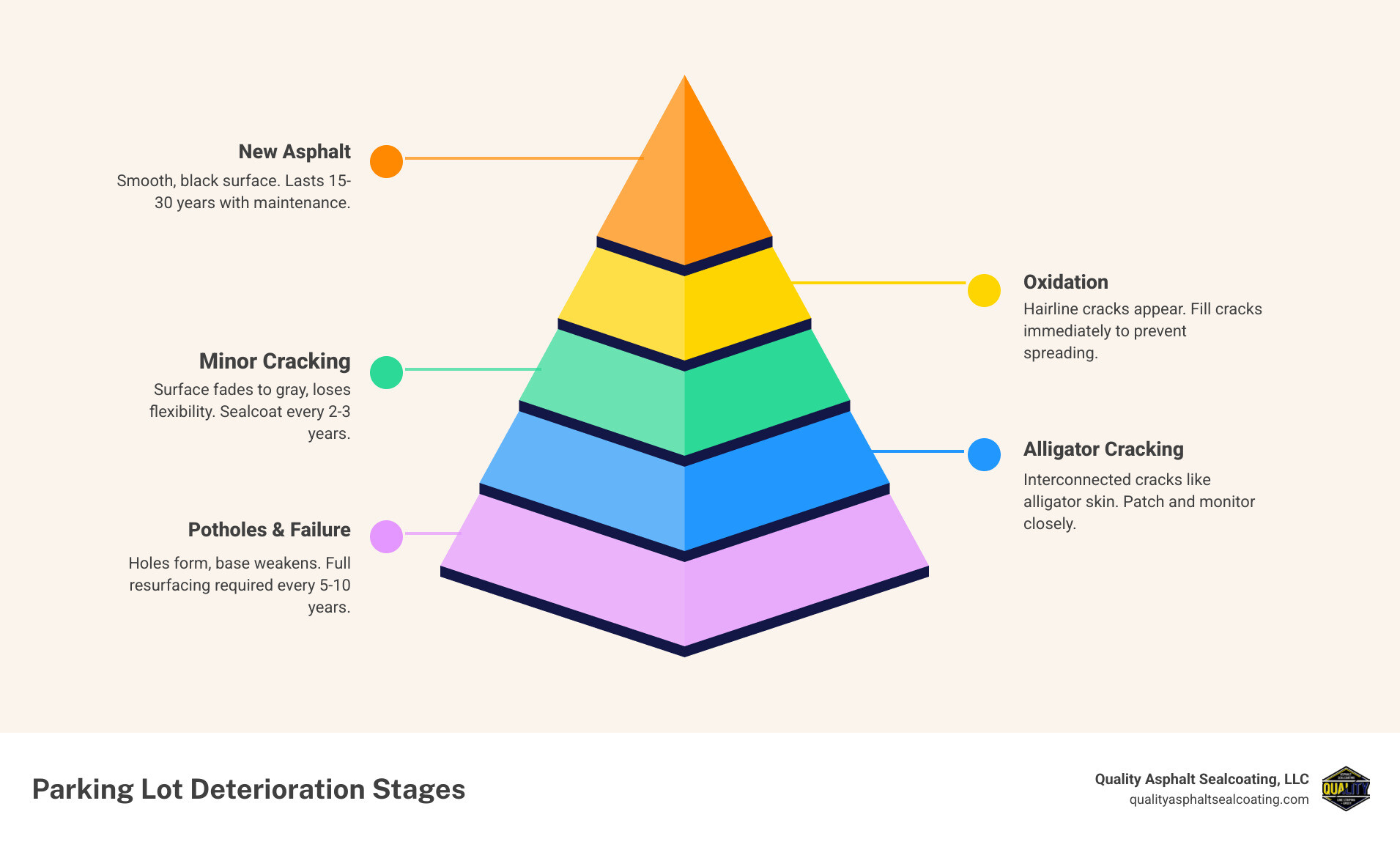
- Alligator Cracking: This is the “point of no return.” These interconnected cracks look like the hide of an alligator and indicate that the structural integrity of the asphalt has failed. At this stage, sealcoating won’t help; you need resurfacing or a patch.
- Standing Water: If you notice large puddles that don’t evaporate long after a Rhode Island rainstorm, you have drainage issues. This “ponding” can seep into the subgrade, causing the entire lot to collapse. Resurfacing can help redirect water toward drains.
- Potholes: Once a crack is ignored, water enters, freezes, and expands, popping out chunks of asphalt. While you can use Line Striping & Pothole Repair Services for minor fixes, multiple potholes across a lot suggest the surface is thinning and needs a full overlay.
- Faded Striping and Oxidation: Over time, the sun’s UV rays and salt from our snowy winters turn asphalt from black to a brittle gray. This process, called oxidation, makes the asphalt prone to cracking. If your lines are invisible and the surface feels like sandpaper (raveling), it’s time for professional attention.
- Surface Thinning and Structural Failure: If the original asphalt was not poured thick enough—commercial lots should generally be at least 4 inches thick for light traffic—the surface will wear down quickly.
Understanding these signs helps you budget effectively. For a deeper look at what these repairs might run you, see The Price is Right: Understanding Asphalt Parking Lot Repair & Resurfacing Expenses.
The Professional Resurfacing Process and Contractor Selection
When you hire a contractor for parking lot resurfacing near me, you shouldn’t just expect them to show up and pour black goo. A professional resurfacing project is a multi-step engineering process.
The Process
- Milling: This involves removing the top 1 to 2 inches of the old, cracked asphalt. Milling ensures the new layer bonds correctly and keeps the lot level with existing curbs and drains.
- Subgrade Repair: A new surface is only as good as what’s underneath. We check for soft spots in the base and repair them before proceeding.
- Tack Coat: A specialized liquid asphalt “glue” is applied to ensure the new overlay sticks to the old base.
- Asphalt Application: The new hot-mix asphalt is laid and compacted.
Asphalt Thickness Standards
The longevity of your lot depends heavily on the thickness of the asphalt. Here is a general guide for what to expect:
| Traffic Type | Recommended Asphalt Thickness |
|---|---|
| Light-Duty (Cars, small SUVs) | 4 Inches |
| Heavy-Duty (Delivery trucks, dumpsters, buses) | 6 to 7.5 Inches |
How to Choose a Contractor
Don’t get burned by a bad hire. When searching for parking lot resurfacing near me, use this checklist:
- Licensing and Insurance: Ensure they are licensed to work in Rhode Island and carry full liability and workers’ comp insurance.
- Project Management: Ask how they will handle “phasing.” A good contractor can resurface a lot in stages so your business stays open.
- Materials: Are they using high-quality hot-mix asphalt or “budget” cold patches that will fail in six months?
- Experience: Look for a company with decades of local experience. At Quality Asphalt Sealcoating, LLC, we bring over 23 years of family-owned expertise to every project.
For lots that aren’t quite ready for a full resurface but need protection, Commercial Parking Lot Sealcoating is an excellent preventative step.
Frequently Asked Questions about Asphalt Maintenance
How often should I schedule parking lot resurfacing near me?
Most commercial parking lots require resurfacing every 5 to 10 years. This timeline depends on traffic volume (heavy trucks wear down asphalt faster), climate (Rhode Island’s freeze-thaw cycles are tough on pavement), and how well you’ve maintained it. If you’ve stayed on top of sealcoating every 2 to 3 years, you can often push resurfacing toward the 10-year mark.
What factors affect the cost of parking lot resurfacing near me?
Several variables influence the final quote:
- Square Footage: Larger lots require more material and labor.
- Asphalt Depth: Thicker applications for heavy-duty traffic cost more.
- Site Prep: If we have to do extensive milling or fix deep structural failures in the subgrade, the price increases.
- Drainage: Correcting “standing water” issues may require specialized grading or manhole adjustments.
When is the best time of year for major asphalt repairs?
Asphalt needs heat to set properly. The best time for resurfacing in the Northeast is during the warm, dry summer months. Ideally, the ambient temperature should be at least 50 degrees Fahrenheit and rising. We avoid winter because the cold prevents the asphalt from compacting correctly, leading to a surface that will crumble within a year.
Conclusion
Finding the right company for parking lot resurfacing near me doesn’t have to be a stressful experience. By focusing on preventative maintenance, understanding the signs of wear, and choosing a contractor with deep local roots, you can ensure your property remains safe and attractive for decades.
At Quality Asphalt Sealcoating, LLC, we are proud to be a family-owned Rhode Island business with over 23 years of experience. We don’t just “pave and leave”; we partner with you to create a long-term maintenance plan that fits your budget. Whether you need a full resurfacing, Line Striping & Pothole Repair Services, or a fresh sealcoat, we use top-quality materials to deliver lasting results.
Ready to protect your investment? Let us help you make your parking lot look brand new again. Contact us today for a detailed estimate and experience the difference that local expertise makes.

