

Why Every Property Owner Needs an Asphalt Maintenance Program
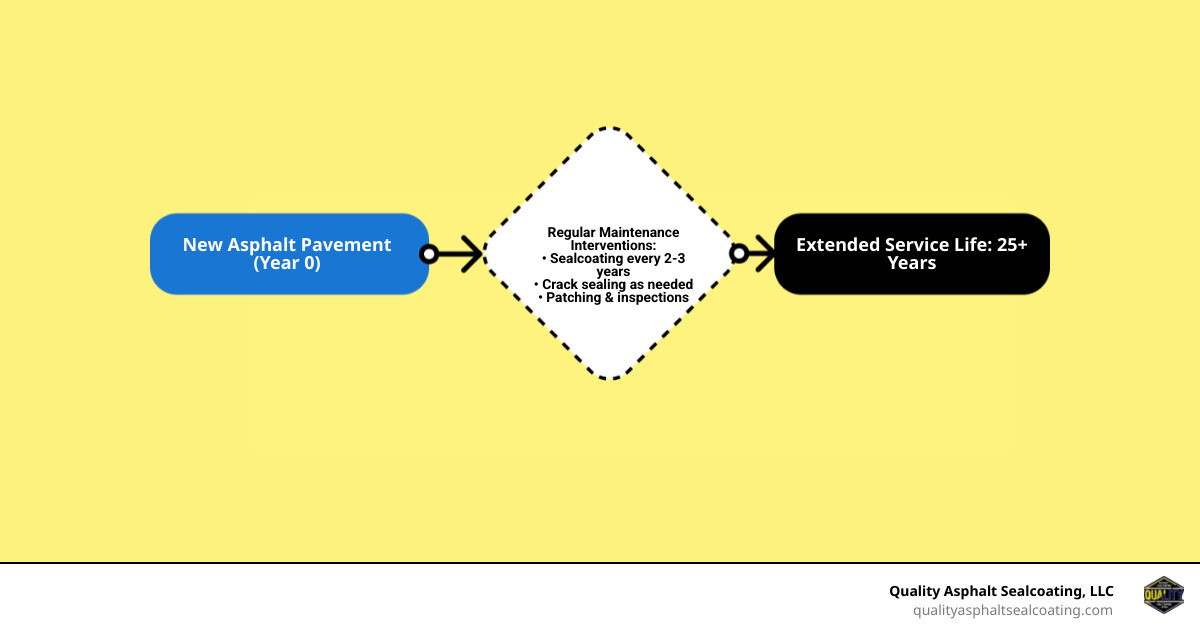
An asphalt maintenance program is a planned schedule of inspections, treatments, and repairs designed to protect your pavement and extend its useful life. Here’s what a solid program includes at a glance:
- Regular inspections – At least once or twice a year (spring and fall)
- Crack sealing – As soon as cracks appear, before water gets in
- Sealcoating – Every 2-3 years to protect against UV rays and oxidation
- Patching and pothole repair – Address damage immediately to prevent spreading
- Drainage maintenance – Keep water moving away from your pavement surface
- Line striping – Refresh faded markings for safety and compliance
- Major repairs or overlays – When surface treatments are no longer enough
Without a plan, small problems become expensive ones — fast.
Here’s the hard truth: neglected asphalt may need full replacement after just 10-12 years, while well-maintained pavement can last 25 years or more. That’s a massive difference in cost and disruption for any property owner.
Whether you manage a commercial parking lot or a residential driveway, the cracks, ruts, and potholes you see today don’t appear overnight. They start small — a hairline crack here, a soft spot there — and grow into structural failures when left untreated. Emergency repairs can cost 5 to 10 times more than the preventative care that would have stopped the problem in the first place.
The good news? A structured maintenance checklist puts you in control. Below, we walk you through everything you need to build and follow an effective asphalt maintenance program.
Understanding the Core of an Asphalt Maintenance Program
When we talk about an asphalt maintenance program, we aren’t just talking about a one-time fix. We’re talking about a comprehensive strategy. Think of it like maintaining a car; you don’t wait for the engine to seize before you change the oil. Similarly, you shouldn’t wait for a sinkhole to swallow a sedan before you look at your parking lot.
A professional Pavement Management Program uses data and strategic interventions to maximize the return on your initial paving investment. In Rhode Island, where our roads take a beating from heavy traffic and coastal humidity, having a plan is the only way to keep your assets from crumbling.
We often see property owners fall into the trap of “reactive maintenance.” This is where you only fix things once they are broken. As we discuss in our look at Preventive vs Reactive: A Deep Dive into Asphalt Maintenance Expenses, being reactive is the fastest way to drain your maintenance budget. A proactive program focuses on keeping the “good” pavement in good condition for as long as possible.
Preventative vs. Corrective Maintenance
In our industry, we divide maintenance into two main camps:
- Preventative Maintenance: These are the routine tasks that keep problems from emerging. This includes sealcoating, minor crack filling, and routine cleaning. These tasks are low-cost and non-urgent, but they are the “secret sauce” to a 25-year pavement life. You can learn more about how we handle this for homeowners through our Driveway Sealcoating Services.
- Corrective Maintenance: This is when we have to fix problems that have already emerged. We’re talking about major crack filling, pothole repair, or spot milling and overlays. These are urgent because if left alone, they lead to total sub-base failure.
By following Pavement Preservation Program details, we focus on applying the right treatment to the right road at the right time. It’s about being surgical with repairs rather than waiting until the only option left is a “rip out and replace” job.
The Impact of an Asphalt Maintenance Program on Pavement Lifespan
Why does asphalt fail? It’s usually a combination of oxidation, UV rays, and water. Asphalt is a flexible pavement, but as it ages, the sun bakes out the essential oils that keep it pliable. It becomes brittle, turns gray, and starts to crack. Once those cracks open up, water gets into the base layers, and in our Rhode Island winters, that water freezes and expands—blowing the pavement apart from the inside.
A structured asphalt maintenance program acts as a shield. Sealcoating provides a sacrificial wear layer that takes the hit from the sun and rain so your asphalt doesn’t have to. According to the Asphalt Institute Maintenance and Rehabilitation guidelines, strategic interventions can transform a standard 15-year lifespan into 25 or 30 years of reliable service.
The Essential Maintenance Checklist: From Inspection to Repair
To manage your pavement, you have to know what you’re looking at. We recommend a “walk-through” inspection at least twice a year—once in the spring to see what the winter did, and once in the fall to prepare for the next one.

When you are out there, keep an eye out for these “Four Horsemen” of pavement failure:
- Raveling: This is when the asphalt starts to disintegrate, and you see loose rocks or “sand” on the surface. Raveling is a primary indicator that the binder is failing and structural failure is on the horizon.
- Rutting: These are the depressions or “grooves” in the wheel paths. This usually happens from heavy traffic or repeated parking in the exact same spots.
- Cracks: Whether they are hairline cracks or wide “alligator” cracks (which look like the skin of a reptile), they are all gateways for water.
- Potholes: The final stage of neglect. Potholes are a massive liability and should be addressed immediately.
For a deeper dive into these issues, check out The A to Z of Asphalt: Your Guide to Parking Lot Maintenance & Repair.
Critical Tasks for Your Asphalt Maintenance Program
Your checklist should be prioritized by urgency. Here is how we break down the must-do tasks:
- Sealcoating: This should be done about 6-12 months after initial installation (once the asphalt has cured) and then every 2 to 3 years thereafter. It keeps the surface dark, beautiful, and protected.
- Crack Filling: This is perhaps the most cost-effective thing you can do. By using high-quality Crack Filling Mastics Services, we can seal out water and prevent the dreaded freeze-thaw damage.
- Patching and Pothole Repair: If you have a hole, you need to fill it. We use various methods depending on the severity, which you can explore through our Line Striping Pothole Repair Services.
Choosing the Right Repair Method
Not all repairs are created equal. Depending on the distress, we might recommend:
- Skin Patches (Temporary): Used when time or weather prevents a permanent fix. It’s a “band-aid” to keep things safe.
- Mill and Fill (Permanent): We grind out the top layer of damaged asphalt and replace it with fresh material.
- Full Depth Patches: If the base is failing, we mill out the damaged area 30cm beyond the failure, fix the sub-base, and then pave it back up.
Following FHWA Pavement Design Guidance ensures that the repair matches the structural needs of the road. We always say: determine the cause of the failure before you fix the surface, otherwise, you’re just throwing money into a hole that will reappear next year.
Advanced Surface Treatments and Rehabilitation
Sometimes a simple sealcoat isn’t enough, but a full repave is too expensive. This is where advanced surface treatments come into play. These are often used on larger commercial properties or municipal roads to extend life by 7 to 10 years.
- Slurry Seal: A mix of aggregate, emulsified asphalt, and water. It’s thicker than a standard sealcoat and provides a new wearing surface. Slurry seals can feel “soft” during their first hot summer—that’s normal!
- Fog Seal: A light application of diluted asphalt emulsion used to seal micro-cracks and enrich the surface of aged asphalt.
- Microsurfacing: A high-performance version of slurry seal that uses polymer-modified binders. It’s faster to cure and can be used on high-traffic areas.
- Chip Seal: We apply a layer of hot asphalt and then “chip” it with small stones. It’s great for waterproofing but can be a bit noisy for residential areas.
You can find more technical data on these materials at Pavement Interactive Materials Testing.
Drainage and Foundation Protection
You can have the best asphalt in the world, but if your drainage is bad, your pavement will fail. Water is the number one enemy of asphalt. If water pools on the surface or saturates the sub-base, the ground becomes soft, and the asphalt will crack under the weight of vehicles.
We pay close attention to catch basins and the “grade” of your lot. If we see standing water, we know there’s a problem. Our team specializes in Fixing Your Foundation: Essential Parking Lot Repair Services to ensure that your “foundation” is just as solid as your surface.
Strategic Planning for Your Asphalt Maintenance Program
Building a plan requires looking at the calendar. In Rhode Island, we have a very specific window for asphalt work. You can’t lay hot mix in a blizzard, and you shouldn’t sealcoat when there’s a frost warning.
Evaluating and Budgeting for Long-Term Success
To plan effectively, we use a simple approach based on square yardage (SY) and the current condition of your pavement. The goal is to map out what work is likely needed and when, so maintenance stays predictable and your pavement condition stays stable over time.
Rather than waiting for surprise failures, we recommend:
- Tracking the age of the asphalt and the last time it was serviced
- Prioritizing preventative work while the pavement is still in good condition
- Scheduling corrective repairs promptly when distress is identified
- Getting at least three bids from trusted contractors in the early spring, but remember: the cheapest bid isn’t always the best. Look for a contractor who takes the time to do a proper Pavement Evaluation and explains the “why” behind their recommendations.
Seasonal Timing and Best Practices
| Season | Task | Why? |
|---|---|---|
| Spring | Inspection & Cleaning | Identify winter damage; remove salt and sand. |
| Late Spring | Crack Sealing | Best time to seal before the heat closes cracks. |
| Summer | Sealcoating | High temps are required for the “break” and cure. |
| Fall | Final Patching | Last chance to waterproof before the freeze-thaw. |
| Winter | Snow Removal | Use professional crews to avoid plow damage. |
Our Rhode Island climate is unique. We deal with heavy frost heave—this is when water in the base freezes and pushes the pavement upward. This is why Commercial Parking Lot Sealcoating is so vital; it keeps that water out of the base in the first place.
Frequently Asked Questions about Asphalt Maintenance
How often should asphalt be inspected?
We recommend a professional inspection twice a year—once in the spring and once in the fall. However, property owners should keep a casual eye on their pavement year-round. If you see a new crack or a pooling puddle, don’t wait for your “scheduled” inspection to call us.
What are the first signs of pavement failure?
The very first sign is usually discoloration. When your asphalt turns from deep black to light gray, it’s oxidizing and becoming brittle. Following that, you’ll see hairline cracks or raveling (loose gravel). If you catch it at the gray stage, a simple sealcoat can often reset the clock.
When is the best time of year for sealcoating?
In Rhode Island, the sealcoating season typically runs from May through September. We need night-time temperatures to stay above 50 degrees Fahrenheit for the material to cure properly. If it’s too cold or too wet, the sealcoat won’t bond, and it will peel off within a few months.
Conclusion
At the end of the day, an asphalt maintenance program is about peace of mind. It’s about knowing that your property is safe, your liability is low, and your investment is protected.
At Quality Asphalt Sealcoating, LLC, we’ve spent over 23 years helping Rhode Island neighbors maintain their pavement. As a family-owned business, we take pride in using top-quality materials and providing honest evaluations. We don’t just want to fix your driveway or parking lot once; we want to be your partners in pavement preservation for the next 25 years.
Ready to start your maintenance journey? Explore our full range of Services and let’s put a plan in place today.

