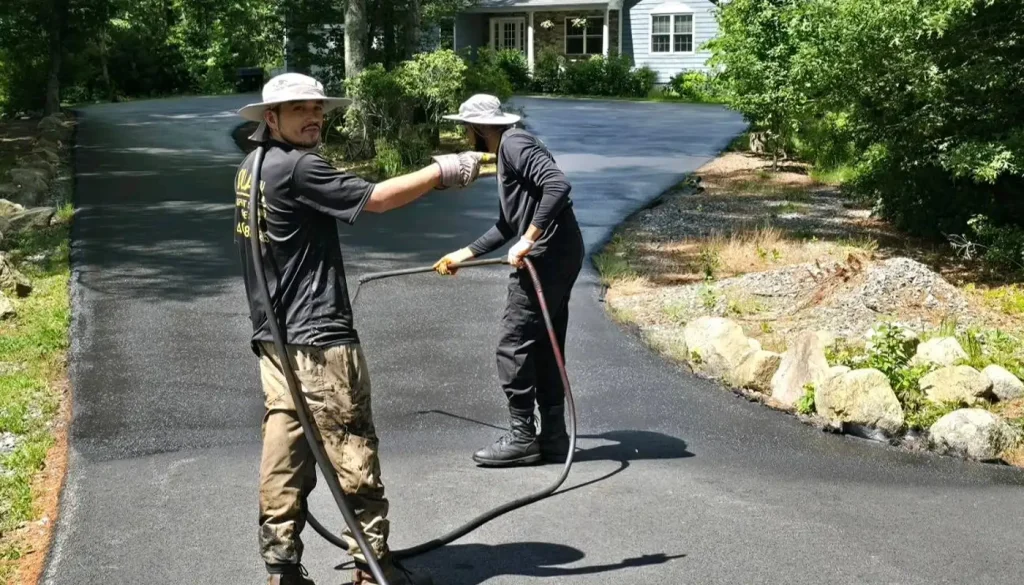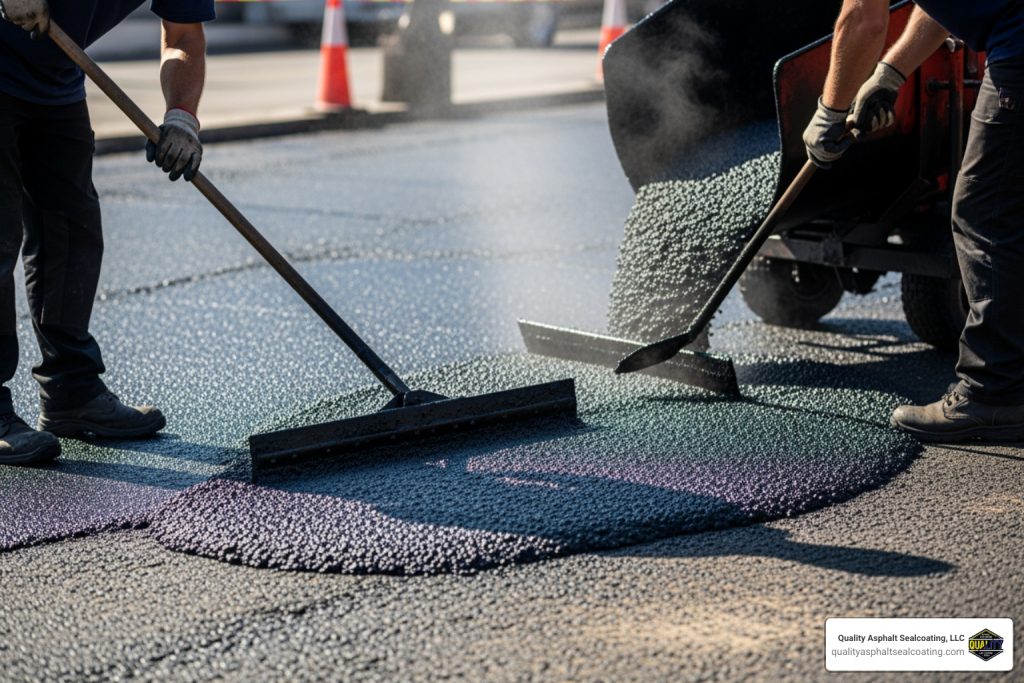
Why Clear Pavement Markings Matter More Than You Think
Pavement striping contractors are professionals who apply painted or thermoplastic markings to parking lots, roads, warehouses, and other surfaces to improve safety, organization, and compliance.
Looking for a quick answer? Here’s what to know:
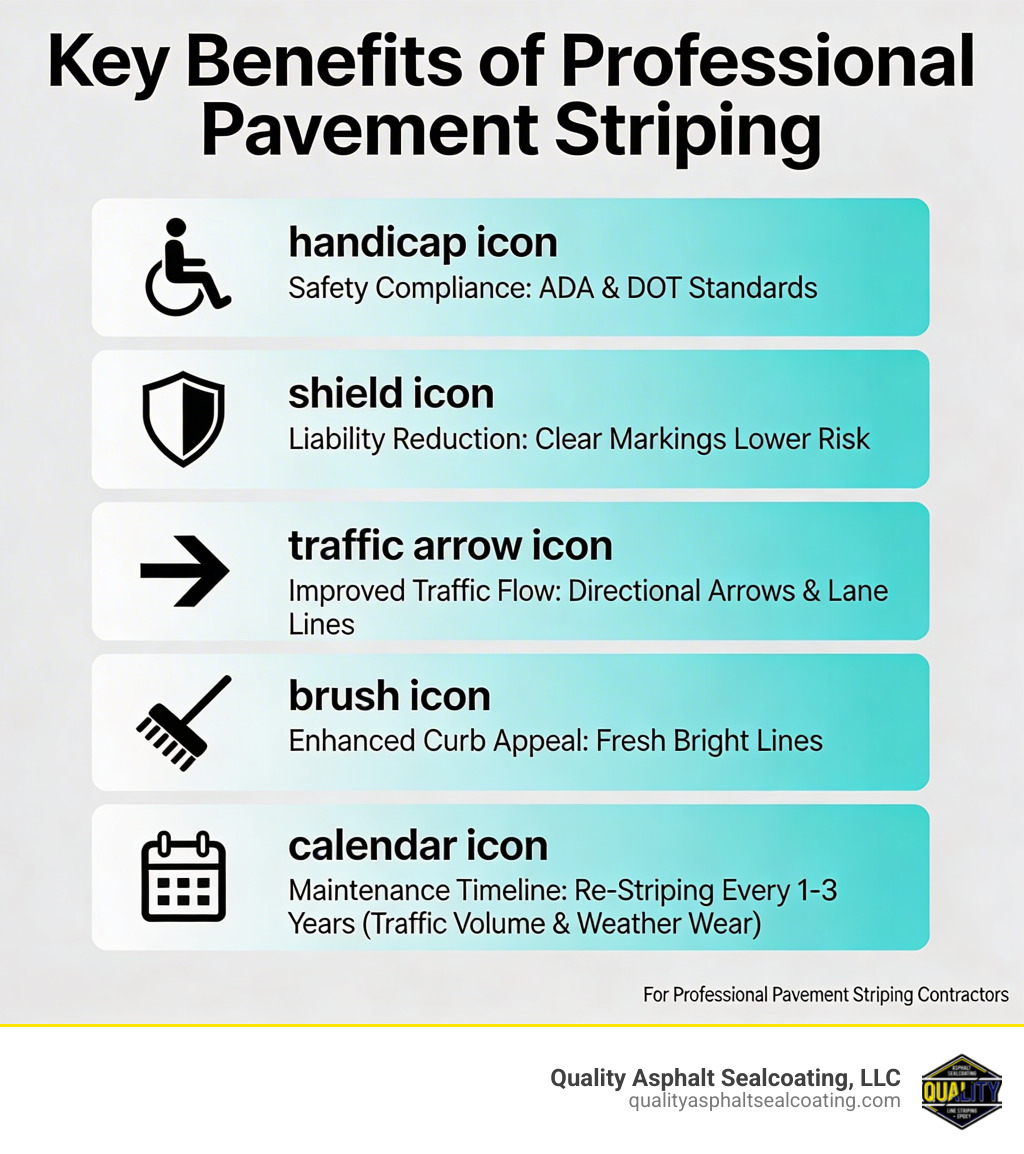
- Safety first – Clear lines guide drivers and pedestrians, reducing accidents
- ADA compliance – Proper markings for handicap spaces and accessible pathways are legally required
- Liability protection – Faded or missing markings can expose property owners to legal risk
- Traffic flow – Well-marked lots reduce congestion and confusion
- Property appearance – Fresh striping makes any property look clean and professional
Think about the last time you pulled into a poorly marked parking lot. Lines faded. No clear direction. You’re not sure where to turn or where it’s safe to walk. It’s frustrating — and more importantly, it’s dangerous.
Weather, heavy traffic, and UV exposure all wear down pavement markings over time. What starts as a crisp, bright line gradually fades into something barely visible. For property owners, that’s not just an eyesore. It’s a safety hazard and a potential liability.
The good news? Professional pavement striping contractors can restore and maintain your markings efficiently — keeping your property safe, compliant, and looking its best.
Why Your Property Needs Professional Pavement Striping Contractors
When you manage a commercial property or a local roadway in Rhode Island, the lines on the ground are more than just decoration; they are a communication system. As expert pavement striping contractors, we know that these markings dictate how people interact with your space. Without them, chaos ensues.
Professional striping ensures that your property adheres to high safety standards. When lines are bright and visible, drivers know exactly where to park and where to drive, which significantly reduces the risk of low-speed collisions. This isn’t just about preventing dented bumpers—it’s about liability reduction. If an accident occurs on your property and the markings are found to be faded or non-existent, you could be held responsible for the lack of clear guidance.
Furthermore, The Art of the Stripe and Professional Parking Lot Marking highlights how a well-marked lot improves the overall customer experience. It shows that you care about your property and the safety of your visitors.
Essential Compliance and Safety Standards
One of the most critical roles of pavement striping contractors is ensuring ADA compliance. The Americans with Disabilities Act (ADA) requires specific markings for handicap parking spaces, including the blue-and-white international symbol of access and designated loading zones for van accessibility. Failing to meet these standards can result in heavy fines and legal trouble.
Beyond ADA regulations, your property must meet local fire marshal requirements. This includes clearly marked fire lanes that must remain unobstructed at all times. Professional contractors also handle:
- Crosswalks: Ensuring pedestrian safety in high-traffic areas.
- Loading Zones: Defining areas for deliveries to keep the main traffic lanes clear.
- DOT Approval: On public-facing roads, markings must meet Department of Transportation standards for reflectivity and layout.
Before hiring, it is always wise to Check Contractor Licensing to ensure they have the credentials to perform work that meets these legal benchmarks.
Maximizing Parking Efficiency
Space optimization is a science. If your parking lot lines are laid out poorly, you might be losing out on valuable parking spots. We use precision techniques to maximize the number of vehicles your lot can hold while maintaining safe traffic flow.
Directional arrows are a key part of this efficiency. By Pointing the Way to Safety and Efficiency with Parking Lot Arrows, we prevent “wrong-way” drivers and keep the flow of traffic moving smoothly toward exits and entrances. This organized approach reduces customer frustration and makes your business more inviting.

Specialized Services Offered by Pavement Striping Contractors
While parking lots are our bread and butter, pavement striping contractors offer a wide range of specialized services for various industries. From the high-stakes environment of an airport to the playful atmosphere of a school playground, every surface requires a different approach.
For a deeper look at the breadth of these offerings, check out The Ultimate Guide to Pavement Marking Services.
Industrial and Warehouse Marking
In an industrial setting, organization equals safety. We provide indoor striping for warehouses and distribution centers to define forklift paths, pedestrian walkways, and hazardous zones. These markings are often done with specialized epoxy coatings that can withstand the heavy wear and tear of industrial machinery. Clear warehouse layouts improve operational efficiency by ensuring that workers and equipment can move through the space without bottlenecking or accidents.
Recreational and Sports Surface Striping
Recreational surfaces require a high level of precision. Whether it’s basketball courts, tennis courts, or school playgrounds, the lines must be exact to meet regulation standards. We use custom stencils to create everything from hopscotch grids for elementary schools to intricate logos for sports teams.
If you are looking for information on public road markings, our guide Stripes for Miles: Your Guide to Local Road Striping Services covers the essentials of maintaining safe transit routes.
Materials and Technology Used by Pavement Striping Contractors
The durability of your lines depends heavily on the materials used. Not all paint is created equal, and choosing the wrong type can lead to premature fading.
Common materials include:
- Traffic Paint: Typically water-based or solvent-based. It is the standard for most parking lots.
- Thermoplastic Markings: A plastic-based material that is melted onto the asphalt. It is incredibly durable and often used on high-traffic roads.
- Glass Beads: Small reflective beads dropped into wet paint to provide nighttime visibility.
Understanding What’s the Difference Between Stripping and Striping? is the first step in speaking the language of the industry.
The Advantages of Thermoplastic Markings
Thermoplastic is the “heavy hitter” of the striping world. Research shows that thermoplastic markings can last 10+ years on parking lot surfaces and up to 12 years on secondary roads. Even on busy highways, they typically last about 5 years.
The main benefits include:
- Quick Drying: They cure almost instantly, allowing traffic to resume without long shutdowns.
- Weather Resistance: They hold up better against the harsh Rhode Island winters and snowplow activity.
- Reflectivity: They maintain their visibility much longer than standard paint.
| Feature | Standard Traffic Paint | Thermoplastic Markings |
|---|---|---|
| Durability | 1-3 Years | 5-10+ Years |
| Drying Time | 30-60 Minutes | Instant |
| Reflectivity | Moderate | High |
| Best Use | Low-traffic lots | Highways & High-traffic areas |
Precision Equipment and Technology
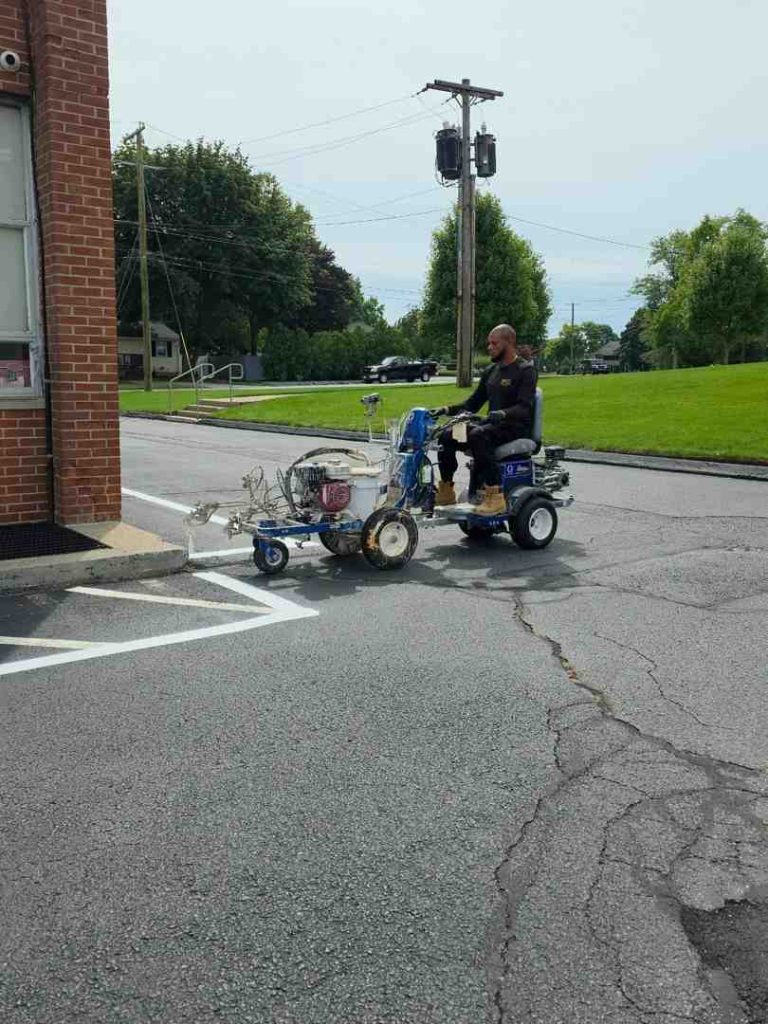
Modern pavement striping contractors use advanced technology to ensure straight lines and accurate layouts. We utilize airless sprayers and “Line Lazers” to produce sharper, thicker lines that bond better to the pavement. Computerized layout tools allow us to map out a lot with mathematical precision before a single drop of paint hits the ground.
To learn more about the technical side, read The Art of the Line: How to Stripe Like a Pro.
The Professional Striping Process and Maintenance
A professional job starts long before the paint machine is turned on. The process involves several key steps to ensure the markings last as long as possible.
- Site Preparation: We begin by removing all debris, dirt, and oil from the surface. Paint will not stick to a dirty lot.
- Surface Cleaning: Using high-powered blowers or sweepers to ensure a pristine canvas.
- Layout Design: Marking out the lines according to the pre-approved plan.
- Application: Using precision equipment to apply the chosen materials.
- Curing Time: Allowing the paint to dry thoroughly before reopening the area to traffic.
For more on why this process matters, see Re-Striping Your Parking Lot: More Than Just Paint.
Maintenance Tips to Extend Marking Life
You’ve invested in professional striping; now you need to protect it. The best way to extend the life of your markings is through a comprehensive maintenance plan.
- Sealcoating: Applying a protective layer over the asphalt prevents UV rays and water from degrading the surface and the paint.
- Crack Filling: Addressing cracks early prevents water from getting under the pavement and causing “alligatoring,” which destroys the surface markings.
- Pothole Repair: Keeping the surface smooth ensures that the striping remains continuous and visible.
Our Line Striping & Pothole Repair Services are designed to work together to keep your pavement in top shape for years.
When to Schedule Re-Striping
How do you know it’s time to call in the professionals? Look for these fading indicators:
- Visibility: If you can’t see the lines clearly from the driver’s seat of a car, it’s time.
- Safety Audits: If a safety inspection reveals that ADA symbols or fire lanes are becoming obscured.
- Traffic Volume: High-traffic lots in Rhode Island may need re-striping every 1-2 years, while lower-traffic areas might last 3 years.
Stay updated on the best practices for maintenance by following our Category: Line Striping & Pothole Repair.
Frequently Asked Questions about Pavement Marking
How often should a parking lot be re-striped?
Generally, we recommend re-striping every 1 to 2 years. However, this depends on traffic volume and weather conditions. In Rhode Island, the salt and sand used during winter can act as an abrasive, wearing down paint faster than in milder climates.
How long does it take for pavement paint to dry and cure?
Standard water-based traffic paint is usually dry to the touch in about 30 minutes, but we recommend keeping traffic off the lines for at least an hour. Thermoplastic markings, on the other hand, cure almost instantly as they cool.
What is the difference between water-based and solvent-based traffic paint?
Water-based paints are more environmentally friendly and are the standard for most commercial applications today. Solvent-based paints are more resistant to freezing during application but are used less frequently due to environmental regulations.
Conclusion
At Quality Asphalt Sealcoating, LLC, we understand that your property is a significant investment. As a family-owned Rhode Island business with over 23 years of experience, we take pride in delivering precision workmanship that stands the test of time. Whether you need a residential driveway refreshed or a massive commercial complex re-striped, we bring the same level of commitment to every job.
Don’t let faded lines become a liability for your business. From sealcoating and crack filling to expert line striping, we provide the lasting results you need to keep your property safe and professional.
Ready to refresh your pavement? Request a professional quote for line striping and pavement maintenance from Quality Asphalt Sealcoating, LLC today. We look forward to helping you pave the way to a safer, more efficient property.