
Why Estimating Sealcoating Costs Before You Start Saves You Money
A driveway sealcoating cost calculator is the fastest way to estimate how much sealer, prep work, and labor your pavement project will need — before you spend a dollar.
Here’s a quick snapshot of what to expect:
| Factor | Typical Range |
|---|---|
| Driveway size (average) | 400–600 sq ft |
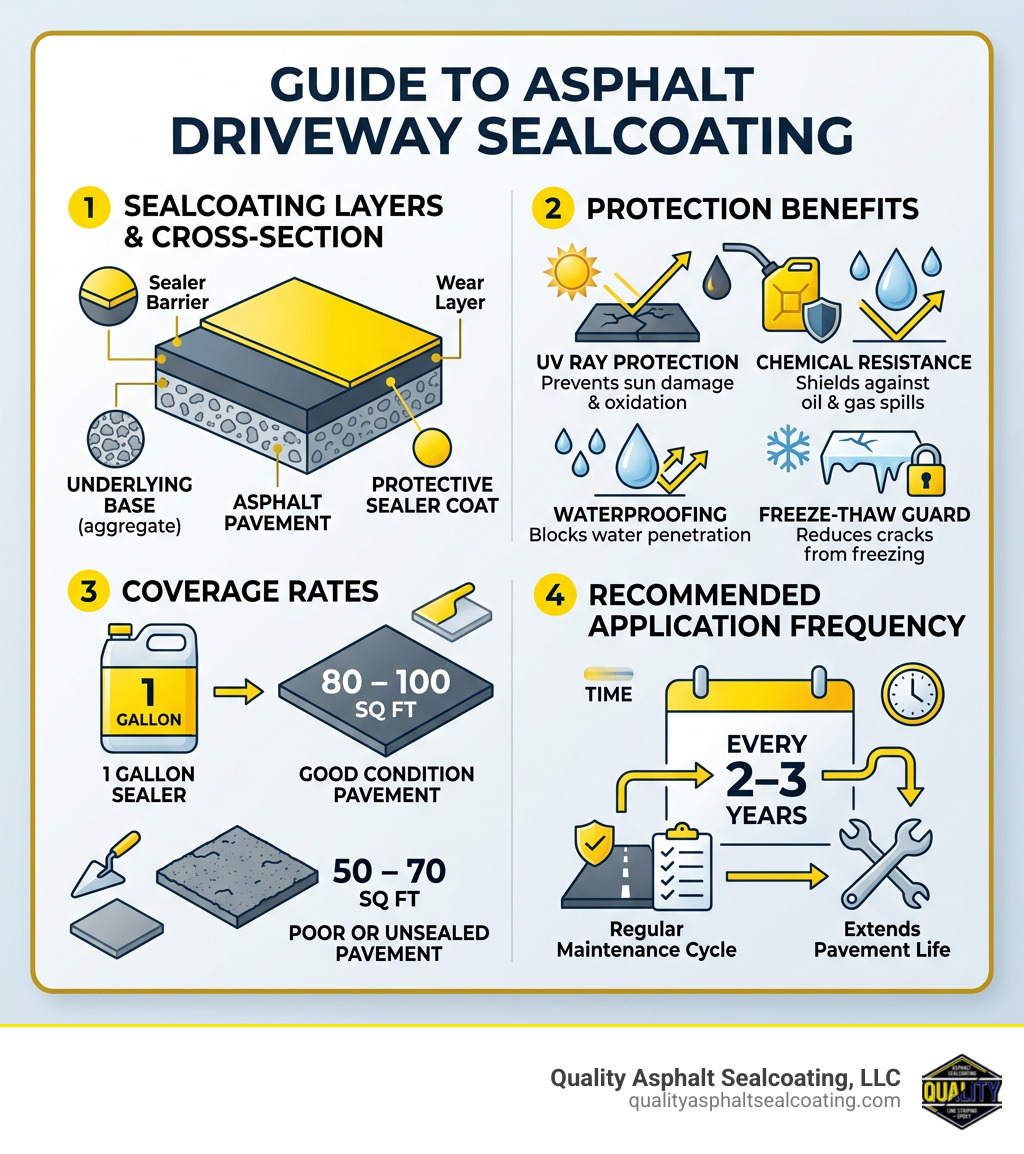
| Sealer coverage per gallon | 80–100 sq ft (good condition) |
| Coats needed (poor condition) | 2 coats |
| Sealing frequency | Every 2–3 years |
| DIY vs. professional | Materials only vs. full-service |
Your asphalt driveway takes a beating every year — from freeze-thaw cycles, UV rays, oil spills, and heavy traffic. Without regular sealing, that damage compounds fast. Small cracks become big ones. Water gets underneath. The whole surface starts to fail.
The good news? Sealcoating is one of the most cost-effective ways to protect your pavement investment. A well-maintained driveway can even add up to 5% to your property’s value, according to the National Association of Realtors.
But before you buy a single pail of sealer or call a contractor, you need to know how much material your project actually requires. That’s where a sealcoating calculator becomes your best tool.
This guide walks you through exactly how to use one — and everything that affects your estimate.
Understanding the Driveway Sealcoating Cost Calculator
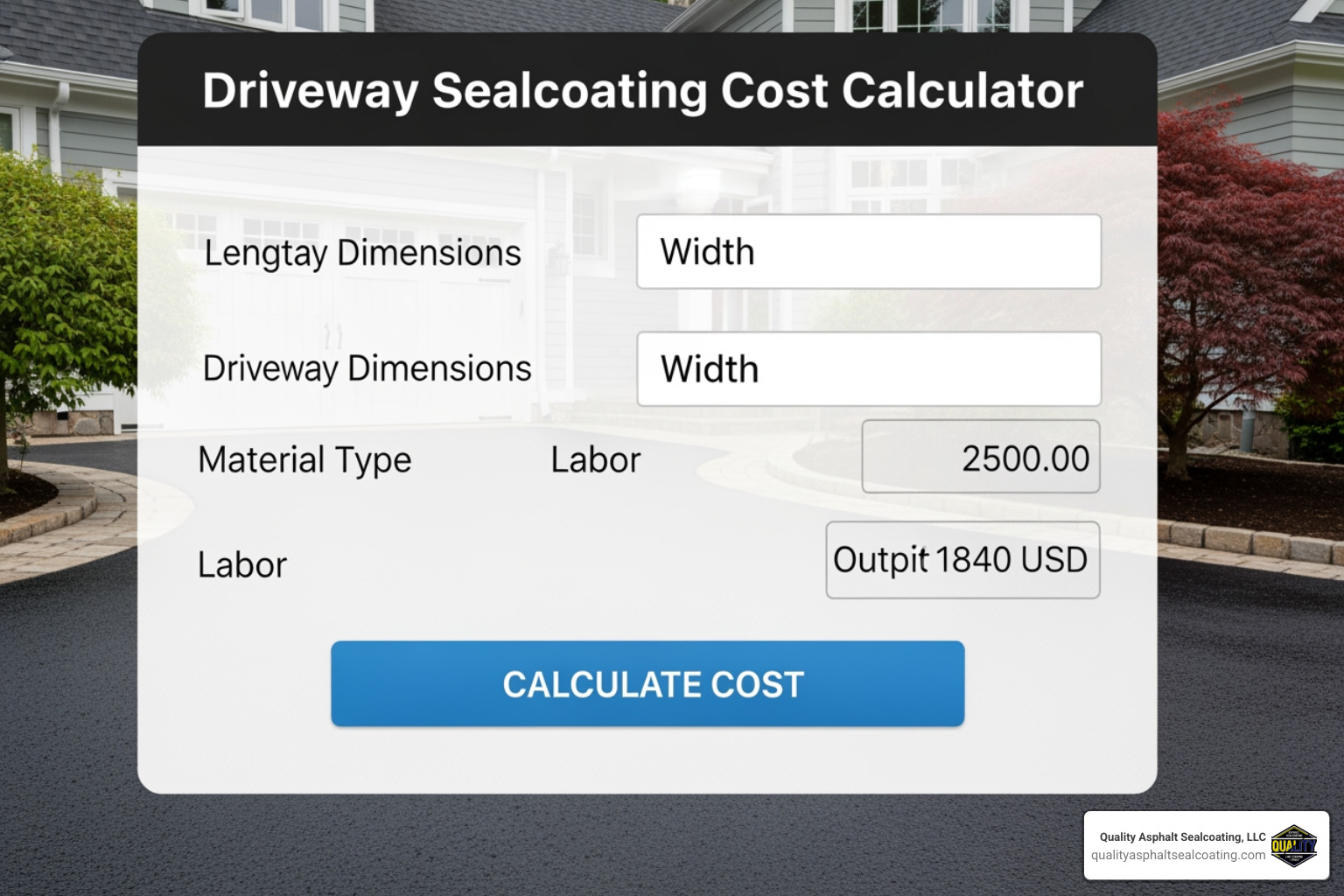
When we talk about a driveway sealcoating cost calculator, we aren’t just talking about a simple math equation. It is a comprehensive way to look at your pavement’s health and determine the resources needed to restore it. Think of it as a roadmap for your driveway’s rejuvenation.
At its core, the calculator helps you translate the physical dimensions of your driveway into tangible needs: how many pails of sealer to buy, how many hours of labor are required, and what kind of preparation work is necessary to ensure the sealant actually sticks. Whether you are managing a small residential path or looking into driveway sealcoating services for a larger property, getting these numbers right is the first step toward a successful project.
How a driveway sealcoating cost calculator works
A driveway sealcoating cost calculator functions by processing several key variables. First, it takes your driveway’s square footage. Then, it applies a “coverage rate”—which is the amount of square feet a single gallon of sealer can reasonably cover.
However, it isn’t just about the size. The calculator must account for the application method. For instance, a manual squeegee or brush application often uses more material than a professional spray system because it “pushes” the sealer into the pores of the asphalt more aggressively. The calculator also factors in the number of coats. While one coat might suffice for a driveway in excellent condition, a second coat is often necessary for older surfaces. Interestingly, the second coat generally requires about one-third less product than the first because the initial layer has already filled the deepest pores.
Benefits of using a driveway sealcoating cost calculator
The primary benefit of using a calculator is precision. We have seen many homeowners end up with three extra five-gallon pails of sealer sitting in their garage because they guessed the amount they needed. Conversely, there is nothing more frustrating than running out of sealer when you are three-quarters of the way finished.
Using a calculator allows for better budget planning and significantly reduces material waste. It also helps you understand the project timeline. By knowing the volume of material and the required prep work, you can better estimate if the job will take an afternoon or a full weekend. Understanding these logistics is a key part of asphalt maintenance expenses, helping you move from reactive repairs to a proactive, cost-saving strategy.
How to Measure Your Driveway for Accurate Estimates
Before you can use a driveway sealcoating cost calculator, you need accurate measurements. Eyeballing it rarely works. We recommend using a long tape measure or a measuring wheel to get the most precise numbers.
Calculating square footage for standard driveways
For most Rhode Island homes, driveways are rectangular. The formula is simple: Length x Width = Square Footage.
If you have a driveway that is 20 feet wide and 50 feet long, you have 1,000 square feet of asphalt. If your driveway has a “bump out” or a parking area, simply measure that section separately as its own rectangle and add it to the total. Remember to deduct the area of any permanent structures, like a brick planter or a shed, that might be sitting on the asphalt. For more details on the importance of accurate measurements and surface protection, you can check out this scientific research on driveway protection.
Accounting for sidewalks and aprons
Don’t forget the “extras.” Many properties have asphalt sidewalks, aprons (the section between the street and your driveway), or even small basketball courts. These surfaces often have different wear patterns than the main driveway.
When calculating your total area, include these sections to ensure you have enough material for a uniform look across the entire property. If you have a winding or irregular driveway, break it down into smaller geometric shapes (rectangles and triangles) and add them together. It’s better to have a slightly high estimate than a low one.
Key Factors Influencing Your Sealcoating Requirements
The “condition” of your asphalt is the biggest “wildcard” in any driveway sealcoating cost calculator. Not all 1,000-square-foot driveways are created equal.
| Asphalt Condition | Texture | Sealer Absorption | Coverage Rate (per gallon) |
|---|---|---|---|
| Excellent/Good | Smooth, previously sealed | Low | 100 sq ft |
| Fair | Some oxidation, minor pits | Medium | 80-90 sq ft |
| Poor/Porous | Rough, gray, never sealed | High | 50-60 sq ft |
If your driveway is older and looks like a dry sponge, it will “drink” the sealer much faster than a driveway that was sealed just two years ago. This factor is critical when determining parking lot repair or residential maintenance needs.
Impact of pavement age and texture
Unsealed asphalt undergoes a process called oxidation. The sun’s UV rays break down the liquid asphalt “glue” that holds the rocks together. As this glue disappears, the surface becomes gray and porous. This increased porosity means you will need more sealer to achieve a protective barrier. For very porous or “starved” asphalt, a second coat is almost always required to ensure the surface is fully sealed and won’t continue to deteriorate.
Regional weather considerations
In Rhode Island, our climate plays a massive role in sealcoating success. We deal with high humidity in the summer and intense freeze-thaw cycles in the winter. Humidity can slow down drying times significantly, while the salt and sand used on our roads in the winter act like sandpaper on your sealer.
According to scientific research on regional cost factors, the local environment dictates both the frequency of application and the type of additives needed in the mix. In the Ocean State, we have to be particularly mindful of the “window” for sealcoating, which typically runs from late April through November.
Choosing the Right Sealant for Your Pavement
The type of sealant you choose will affect both the material requirements and the longevity of the project. There is no one-size-fits-all solution, especially when looking at commercial sealcoats.
Comparing coal tar and asphalt emulsion
For decades, coal tar was the industry standard. It is highly resistant to gasoline and oil spills. However, coal tar has a higher environmental impact and contains more VOCs (volatile organic compounds).
Asphalt emulsion sealers have become the most popular choice for residential driveways. They are water-based, have a lower odor, and are much friendlier to the environment. While they might be slightly less resistant to heavy oil spills than coal tar, they provide excellent UV protection and a beautiful, deep-black finish that most homeowners prefer.
The benefits of latex acrylic sealants
If you are looking for the “premium” option, latex acrylic sealants are often the way to go. These are typically the most expensive materials, but they offer incredible longevity—sometimes lasting five to ten years. They are fast-drying, have excellent color retention, and provide superior UV protection. For a high-traffic driveway or a property where you want the absolute best protection, the higher initial material cost is often offset by the fact that you won’t need to reseal nearly as often.
Preparation and Application: The Secret to Longevity
You can use the best driveway sealcoating cost calculator in the world and buy the most expensive sealer, but if you don’t prep the surface, it will fail. Sealcoating is 80% preparation and 20% application.
Before the sealer touches the ground, the driveway must be cleaned of all dirt, debris, and vegetation. Oil spots must be primed with a specialized sealer, or the new sealcoat will simply peel off those areas. This level of detail is standard in commercial parking lot sealcoating and should be the standard for your home as well.
Why crack filling is essential
If sealcoating is the “paint,” crack filling is the “caulk.” Sealcoat is a thin liquid designed to protect the surface; it is not designed to fill structural cracks.
In Rhode Island, water is the enemy of asphalt. When water gets into a crack and freezes, it expands, turning a small hairline fracture into a massive pothole. Filling cracks with a hot-applied rubberized filler is the most important maintenance step you can take. It prevents water infiltration, stops vegetation from growing through the pavement, and maintains the structural integrity of the driveway.
Ideal weather conditions for application
Timing is everything. You want a day where the temperature is between 50°F and 90°F. Humidity should be low, and there should be no rain in the forecast for at least 24 to 48 hours. Direct sunlight helps the sealer cure faster, but extremely hot days can cause the sealer to dry too quickly, leading to “streak” marks. Always check the local Rhode Island forecast before starting—if there’s a chance of a sudden coastal shower, it’s better to wait.
Professional vs. DIY: Making the Right Choice
Many homeowners wonder if they should tackle the job themselves. While a DIY project can save on labor, there are trade-offs in material quality and equipment.
When to hire a professional
Professional contractors have access to commercial-grade sealants that aren’t typically sold in big-box home improvement stores. These professional mixes often include additives like sand (for traction) and polymer tougheners (for durability).
If you have a very large driveway, extensive cracking, or significant pothole damage, a professional is usually the better choice. We use specialized spray systems and high-volume tanks that ensure an even, consistent coat that is difficult to replicate with a hand brush. Plus, hiring a pro usually comes with a warranty. For more guidance, see our tips on picking a sealcoating pro.
Common DIY mistakes to avoid
According to scientific research on DIY tools and prep, the most common mistake is poor cleaning. If there is a layer of dust or “pollen” on the asphalt, the sealer will bond to the dust, not the driveway.
Other common errors include:
- Over-dilution: Adding too much water to the sealer to make it “stretch” further, which weakens the protective layer.
- Poor timing: Applying sealer right before a rainstorm.
- Uneven application: Leaving thick puddles in low spots, which will crack and peel as they dry.
Frequently Asked Questions about Driveway Maintenance
How long does sealcoat take to dry before I can drive on it?
Typically, you can walk on the surface within 4 to 8 hours, but you should wait 24 to 48 hours before driving a vehicle on it. In high humidity or shaded areas, we recommend waiting the full 48 hours to ensure the sealer has completely hardened.
How often should I sealcoat my driveway for maximum lifespan?
For most residential driveways in Rhode Island, we recommend sealcoating every 2 to 3 years. If you wait too long (5+ years), the asphalt will become too brittle and porous. If you seal it every year, you run the risk of sealer buildup, which can actually cause the surface to crack.
Does sealcoating fill in large potholes or low spots?
No. Sealcoating is a protective film, not a structural filler. Potholes require a “hot patch” or “cold patch” repair with actual asphalt material before the sealcoating process begins. Similarly, low spots that collect water cannot be leveled out with sealer; they require professional resurfacing.
Conclusion
At Quality Asphalt Sealcoating, LLC, we bring over 23 years of Rhode Island expertise to every project. We understand that your driveway is a significant part of your home’s value, and we treat it with the care it deserves. Whether you are using a driveway sealcoating cost calculator to plan your budget or you are ready to hand the job over to the experts, preventive maintenance is always cheaper than a total driveway replacement.
Regular sealcoating, crack filling, and pothole repair are the keys to a long-lasting, beautiful driveway. If you’re ready to protect your investment with professional results, we are here to help.
Request a professional estimate today and let us help you keep your pavement in top shape for years to come!

