Why Crack Repair Asphalt Driveway Maintenance Can’t Wait
Crack repair asphalt driveway work is something every property owner will face — and the sooner you act, the better.
Here’s a quick overview of how to repair asphalt driveway cracks:
- Inspect the crack — measure its width and depth
- Clean the crack — remove all dirt, weeds, and debris
- Choose the right filler — based on crack width (see below)
- Apply the filler — pour, caulk, or tamp depending on the method
- Let it cure — wait at least 24-48 hours before driving on it
- Seal the surface — apply driveway sealer to protect the repair
| Crack Width | Recommended Repair Method |
|---|---|
| Under 1/8″ | Pourable squeeze-bottle filler |
| 1/8″ to 1/2″ | Rubberized filler with caulking gun |
| 1/2″ to 3/4″ | Hot rubberized or cold pour crack filler |
| 3/4″ to 2″ | Hot rubberized filler or cold patch asphalt |
| Over 2″ or alligator cracking | Cold patch + compaction, or professional repair |
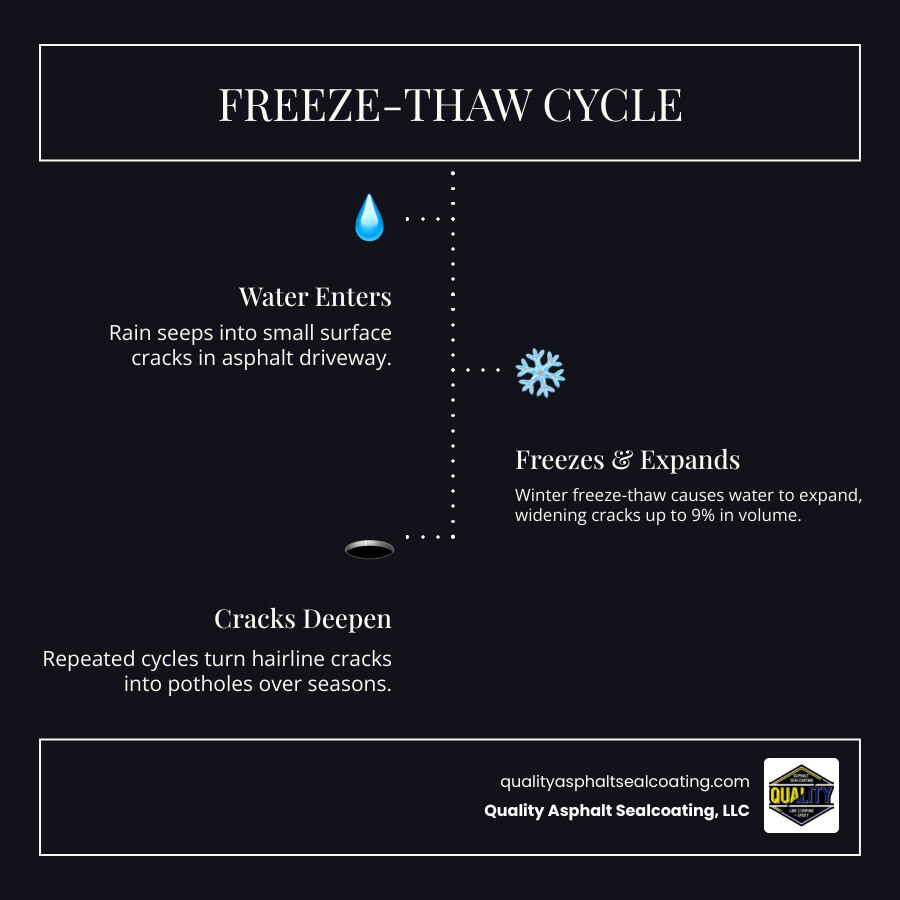
Asphalt driveways are tough — but they’re not invincible. Over time, water seeps into small surface cracks. When temperatures drop, that water freezes and expands. When it warms up, it contracts. This freeze-thaw cycle repeats season after season, and each cycle makes the crack a little wider and a little deeper.
Left untreated, small cracks become large cracks. Large cracks become potholes. And potholes can mean a full driveway replacement — a costly outcome that’s almost always preventable with timely maintenance.
Your driveway also takes a hit from UV rays, heavy vehicles, tree roots, and poor drainage. The damage is gradual — but it compounds fast.
The good news? Most cracks are very DIY-friendly if you catch them early and use the right materials.
This guide from Quality Asphalt Sealcoating, LLC walks you through everything you need to know — from assessing the damage to choosing the right repair method — so you can protect your pavement and extend its life for years to come.
Crack repair asphalt driveway: Assessing the Damage
Before we grab the tools and head outside, we need to understand exactly what we’re up against. Not all cracks are created equal. Some are just surface-level signs of aging, while others are screaming for help from the foundation up.
In our 23+ years of experience in Rhode Island, we’ve seen how quickly a small crack can turn into a major headache. Water is the primary culprit. When it seeps into your asphalt, it attacks the binder that holds the sand and gravel together.
For a deeper dive into the fundamentals, you can check out our more info about parking lot repair basics to see how these principles apply to both residential and commercial surfaces.
Identifying causes and climate impacts
In Rhode Island, our driveways live a hard life. We experience extreme temperature swings — from humid 90°F summers to -30°F wind chills in the winter. This causes the asphalt to expand and contract constantly.
- Thermal Expansion: In the summer, heat causes the asphalt to expand. In winter, it shrinks. This constant movement eventually leads to stress cracks.
- The Freeze-Thaw Cycle: This is the big one. Water enters a crack, freezes, and expands with incredible force, pushing the asphalt apart.
- UV Rays: The sun “bakes” the oils out of the asphalt (oxidation), making it brittle and grey. Brittle asphalt cracks much easier than flexible, “fresh” blacktop.
- Heavy Loads & Soil Movement: If a heavy delivery truck parks on a soft edge, or if the soil beneath the driveway shifts, you’ll see structural cracking.
- Tree Roots: Roots are surprisingly strong and can heave entire sections of a driveway upward.
Assessing crack repair asphalt driveway needs by size
To choose the right fix, you need to measure. You can see a visual representation of wide driveway cracks to get an idea of how width dictates the repair strategy.
- Hairline Cracks (Under 1/8″): These are usually cosmetic but should be sealed to prevent them from growing.
- Small to Medium Cracks (1/8″ to 1/2″): These are the most common DIY repairs. A rubberized filler is usually the best bet here.
- Large Cracks (1/2″ to 2″): These require more substantial materials. For cracks this wide, we often recommend a backer rod to prevent the filler from sinking into the abyss. You can understand backer rod applications to learn how these foam inserts save you money and material.
- Alligator Cracking: If your driveway looks like the skin of a crocodile — a series of interconnected cracks in a small area — this is a sign of structural failure. Simple filling is only a temporary band-aid; the base likely needs professional attention.
Essential Preparation and Tools for Success
Preparation is 90% of the job. If you apply the world’s best filler to a dirty, wet crack, it will fail. We’ve seen DIY projects fail after just one winter because the surface wasn’t prepped correctly.
For a comprehensive look at the equipment we use professionally, browse the complete guide to parking lot maintenance. For your home project, you’ll need:
- Wire Brush & Screwdriver: To scrape out weeds and loose rocks.
- Leaf Blower or Shop Vac: To get the fine dust out.
- Pressure Washer: For deep cleaning (ensure 24 hours of drying time after!).
- Safety Goggles & Gloves: Asphalt products can be sticky and irritating.
- Repair Material: Such as an example of asphalt repair caulk for smaller cracks.
Cleaning and drying the surface
- Vegetation Management: Pull every weed. If roots remain, use a targeted weed killer and wait a few days. Dead roots are easier to remove than living ones.
- Debris Removal: Use your screwdriver to dig out old, failed filler or packed-in dirt. Follow up with a stiff wire brush.
- Oil Degreasing: If there are oil spots near the cracks, clean them with a degreaser. Oil prevents the asphalt filler from bonding.
- Moisture Elimination: This is critical. The crack must be bone-dry. If you’re in a hurry, a propane torch (or heat lance) can help dry the sidewalls of the crack, but be careful not to burn the existing asphalt.
Choosing the Right Method for Crack Repair Asphalt Driveway
Now that everything is clean, it’s time to choose your weapon. We generally categorize repairs into three buckets: Cold Pour, Hot Rubberized, and Patching.
For a full breakdown of industry terms and methods, check out our A-to-Z guide of asphalt maintenance.
Comparing filling vs. cutting and replacing
- Filling/Sealing: This is the standard maintenance. It’s meant to keep water out. It’s a “flexible” fix that moves with the pavement.
- Cutting and Replacing: If a section is crumbling or has “alligator” cracks, you may need to cut out a square section of asphalt, compact the base, and pour new hot-mix or high-grade cold patch. This is a long-term solution for localized structural issues.
Step-by-step crack repair asphalt driveway guide
If you are dealing with standard cracks (1/4″ to 1″), here is the gold-standard DIY method:
- Insert Backer Rod (if needed): For cracks deeper than 1/2 inch, push a foam backer rod into the crack. It should sit about 1/4 inch below the surface.
- Apply the Filler:
- Cold Pour: Shake the bottle well. Snip the tip and pour the liquid into the crack, slightly overfilling it.
- Melt-in Sticks: These are rubberized “ropes” you lay into the crack and melt with a propane torch. This is the closest a DIYer can get to professional-grade hot rubberized repair.
- Smooth It Out: Use a putty knife or a specialized U-shaped squeegee to level the filler with the surrounding asphalt.
- Tamp It (for Patch): If using a cold patch for a wide gap, overfill the hole by about half an inch, then use a hand tamper (or even your car tire!) to pack it down tight.
Curing, Sealing, and Preventing Future Damage
Once the filler is in, the clock starts. Most cold-pour fillers require 24 to 48 hours to “skin over” before you should drive on them. However, they can take months to fully cure.
Sealing the driveway after your repairs have cured is the single best way to protect your investment. Think of it like paint on a wooden house; it’s the sacrificial layer that takes the beating from the sun and rain so your asphalt doesn’t have to.
To understand the long-term financial benefits, see our breakdown of preventive vs reactive maintenance expenses.
Avoiding common repair mistakes
- Trapped Moisture: If you fill a damp crack, the water will turn to vapor when the sun hits it, causing the filler to bubble and peel.
- Overfilling: A huge “mound” of filler looks ugly and can be scraped off by snowplows in the winter. Keep it flush.
- Premature Traffic: Driving on a fresh repair will track black goo into your garage and ruin the seal.
- Ignoring the Base: If the ground is sinking, no amount of filler will fix it. You need to address the drainage or the soil first.
Long-term prevention strategies
- Regular Inspection: Walk your driveway every spring. Catching a 1/8″ crack is much cheaper than fixing a 1″ crack.
- Drainage Systems: Ensure your gutters aren’t dumping water directly onto the edge of the driveway. Erosion at the edges leads to “edge cracking.”
- Weight Distribution: Avoid parking heavy trailers or RVs in the same spot for months at a time, especially during hot summer days when the asphalt is soft.
DIY vs. Professional Repair: When to Replace
We love a good DIY project, but there are times when the “Do It Yourself” approach hits a wall. Professional crews have access to hot rubberized crack filler that is heated to 350°F in specialized melters. This material creates a chemical bond with the sidewalls of the crack that cold-pour products simply can’t match.
If you’re unsure where your driveway stands, explore our essential parking lot repair services to see the professional-grade solutions available.
Signs you need a full driveway replacement
Asphalt typically lasts 15–20 years. If your driveway is approaching its 25th birthday and looks more like a jigsaw puzzle than a road, it might be time for a total replacement.
- Extensive Alligatoring: If more than 25% of the driveway has interconnected cracks.
- Drainage Collapse: If water pools in the middle of the driveway and doesn’t move, the base has likely failed.
- Crumbling Edges: If the edges are breaking off in large chunks, the structural integrity is gone.
- Potholes Everywhere: Multiple deep potholes usually indicate the sub-base is saturated with water and can no longer support weight.
Frequently Asked Questions about Asphalt Repair
How long should I wait to drive on a repaired crack?
For most DIY cold-pour products, you should wait 24 to 48 hours. If you use a “melt-in” rubberized stick, it’s usually ready as soon as it cools to the touch (about 20-30 minutes). However, always check the manufacturer’s label, as humidity can extend drying times significantly.
Can I repair cracks in the winter?
It is not recommended. Most fillers require temperatures to be at least 50°F and rising. In Rhode Island, the best time for crack repair asphalt driveway work is late spring through early fall. If you apply filler in the cold, it won’t bond properly and will likely pop out during the first snowplow run.
Why do my driveway cracks keep coming back?
This is usually due to one of two things: base movement or poor flexibility. If the soil underneath is moving, the crack will continue to open. Also, many “big box store” fillers are brittle. They fill the gap but don’t expand and contract. That’s why we use professional-grade rubberized materials that stay flexible even in -30°F weather.
Conclusion
Taking care of your driveway doesn’t have to be a daunting task. By following this crack repair asphalt driveway manual, you can stay ahead of the elements and keep your pavement looking sharp. The goal is to keep water out — because in asphalt, water is the ultimate enemy.
If your driveway has reached a point where DIY isn’t enough, or if you simply want the peace of mind that comes with a professional, warrantied repair, we are here to help.
Quality Asphalt Sealcoating, LLC is a family-owned Rhode Island business with over 23 years of experience. We specialize in everything from residential sealcoating to professional crack filling and mastic services. We live and work right here in the Ocean State, so we know exactly what it takes to make a driveway survive a New England winter.
Give us a call today to discuss your project — whether it’s a small patch or a commercial parking lot, we bring the same level of top-quality care to every job. Let’s get that driveway back to its best!