

Understanding the Causes and Risks of Pavement Damage
Asphalt pothole repair services are professional solutions for fixing damaged pavement before small problems become expensive failures. Here’s a quick overview of your main options:
- Cold patch – A temporary fix using pre-mixed asphalt. Fast and cheap, but not long-lasting.
- Hot mix backfilling – A more durable option using heated asphalt to fill the damaged area.
- Saw-cut patching – A permanent repair that removes the full damaged section and replaces it. Best for high-traffic areas.
- Infrared repair – Heats existing asphalt to bond seamlessly with new material. Fast, durable, and low-waste.
Asphalt surfaces are built to last around 25 years. But heavy traffic, harsh weather, and age can cut that lifespan short — sometimes dramatically.
Potholes are one of the most visible signs that your pavement is in trouble. They don’t just look bad. They damage vehicles, create tripping hazards, and expose property owners to serious liability.
And they don’t get better on their own.
According to AAA, pothole damage cost drivers $26.5 billion in 2021 alone. That’s not just a road problem — it’s a parking lot problem, a driveway problem, and ultimately a your property problem.
The good news? Potholes are fixable. And the earlier you act, the less it costs.
This guide covers everything you need to know — from what causes potholes to which repair method is right for your situation, and how to stop them from coming back.
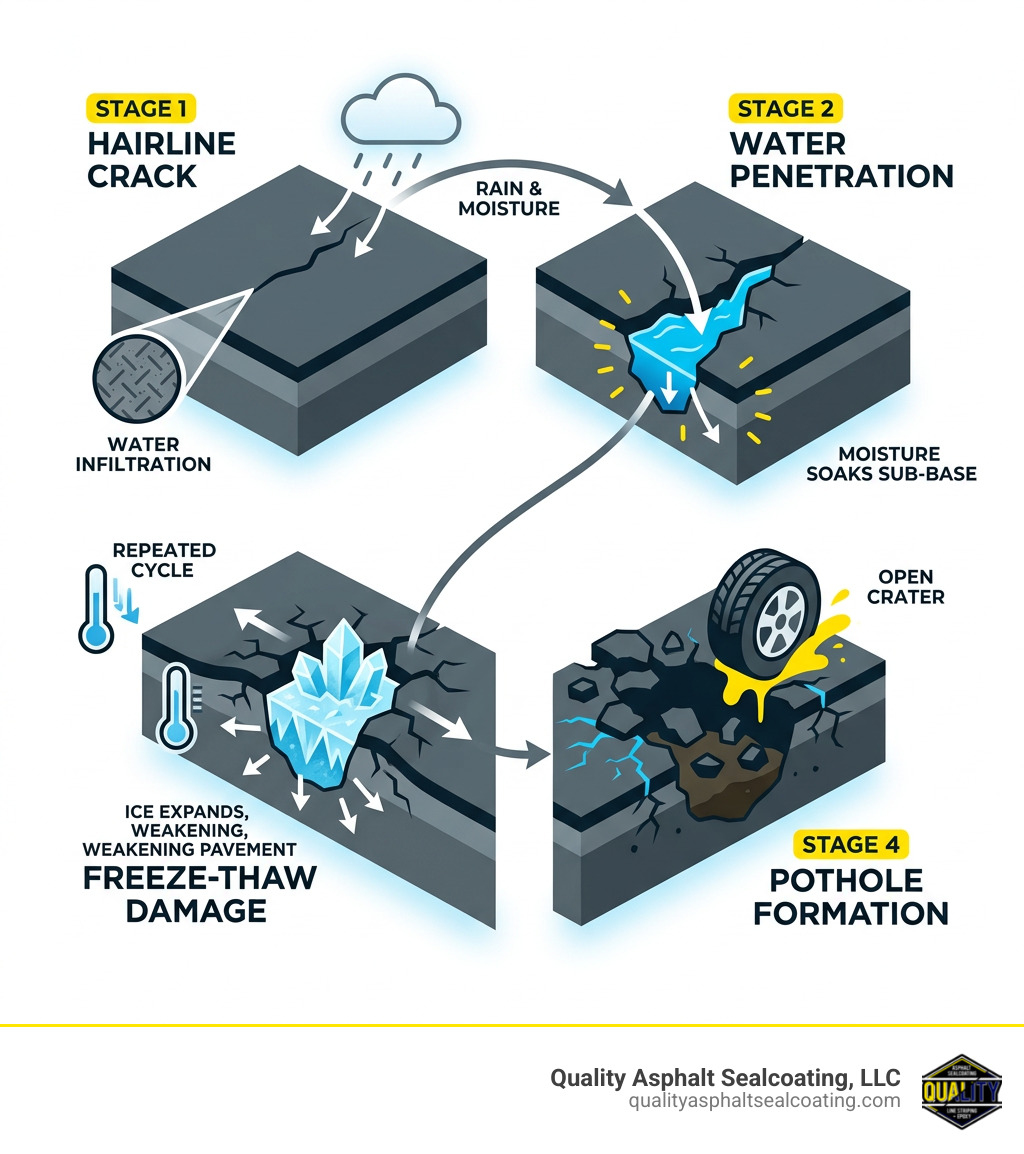
If you’ve ever wondered why your smooth driveway suddenly looks like the surface of the moon, you aren’t alone. In Rhode Island, we face a unique set of challenges that make our pavement particularly susceptible to damage.
Moisture Infiltration and Freeze-Thaw Cycles
The primary “pothole predator” is water. It starts when tiny, almost invisible cracks form in the asphalt. When it rains, water seeps through these cracks and settles into the sub-base—the foundation underneath your pavement.
In our region, the temperature often dances around the freezing mark. When that trapped water freezes, it expands, pushing the asphalt upward. When it thaws, it leaves a void or a “bubble” under the surface. As cars drive over that weakened spot, the asphalt eventually collapses into the void, and—voila!—you have a pothole.
Sub-base Failure
Sometimes the problem isn’t just on the surface. If the ground underneath wasn’t compacted correctly or if the drainage is poor, the sub-base can erode. Without a solid foundation, even the thickest asphalt will eventually crack and crumble. This is why professional asphalt pothole repair services always start with an assessment of the ground conditions.
The Real Cost of Ignoring the Holes
Ignoring a pothole is a bit like ignoring a cavity in your tooth; it only gets bigger, more painful, and much more expensive to fix later.
- Vehicle Damage: As mentioned, AAA research shows vehicle damage costs are staggering. Potholes can blow out tires, bend rims, and ruin a car’s alignment or suspension.
- Liability Risks: If a customer or a delivery driver trips in a pothole on your property, you could be held liable for their injuries.
- Curb Appeal and Business Image: Your parking lot is the first thing people see. A lot full of craters looks unprofessional and unwelcoming.
- Structural Integrity: A single pothole allows more water to reach the base, which leads to more potholes. Eventually, you won’t just need a patch; you’ll need to tear up the whole lot and start over.
To get a better handle on how these issues start, check out more info about parking lot repair basics to see how early intervention saves your pavement’s life.
Comparing Professional Asphalt Pothole Repair Services
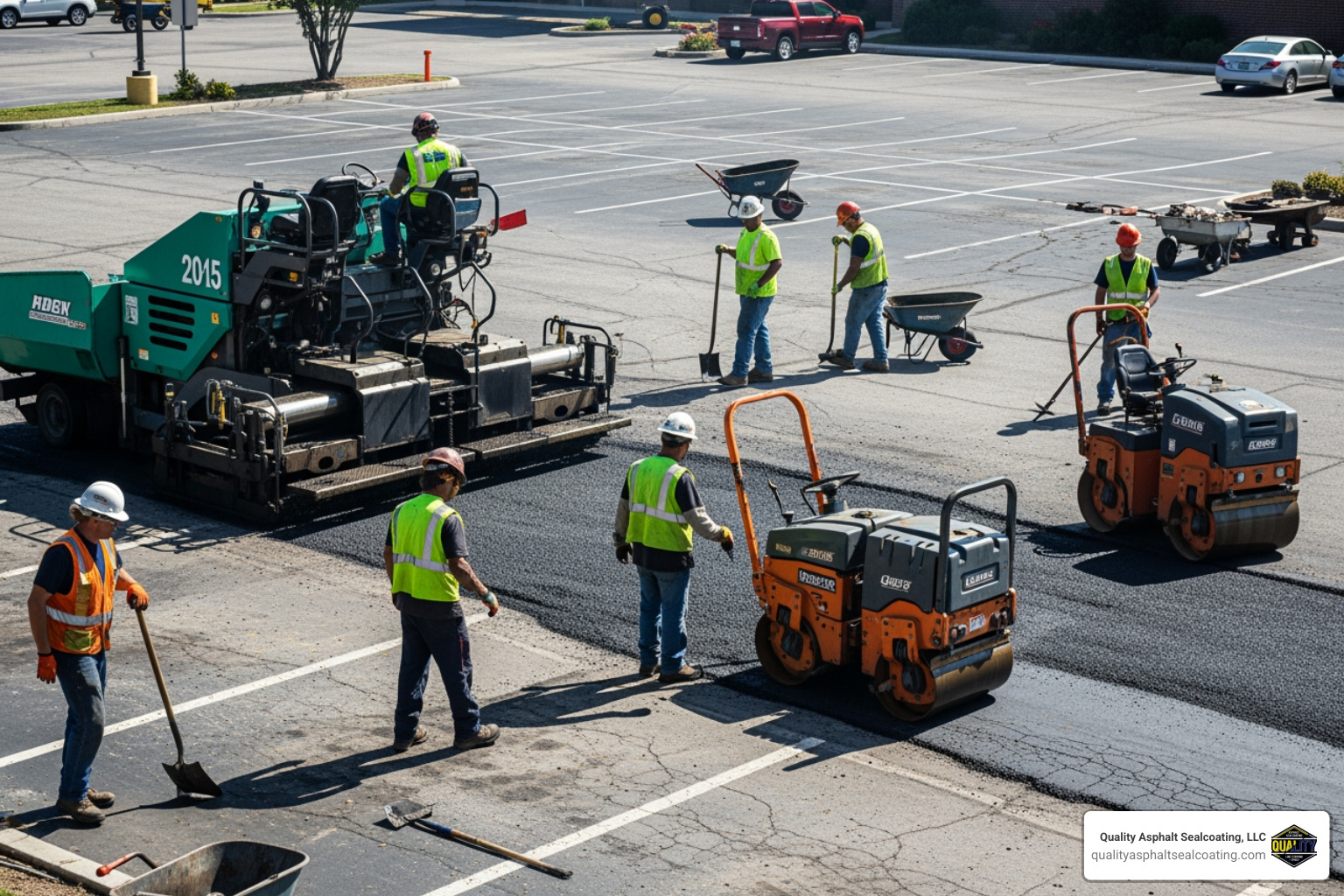
When you call us for asphalt pothole repair services, we don’t just have one tool in our belt. Different problems require different solutions.
Choosing the Right Method
Here is a quick breakdown of how common professional methods stack up against each other:
| Feature | Cold Patch | Hot Mix Backfilling | Saw-Cut & Patch | Infrared Repair |
|---|---|---|---|---|
| Durability | Low (Temporary) | Moderate | High (Permanent) | High (Permanent) |
| Speed | Very Fast | Fast | Moderate | Fast |
| Water Resistance | Low | Moderate | High | Superior |
| Seamlessness | No | No | No (Seams present) | Yes (Seamless) |
| Best For | Emergency Winter Fix | Small, low-traffic areas | High-traffic, structural | Commercial lots/Driveways |
For a deeper dive into the technical side of these options, you can explore The A to Z of asphalt maintenance.
The Superiority of Infrared Asphalt Pothole Repair Services
If you’re looking for the “gold standard” of modern repair, infrared technology is it. This method uses an infrared heater to warm the existing asphalt to about 300–350 degrees Fahrenheit.
Why is this better? Because it creates a thermal bond. Instead of just sticking new asphalt on top of old asphalt (which creates a seam where water can get back in), infrared melts the two together.
- Seamless Patches: No joints mean no places for water to seep in and start the freeze-thaw cycle all over again.
- 30-Minute Reopening: Because we aren’t waiting for a massive slab of new asphalt to cool from scratch, you can usually drive on the repair in half an hour.
- Eco-Friendly: We recycle the existing asphalt, reducing waste by up to 95%.
- Oxidation Prevention: The specialized heaters warm the asphalt without burning or oxidizing it, preserving the oils that keep asphalt flexible.
Traditional Saw-Cut and Patching Methods
While infrared is amazing, some situations—like a total sub-base collapse—require the traditional Saw-Cut and Patch method.
In this process, we use a diamond-bladed saw to cut a clean square around the damaged area. We remove the “bad” asphalt entirely, check and compact the aggregate base, apply a tack coat (an adhesive), and then fill it with fresh hot mix asphalt. This is a full-depth repair that is incredibly durable for high-traffic areas like entrance ramps or loading docks.
The Step-by-Step Process for Lasting Repairs
We believe in doing things right the first time. A “quick fix” that fails in three months isn’t a service—it’s a nuisance. Here is how we ensure our asphalt pothole repair services stand the test of time.
1. Surface Preparation and Debris Removal
You can’t build a house on a swamp, and you can’t patch a pothole filled with mud and wet leaves. We start by cleaning out all loose debris, rocks, and vegetation. If there is standing water, we dry the area completely.
2. Assessing Ground Conditions
We look at why the hole formed. Is there a drainage issue? Are there environmental guidelines for ground conditions we need to consider? If the ground is soft or saturated, we address the foundation before adding the top layer.
3. Layered Filling and Crowning
For deeper holes, we don’t just dump a giant pile of asphalt in one go. We apply it in layers, compacting each one to ensure there are no air pockets. We also use a “crowning” technique, where the center of the patch is slightly higher than the surrounding pavement. This allows for a tiny bit of natural settling and ensures water runs off the patch rather than sitting on it.
4. Compaction and Curing
Using a vibrating roller or a plate compactor, we press the material until it is dense and level with the existing surface. Proper compaction is what makes the repair waterproof and strong enough to handle heavy vehicles. For more on the long-term care of these repairs, see our guide to parking lot maintenance.
Professional vs. DIY Asphalt Pothole Repair Services
We get it—the “pothole patch” bags at the local hardware store look tempting. But there is a massive difference between a DIY weekend project and professional asphalt pothole repair services.
- Material Quality: We use professional-grade hot mix asphalt or high-performance modified cold mixes that aren’t available to the general public.
- Specialized Equipment: A hand-tamp tool from a big-box store can’t provide the thousands of pounds of force that a vibrating roller does. Without that compaction, the patch will likely crumble within a year.
- Bonding Strength: Professionals use industrial tack coats and infrared heaters to ensure the new material actually sticks to the old.
- Long-term ROI: While a bag of cold patch is cheap, if you have to redo it every spring, you’re losing money. A professional repair is an investment that lasts for years.
If you’re still curious about the DIY route for very minor driveway dings, you can read more about how to stop the bump with DIY fixes, but for anything larger than a dinner plate, professional help is usually the safer bet.
How to Prevent Future Potholes and Extend Pavement Life
The best pothole is the one that never forms. Once we’ve repaired your existing damage, we want to help you protect the rest of your investment.
Crack Sealing: The First Line of Defense
Potholes are just grown-up cracks. By performing regular crack sealing, we “stop the bleed.” We use a hot-applied rubberized sealant that stretches and contracts with the weather, keeping water out of the sub-base. Check out how we handle fixing your foundation through proactive maintenance.
Sealcoating
Think of sealcoating like sunscreen for your driveway. The sun’s UV rays bake the oils out of asphalt, making it brittle and grey. Brittle asphalt cracks easily. Our high-quality sealcoating provides a protective layer that resists UV rays, chemicals, and oil spills, while also restoring that beautiful, jet-black look.
Drainage Management
If water is pooling in your lot, it’s only a matter of time before a pothole appears. We can help identify “birdbaths” (low spots) and suggest drainage solutions or ramp installations to keep water moving where it belongs—away from your asphalt.
Scheduling Emergency Asphalt Pothole Repair Services
Sometimes, you can’t wait for the perfect sunny day in June. A massive pothole in the middle of a busy retail entrance is a liability nightmare that needs immediate attention.
- 24-Hour Response: We understand that business disruption needs to be kept to a minimum.
- Winter Repairs: While hot mix is harder to come by in the dead of a Rhode Island winter, we use high-performance winter-grade mixes to stabilize hazards until permanent repairs can be made in the spring.
- Safety First: If a pothole is deep enough to trip a pedestrian or damage a rim, it’s an emergency. We prioritize these “high-risk” repairs to keep your customers safe.
Frequently Asked Questions about Pothole Repair
When is the best time of year to repair potholes?
In Rhode Island, the “sweet spot” is typically from late spring through early autumn. Asphalt needs warm ground temperatures (usually above 40-50°F) to bond and cure properly. However, with infrared technology, we can often extend this season. The most important thing is that the area is dry.
How long do professional pothole repairs typically last?
A temporary cold patch might only last a single season. However, a professional saw-cut or infrared repair can last as long as the surrounding pavement—often 5 to 10 years or more—provided the rest of the lot is maintained. Factors like traffic volume and how well you keep up with sealcoating play a huge role in durability.
What other maintenance services should be performed alongside pothole repair?
Repairing the hole is just one part of a healthy pavement plan. We often recommend:
- Line striping services: Once the lot is smooth, fresh lines make it safe and organized.
- Crack Filling: To prevent the next round of potholes.
- Sealcoating: To protect the entire surface from the elements.
- Power Washing: To remove oil and grease that eat away at the asphalt binder.
Conclusion
At Quality Asphalt Sealcoating, LLC, we’ve spent over 23 years helping Rhode Island property owners protect their pavement. We are a family-owned business that believes in quality materials, honest advice, and results that actually last.
Whether you have a single pesky pothole at the end of your driveway or a commercial parking lot that needs a total maintenance overhaul, we have the expertise to get the job done right. Don’t wait for a small crack to turn into a multi-billion dollar liability.
Ready to smooth out your property? BOOK A FREE ESTIMATE today and let us show you why we’re Rhode Island’s trusted choice for asphalt pothole repair services.

