

Why Potholes Are a Bigger Problem Than They Look
Asphalt pothole repair services are professional solutions for fixing damaged pavement before small holes turn into expensive structural failures.
Quick answer — what you need to know:
- Potholes form when water seeps into cracks, freezes, expands, and collapses the pavement surface
- Professional repair methods include cold patch, hot mix, full-depth patching, and infrared repair
- Prompt repairs protect vehicles, pedestrians, and your property value
- Professional repairs can last 7–10 years, and up to 20 years with regular maintenance
- DIY cold patch is a short-term fix only — professional methods are far more durable
That small pothole in your parking lot or driveway? It’s not just a surface flaw.
It’s a sign that your asphalt is beginning to fail underneath. Water gets in. It freezes. It expands. The pavement above collapses. And the hole grows — fast.
In 2021, pothole-related vehicle damage cost U.S. drivers $26.5 billion, according to AAA. That’s not counting the liability risk to property owners when someone trips, falls, or blows a tire on your pavement.
The good news: professional pothole repair stops the damage cycle early. Fixing a pothole now is almost always faster, simpler, and far less costly than waiting for full pavement reconstruction — which can cost four to five times more than routine maintenance.
This guide covers everything you need to know about professional repair options, so you can make the right call for your property.
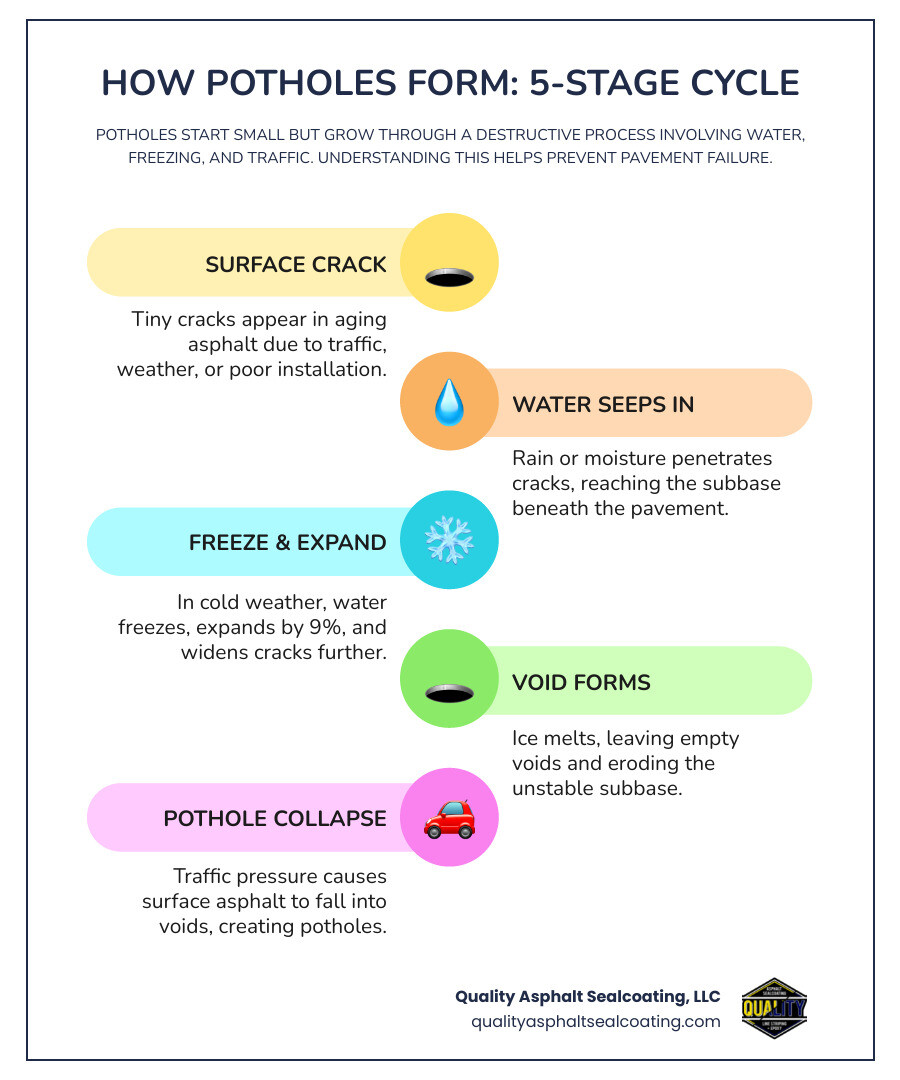
The Science Behind Pothole Formation and Asphalt Failure
To understand why asphalt pothole repair services are so critical, we have to look at what is happening beneath the surface. Potholes are rarely a “random” occurrence; they are the result of a specific scientific process involving moisture, temperature, and structural stress.
The Freeze-Thaw Cycle
In Rhode Island, our pavement faces a brutal battle with the elements. Potholes primarily form when water seeps into pre-existing cracks in the asphalt. When temperatures drop, this trapped water freezes and expands. As it expands, it pushes the asphalt upward and weakens the aggregate. When the ice melts, it leaves a hollow void beneath the surface.
Subbase Erosion and Traffic Stress
Once that void is created, the structural integrity of the pavement is compromised. As heavy vehicles drive over these weakened spots, the asphalt surface can no longer support the weight. The pavement eventually collapses into the void, creating the crater we recognize as a pothole. Poor drainage exacerbates this, as standing water continues to eat away at the subbase, leading to rapid erosion.
Oxidation and Chemical Damage
It’s not just water that causes trouble. UV rays from the sun cause the asphalt to oxidize, making it brittle and more prone to cracking. Additionally, vehicle oil and chemical spills can soften the asphalt binder, causing it to “unravel.” You can learn more about how cities protect and fix streets to see how large-scale infrastructure manages these same stressors.

Why Property Owners Prioritize Asphalt pothole repair services
As a property owner, a pothole is more than an eyesore—it is a significant liability. Here is why savvy owners in Rhode Island don’t wait to call for professional help.
Liability and Safety
Potholes are a primary cause of “slip and trip” injuries. If a pedestrian twists an ankle in your parking lot, you could be facing a costly legal battle. Furthermore, for drivers, potholes are notorious for causing flat tires, bent rims, and suspension damage. With pothole damage costing drivers billions annually, your customers will likely avoid your business if your parking lot feels like an obstacle course.
Preserving Property Value and Professionalism
Your parking lot or driveway is the “welcome mat” of your property. Smooth, well-maintained asphalt signals professionalism and care. Conversely, a lot riddled with holes suggests neglect. Regular maintenance, including line striping and pothole repair services, ensures your property remains attractive and functional.
Cost-Effective Emergency Response
Ignoring a small hole is the fastest way to ensure you’ll eventually need a total replacement. Pavements deteriorate at an accelerating rate once they reach 75% of their service life. By utilizing asphalt pothole repair services early, you stop the spread of damage, saving you from reconstruction costs that are often four to five times higher than routine patching.
Comparing Professional Repair Methods and Techniques
Not all patches are created equal. Depending on the season and the severity of the damage, we use different techniques to ensure a lasting fix.
| Method | Durability | Best Use Case | Application Time |
|---|---|---|---|
| Cold Patch | Temporary (1-2 years) | Winter emergencies, low traffic | Very Fast |
| Hot Mix | Permanent (7-10 years) | Driveways, parking lots, high traffic | Moderate |
| Infrared | Permanent (10+ years) | Seamless repairs, joint failures | Fast |
Permanent vs. Temporary Asphalt pothole repair services
When you need a quick fix in the middle of a Rhode Island winter, cold patch (or “throw-and-roll”) is often the only option. It’s a pre-mixed material that remains flexible in cold temperatures. However, it is not fully waterproof and is considered a temporary solution.
For a lasting result, hot mix asphalt is the gold standard. This involves heating the asphalt to over 300°F and applying it to a prepared area. For severe issues where the foundation has failed, we utilize full-depth patching. This involves excavating down to the base, rebuilding the foundation, and layering new hot mix. You can find a deeper dive into these methods in our A to Z guide of asphalt maintenance.
The Role of Infrared Technology in Asphalt pothole repair services
One of the most advanced tools in our arsenal is infrared repair. This technology uses high-intensity heat to soften the existing asphalt around a pothole. We then add a small amount of new hot mix and rake it together.
This creates a seamless, jointless repair. Because there are no seams between the old and new asphalt, water cannot seep back in as easily. It’s an incredibly efficient, zero-disruption method that recycles existing material while providing a permanent bond. This is one of the essential parking lot repair services we recommend for high-traffic commercial areas.
The Professional Pothole Repair Workflow
When we arrive on-site, we follow a rigorous process to ensure the repair doesn’t just look good, but actually lasts.
- Damage Assessment: We don’t just fill the hole; we look for the root cause. Is it a drainage issue? Is the asphalt too thin?
- Cleaning and Debris Removal: We use compressed air or industrial blowers to remove every bit of loose rock, dirt, and standing water. A patch will not stick to a dirty hole!
- Tack Coat Application: For standard patching, we apply a liquid asphalt “tack coat” to the edges. This acts as the glue that bonds the new material to the old.
- Layering and Compaction: We apply the asphalt in layers. Proper compaction is the most important step—we use vibrating plates or rollers to ensure the patch is dense and level with the surrounding surface.
- Perimeter Sealing: We often “bead” the edges with hot rubberized sealant to prevent water penetration.
- Curing: While some repairs are drivable immediately, others need a few hours to harden. We always rope off the area to protect the new patch.
Understanding these parking lot repair basics helps property owners appreciate why professional work far outlasts a quick DIY bag of asphalt.
Beyond the Patch: Extending Pavement Lifespan
A pothole repair is often a “reactive” measure. To truly save money, you need a “proactive” plan. The average life of a paved road is 18 to 20 years, but with a solid maintenance program, you can extend that significantly.
Preventative Maintenance
Think of sealcoating like sunscreen for your driveway. It protects against UV rays, water, and oil. We recommend sealcoating every 2–3 years to keep the asphalt flexible and waterproof. When combined with regular crack filling, you can potentially double the life of your pavement.
The Value of Crack Filling
Every pothole started as a crack. By filling cracks while they are small, you prevent the water seepage that leads to the freeze-thaw cycle. Our complete guide to parking lot maintenance explains how these small investments prevent the need for massive reconstruction later.
Long-Term Savings
Research shows that reconstruction costs are significantly higher than routine maintenance. By following an essential commercial pavement maintenance plan, you keep your “cost per year” of ownership as low as possible.
Frequently Asked Questions about Pothole Repair
When is the best time of year for permanent pothole repairs?
In Rhode Island, the “paving season” typically runs from late spring through late fall. For a permanent hot mix repair, the ground temperature generally needs to be above 40°F. If you have an emergency in February, we use high-quality cold patch materials to keep the area safe until the plants reopen in the spring.
How long does a professional pothole repair typically last?
A professional hot mix or infrared repair can last 7–10 years. If the rest of the pavement is well-maintained with regular sealcoating and crack filling, that repair can easily last as long as the surrounding asphalt—potentially up to 20 years.
Can I repair potholes myself with store-bought bags?
You can, but it’s usually a temporary fix. DIY bags often lack the high-quality binders found in professional mixes. More importantly, most homeowners don’t have the heavy compaction equipment (like 1-ton rollers or vibrating plates) needed to squeeze out the air pockets. Without proper compaction and edge sealing, water will get back in within a few months, and you’ll be right back where you started.
Conclusion
Potholes are an inevitable part of living with Rhode Island’s weather, but they don’t have to ruin your property or your budget. By choosing professional asphalt pothole repair services, you are investing in the safety, beauty, and longevity of your pavement.
At Quality Asphalt Sealcoating, LLC, we bring over 23 years of experience to every job. As a family-owned Rhode Island business, we understand the local climate and what it takes to make a repair last. Whether you have a single pesky hole in your driveway or a commercial parking lot that needs a total overhaul, we use top-quality materials and proven techniques to get the job done right.
Don’t wait for a small crack to become a $26 billion liability. Request a quote for professional crack filling and mastic services today and let us help you protect your investment.

